 Historical Figure MBTI
#399 · 4-5-26 · The Mongol Empire
Toghrul
The Ong Khan · Kerait Lord and Patron Turned Enemy · The Prester John of Legend
c. 1130 — 1203
8 min read
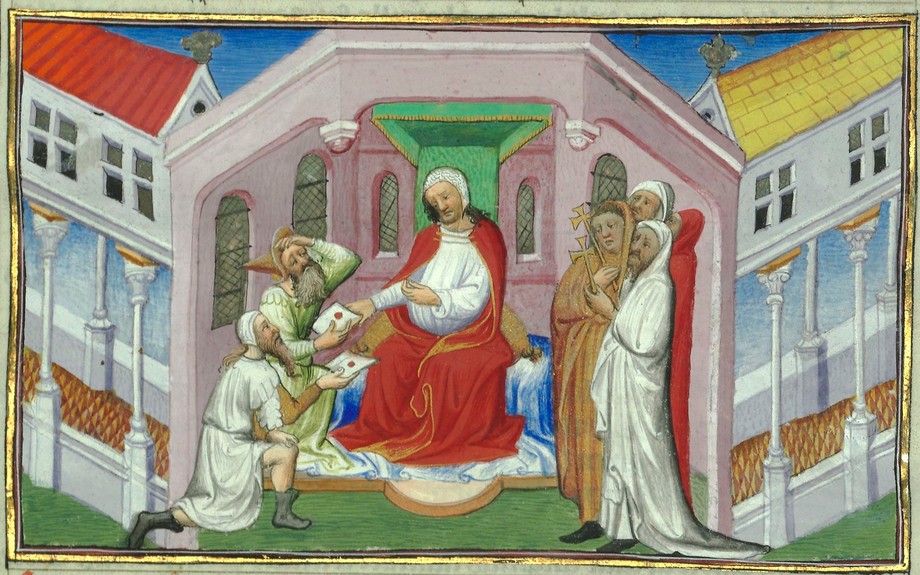
Portrait of Toghrul
The Old Khan Who Could Not Imagine the Future
For a generation he was the greatest lord on the steppe. Toghrul—the Ong Khan, ruler of the Kerait confederation—held power of the old kind: authority resting on inherited position, a great name, and alliances accumulated over decades. He had fought his way to the Kerait throne through the usual brutalities, and he understood the world he governed as a stable thing, a known board with known pieces. He was not a visionary. He was a custodian.
Into his orbit, as a young and landless man, came Temüjin. The anda oath between Toghrul and Temüjin's late father placed the orphaned son in a known category—vassal, foster-son, client—and the arrangement worked brilliantly at first. When the Merkits carried off Börte, Toghrul supplied the armies that recovered her. Together they broke the Tatars. Through it all Temüjin rose as the old khan's most capable lieutenant. For years the relationship was the central fact of steppe politics: the aging patron and the rising protégé.
It ended in jealousy and bad counsel. Temüjin grew too strong, and Toghrul's son Senggum saw a rival who would swallow his birthright. Jamukha fanned the same fear. The vacillating old man let himself be turned, agreed to lure Temüjin to a feast and ambush him there. Warned in time, Temüjin fled, regrouped, and struck back—destroying the Keraites in a three-day battle in 1203. Toghrul fled west and was killed by Naiman guards who did not recognize whom they had cut down. The psychology of this ruin is the ISTJ: a man whose dominant introverted sensing bound him to inherited position and the order he had always known, and whose inferior intuition left him fatally unable to grasp the wholly new kind of power growing under his own protection.
Toghrul was the ISTJ as the conservative custodian of a dying world—dominant Si anchored to inherited rank and old alliances, practical Te managing a khanate year by year, and an inferior intuition so blind to the future that he could not see, in the loyal protégé at his side, the man who would make the entire steppe over and leave nothing of the old order standing.
The Weight of Inherited Position
Si — dominant
Dominant introverted sensing is the function of precedent and continuity—loyalty to position held rather than invented. Toghrul was this kind of ruler to the bone. His power rested on a title, on the Kerait name, on alliances inherited and maintained over a long career. He thought in terms of who owed what to whom, of old bonds and old debts, of the board as it had always been laid out.
The anda relationship mattered precisely because it was precedent—it placed Temüjin in a known category: vassal, foster-son, client. Si excels at managing established relationships and known quantities. It is supremely good at a world that does not change. But its strength is also its prison: it assumes the categories of the past will describe the present, that a vassal who has always been a vassal will remain one. Toghrul could not conceive that Temüjin would become something the steppe had never produced—not a bigger rival lord of the old kind, but the architect of an entirely new order in which lords like Toghrul would not exist at all.
The Manager of a Khanate
Te — auxiliary
Auxiliary extraverted thinking gave Toghrul's conservatism its competence. For decades he was an effective ruler by the standards of his world—keeping clans in line, fielding armies, managing the arithmetic of pasture and tribute, conducting diplomacy with the Jin dynasty that earned him the very title by which he is remembered. His handling of Temüjin showed the same managerial cast: he recognized a useful instrument and deployed it, lent armies when lending served his interests, and integrated a capable lieutenant into the apparatus of Kerait power.
What auxiliary Te cannot do, yoked to dominant Si, is question the frame within which it operates. It optimizes the known game; it does not ask whether a different game is being played. Toghrul managed his khanate shrewdly right up to the moment the rules changed beneath him, and then his shrewdness was worthless, calibrated to a world that was ending. He could administer the old order with skill. He simply could not perceive that it had a successor already standing in his tent.
The Bonds He Honored Until He Did Not
Fi — tertiary
Tertiary introverted feeling gave Toghrul a private register of personal loyalty—real, but not strong enough to hold under pressure. For years the Fi held: he honored the anda oath to Yesügei, stood by Temüjin in the war to recover Börte, fought beside him against the Tatars. There was something of the foster-father in the old khan's regard.
But the tertiary function is the weakest link, and when Senggum and Jamukha went to work on his fears, the bond could not hold the line. A stronger feeling-function might have refused the betrayal outright. Toghrul's did not. He let himself be turned, and the man who had been a foster-son became a threat to be eliminated by treachery. The tertiary-Fi ruler is not a monster; he is a man whose decent loyalties are genuine but shallow-rooted, and who, when frightened, allows fear to override them—and tells himself the betrayal was forced upon him.
The Future He Could Not Imagine
Ne — inferior
Inferior extraverted intuition is the blind spot of the ISTJ—the underdeveloped capacity to read where a situation is tending rather than where it has been. In Toghrul's life it was fatal, because the future he could not imagine was standing in his own camp, wearing the face of a loyal vassal.
Toghrul could see Temüjin as a powerful subordinate, a rival of the familiar kind. What he could not see was that Temüjin was not a piece on the board at all but the man who would throw out the board itself—an army organized by function rather than clan, loyalty running upward to a person rather than sideways to blood. Inferior Ne cannot perceive this kind of emergent possibility; Toghrul kept analyzing the threat in old categories long after they had stopped describing the thing he faced. His response was the oldest steppe trick there was: the treacherous feast, the ambush. A stale solution against a man who was outrunning convention entirely—and the man, warned in time, escaped, regrouped, and came back to annihilate him.
Why ISTJ Over ESTJ
Why not ESTJ?
A powerful steppe ruler who fielded armies and managed a confederation might tempt an ESTJ read—the commanding executive who imposes order outward. But Toghrul did not command in that bold, initiative-taking way. His power rested on inherited position, on a name and a title he had received and maintained, not on a dominant outward will that built and seized. He was reactive where the ESTJ is proactive: cautious, vacillating, easily turned by his son and his rivals. That is a man led by dominant Si—the custodian of an established order—with Te in service of his caution, not an ESTJ whose dominant Te makes him the one who commands.
The ESTJ leads with extraverted thinking: he takes the initiative and imposes his order on the world from the front. Toghrul was the inverse—his thinking real but auxiliary, always serving a deeper conservatism whose first instinct was to preserve what had been inherited. When the man who would actually remake the steppe arose in his own camp—the commander-organizer who led with dominant Te—Toghrul could neither match him nor comprehend him. He was the custodian who could not adapt, not the commander who would have seized the opportunity first.
Connected Figures
Further Reading
- Genghis Khan and the Making of the Modern World — Jack WeatherfordThe most readable modern account of Temüjin's rise; covers the Kerait alliance and Toghrul's betrayal in detail.
- The Secret History of the Mongols — translated by Igor de RachewiltzThe primary Mongol source, composed shortly after Genghis Khan's death; Toghrul (the Ong Khan) is a central figure in the middle sections.
- Genghis Khan: His Life and Legacy — Paul RatchnevskyA rigorous scholarly biography that reconstructs the political landscape Toghrul dominated and the sequence of the Kerait war.
