 Historical Figure MBTI
#398 · 4-5-26 · The Mongol Empire
Jamukha
The Anda · Blood-Brother and Rival of Genghis Khan · The Last of the Old Order
c. 1160 — c. 1206
5 min read
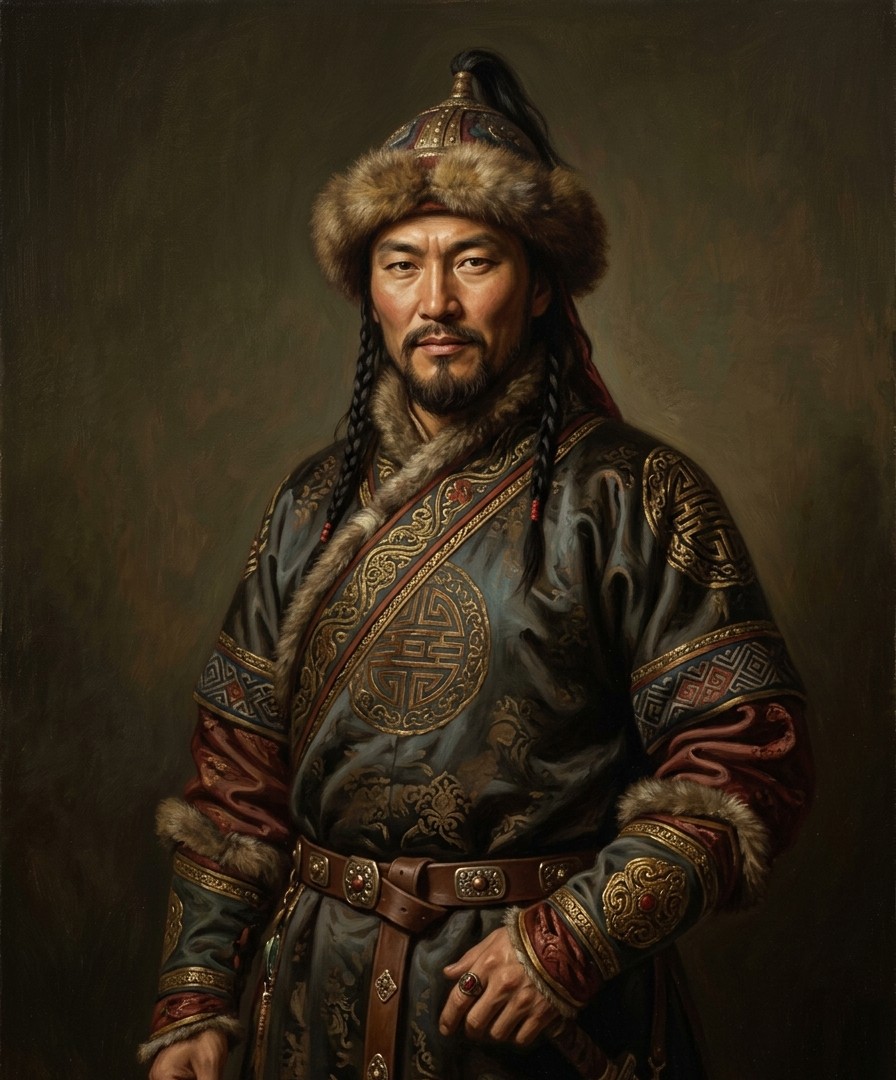
AI-assisted Portrait of Jamukha
The Brother Who Became the Rival
Every great conqueror has a shadow self—the road not taken—and for Temüjin, that shadow had a name he had loved since boyhood. Jamukha was born around 1160 into the Jadaran clan, high-born, magnetic, a natural prince of the grasslands where the orphaned Temüjin was a nobody. Three times across their lives they swore the anda oath of blood-brotherhood. When the Merkits carried off Temüjin's wife Börte, Jamukha rode at his side to bring her home. Then they split—the Secret History records the break in a cryptic exchange about pitching tents by the mountain or by the river, two men who could no longer share one ground.
The divide was real. Jamukha stood for the old order: noble blood, tribal aristocracy, rule by birthright. Temüjin was building something the steppe had never seen—a meritocracy that broke the clans and rebound their members by personal allegiance. A coalition of frightened chiefs elected Jamukha Gür Khan, “universal khan,” in open challenge. But his confederations kept fracturing where his rival's loyalty held. In the end he was a fugitive, betrayed to Temüjin by his own remaining followers—men whom Genghis promptly executed for selling their lord. Brought captive before the brother he had spent his life fighting, Jamukha asked only for a clean, noble death, and by the sources Genghis granted it with grief. The psychology beneath that whole dazzling, doomed arc is the ENTP: restless dominant intuition, shrewd calculation, magnetic charm, and the one fatal deficit—the inability to build something that lasts.
Jamukha was the ENTP who matched Genghis Khan in brilliance but not in patience—a dominant-Ne mind of restless invention and shifting coalitions, charismatic enough to be elected universal khan and clever enough to wound the greatest conqueror in history, yet never able to make the loyalty he kindled last beyond a single turn of fortune. He was the dazzling road the Mongols did not take.
The Road Not Taken
Ne — dominant
Dominant extraverted intuition generates possibilities and is forever drawn to the option no one else has considered. On the steppe this looked like genius: Jamukha was inventive in war, credited with novel tactical formations, constantly recombining the grasslands' politics into new confederations. He embodied a whole counter-future for the Mongols—the aristocratic world against Temüjin's meritocracy—and for years enough people believed in that alternative to make the outcome genuinely uncertain. But unchecked Ne carries its own undoing: the mind that sees every possibility struggles to commit absolutely to one. His coalitions were brilliant and provisional, gone the moment a better option appeared elsewhere. The greatest gift of dominant Ne is to see every road. Its curse is to be unable to build one that endures.
The Cold Eye of the Strategist
Ti — auxiliary
Auxiliary introverted thinking pruned Jamukha's possibilities into strategy. He read the balance of tribes, gauged who could be turned and who frightened, and timed his strikes with calculation no charisma alone could supply. The man was dangerous because he was not merely magnetic; he thought. Ti also accounts for the colder streak: the Secret History records an episode in which Jamukha had captured nobles boiled alive after a victory—calculated brutality that reportedly drove allies toward Temüjin in revulsion. His terror was sharp and local where his rival's was systematic—clever in the moment, corrosive to the loyalty he needed. Ti served his intuition but did not govern his life. He could out-calculate a campaign and still lose the slow, unglamorous war of institution-building.
The Charm That Gathered the Tribes
Fe — tertiary
Tertiary extraverted feeling is the ENTP's social engine. Jamukha was magnetic and eloquent, the kind of leader who could knit proud chiefs into a confederation and be raised to Gür Khan. His Fe was also bound up, poignantly, with the anda bond itself: the Secret History gives him speeches of real feeling about the brotherhood he and Temüjin had shared, the warmth of their boyhood, the tragedy of their estrangement. But tertiary Fe is an instrument, not a foundation. Jamukha could kindle loyalty; he could not anchor it. He could gather the tribes. He could not make them stay.
The Structure He Could Not Build
Si — inferior
Inferior introverted sensing is the ENTP's blind spot, and in Jamukha it cost him everything. Si is continuity and durable structure—the institutional discipline that built the Mongol decimal army and its body of law. Temüjin subordinated his charisma to that unglamorous work, binding his men with unconditional rewards and punishments until loyalty became structural. Jamukha never made that turn: his federations were assembled fresh each time and collapsed each time, while his rival was laying down a permanence that outlasted moments. The final, bleak proof: his own followers—gathered by contingent advantage—betrayed him and delivered him bound to his enemy. Temüjin had the betrayers executed on the spot, refusing to reward men who would sell their lord. Even in destroying his anda, Genghis demonstrated the very principle that had defeated him.
Why ENTP Over INTP
Why not INTP?
The INTP shares Jamukha's flexible intelligence and auxiliary Ti, but the INTP's native posture is private and inward—the system-builder who engages the social world reluctantly. Jamukha was the opposite: an outward, charismatic political player who lived in the arena, gathered men by force of presence, and contended for open leadership. An INTP of comparable gifts would have been a brilliant adviser working from behind the scenes, content to be right and indifferent to the crowd. Jamukha craved the front of the stage, let himself be raised to Gür Khan by acclamation, and waged his contest with Temüjin as a public struggle for every clan's loyalty. His was an extraverted life—and it was both his brilliance and his ruin.
Connected Figures
Further Reading
- The Secret History of the Mongols — Trans. Igor de RachewiltzThe primary source for Jamukha — the Mongols' own chronicle preserving his speeches, his anda oath, and his execution in haunting detail.
- Genghis Khan and the Making of the Modern World — Jack WeatherfordThe most accessible modern account of the Mongol rise, with full treatment of the Jamukha rivalry as the hinge moment of steppe history.
- The Mongols — David O. MorganA concise, authoritative historical survey placing Jamukha and the pre-imperial steppe politics in wider context.
- Genghis Khan: His Conquests, His Empire, His Legacy — Frank McLynnA detailed biography that devotes sustained attention to the Jamukha years as the formative crucible of Temüjin's leadership.
