 Historical Figure MBTI
#397 · 4-5-26 · The Mongol Empire
Tolui
Youngest Son of Genghis Khan · Keeper of the Hearth · Father of Kublai
c. 1191 — 1232
6 min read
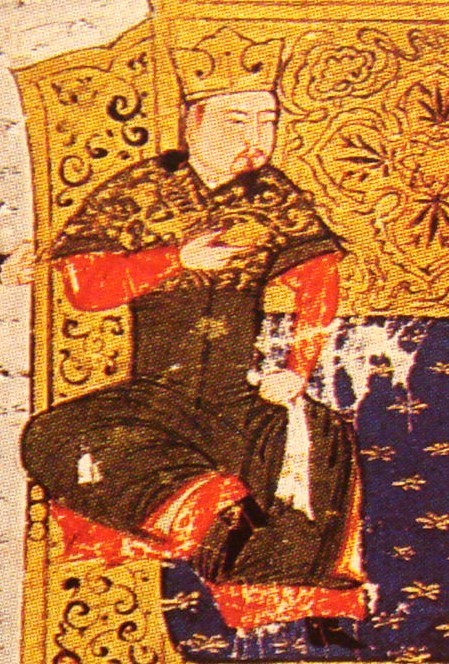
Portrait of Tolui
The Keeper of the Hearth and the Sword
He was the fourth and youngest son of Genghis Khan and Börte—the otchigin, the keeper of the hearth, who by custom stayed at the center and inherited the bulk of his father's personal army. Jochicarried disputed paternity; Chagataikept the law; Ögedei was chosen to rule. Tolui was the one you sent when a thing needed to be destroyed.
Destroy he did. Unleashed on Khorasan, he reduced Merv and Nishapur with a thoroughness that made his name the most feared of the four. When Genghis died, Tolui held the empire as regent, then broke the Jin with a flanking march. He was dead before forty, worn out by drink—or, by one account, by draining a cursed draught so Ögedei might live. Either way, an end consumed by the present. The ESTP reads through it all—dominant Se; Ti in the improvised tactics; Fe in the bond with his men; inferior Ni in the recklessness that killed him young.
Tolui was the ESTP war-engine of the house of Genghis—a man who lived in the felt fact of the battlefield and the cup, sharp enough to break the Jin with an improvised flanking march and reckless enough to drink himself into an early grave.
The Man Who Lived in the Blow
Se — dominant
Dominant Se is total immersion in the physical present. Where his father Genghis conquered in order to restructure, Tolui rode at the thing in front of him and broke it. He moved through the cities of Khorasan in person, reducing them with a thoroughness that left nothing standing. The Mongol way of war—the headlong ride, instant adaptation to the ground—rewarded the man who could read momentum and commit to the opening as it appeared. In Tolui's career there is no deliberation: only the assault, the breakthrough, the next city.
The same appetite made him insatiable at the table. Se reaches for intensity, and when there is no battle it reaches for the cup. The sensory relish that powered the conqueror emptied the wine-skin; a man so fully given over to the present has little defense against it.
The Tactician Inside the Brawler
Ti — auxiliary
Raw Se makes a berserker; Tolui was a general. Auxiliary Ti reads the enemy as a system with a weak joint, then drives everything at it. In 1231–1232, Tolui swept south through Song territory to hit the Jin from an unexpected quarter. When the larger Jin army caught his exhausted troops near the Sanfeng mountains, he used terrain and a sudden blizzard to shatter them, turning their advantage into a trap—won by angles no purely impulsive man would have seen.
Tolui was not a systematizer—he built no institutions, codified no law. His Ti was tactical rather than architectural, expended on the next battle rather than the shape of the next empire. But within that frame it was genuinely sharp, which is why a man so given to the immediate could be trusted with the empire's hardest fights.
The Bond With His Men and His Brother
Fe — tertiary
Tertiary Fe in an ESTP is the warrior's instinct for the morale of the war-band. Tolui led from the front, shared the hardships, and the troops he inherited—the elite core of his father's army—were ferociously committed. Men who march into a blizzard on a winter flanking gamble are giving a loyalty that fear alone cannot buy.
The same register governed his bond with Ögedei. Holding the largest force after Genghis died, Tolui could have pressed his own claim. Instead he stewarded the empire and stood aside. That Fe logic gives the death legend its truth: when the shamans called for a life, Tolui drained the cursed cup—a story told because it fit the man who would put his body between his Khan and the spirits as readily as between his Khan and the enemy.
The Man Who Burned Too Fast
Ni — inferior
Inferior Ni is the long view, the awareness of future cost. Tolui's deficit is written across his death: he drank as though the body had no future to ruin, and it ruined him. The disregard for the horizon that made him fearless in the saddle made him heedless of himself off it. Where Kublai would think in dynasties, Tolui thought in campaigns and cups.
The death legend is the inferior function's last word. Whether Tolui drank the cursed draught in a single gesture for his brother or drank himself to death by degrees, both readings arrive at the same point: a man who could not see far enough ahead to spare himself. The future was the one terrain he never learned to read.
Why ESTP Over ISTP
Why not ISTP?
The ISTP shares Se–Ti machinery and tactical sharpness, but leads with introverted thinking—the detached, self-contained craftsman who works best alone. Tolui was nothing of the kind: a bold field commander who thrived on the crowd and the charge, running on the outward energy of the war-band. His extraverted relish for intensity points to dominant Se, not the ISTP's inward Ti.
The ISTP leads with thinking and reaches for action as the auxiliary—reserve, solitary precision. Tolui inverts this: the dominant note of his life was sensory and outward, the headlong campaign and the cup passed in company, the physical intensity that finally consumed him. He was the brawler with a tactician inside—an ESTP, and a textbook one.
Connected Figures
Further Reading
- The Secret History of the Mongols — Translated by Igor de RachewiltzThe primary Mongolian source — covers Tolui's role in the early empire and the succession crisis after Genghis Khan's death.
- Genghis Khan and the Making of the Modern World — Jack WeatherfordA widely read narrative of the Chinggisid empire; Tolui and Sorghaghtani Beki's legacy features prominently.
- The Mongol Empire: Genghis Khan, His Heirs and the Founding of Modern China — John ManCovers the Toluid line's rise through Möngke and Kublai.
- The Mongols — David MorganThe standard short scholarly overview; situates Tolui in the family succession and the broader imperial structure.
