 Historical Figure MBTI
#396 · 4-5-26 · The Mongol Empire
Ögedei
Second Great Khan · The Genial Heir · Builder of Karakorum
c. 1186 — 1241
7 min read
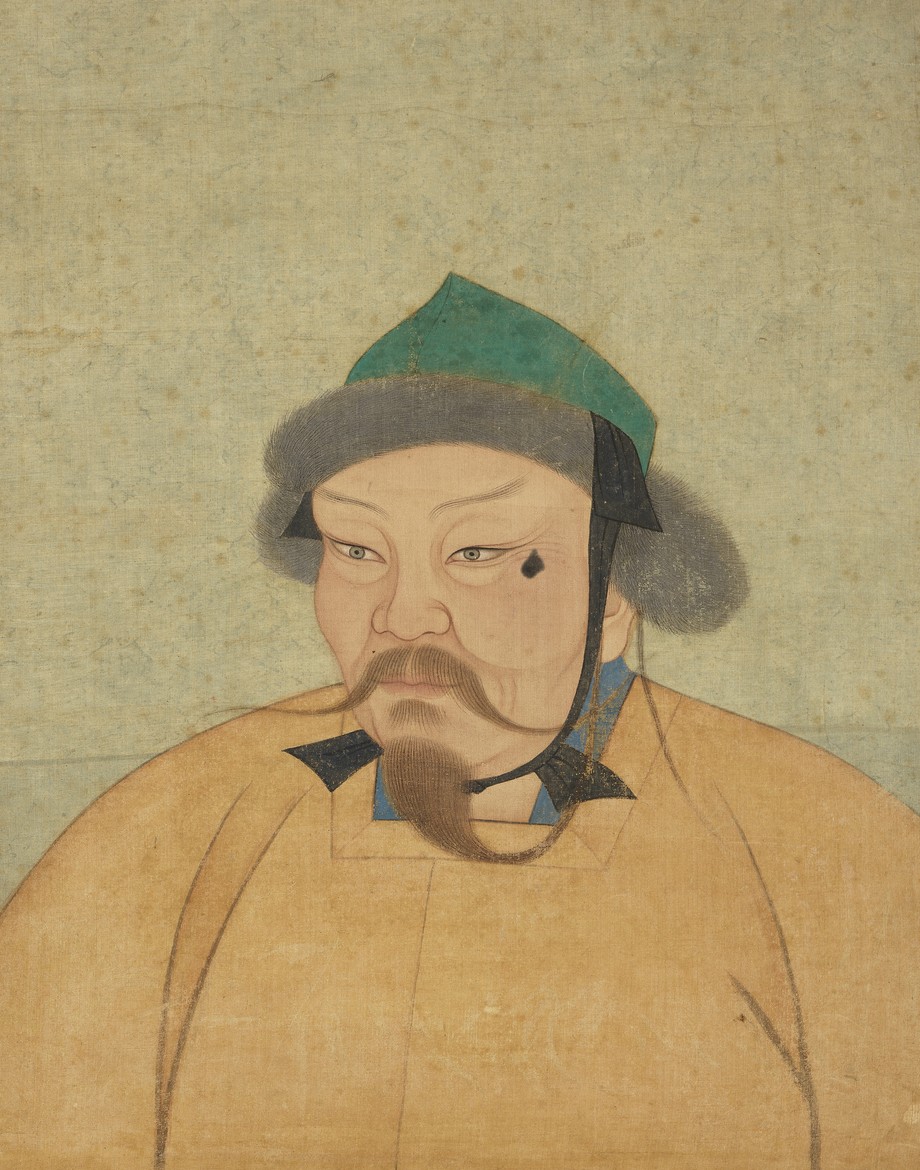
Portrait of Ögedei
The Heir Everyone Could Agree On
Born around 1186, Ögedei was the third son of Genghis Khan and his first wife Börte, and he became the second Great Khan for a reason that has little to do with conquest and everything to do with temperament. Where Jochi was embittered by lifelong whispers about his paternity, and Chagatai was rigid and abrasive, Ögedei was affable, even-tempered, and universally liked. The world's largest empire passed not to its hardest man but to its most agreeable one.
The choice was vindicated. Proclaimed Great Khan in 1229, Ögedei completed the conquest of northern China, launched the great western invasion under Subutaithat carried Mongol armies to the gates of Hungary and Poland, built the imperial capital at Karakorum, and expanded the postal-relay system, the yam, across a continent. The conqueror had built the empire; the genial heir made it run. Yet what contemporaries remembered most was the man himself—his reckless open-handedness, and his finally fatal thirst. When Chagatai assigned a man to count his cups, Ögedei ordered larger cups. It killed him in December 1241, recalling the Mongol armies from the edge of Western Europe. He was, in the cleanest sense, an ESFP.
Ögedei was the ESFP Great Khan—dominant Se in the appetite for the feast, the cup, the spectacle and the vivid present, auxiliary Fi in the genuine personal warmth that bound men to him, a ruler who held the world together not with his father's iron will but with an open hand and a full cup.
The Feast, the Cup, and the Vivid Present
Se — dominant
Dominant extraverted sensing is an appetite for the world as it arrives—the taste, the spectacle, the physical immediacy of the present moment, pursued without deferral. Ögedei lived there completely. He loved the hunt, the feast, the pageantry of a court in full splendor, and above all he loved to drink. The great kumis and wine feasts of Karakorum were the natural element of his reign. He was not a man who hoarded pleasure for some future settlement; the pleasure was the thing, now, in the cup in his hand. The dominant sensor cannot make a vivid present feel small against an abstract future.
Se also explains the brighter side of his rule. Ögedei understood that a Khan who threw the grandest feast and distributed the most dazzling largesse bound men to him in the most concrete way. His Karakorum was meant to be seen and felt: a capital rising on the steppe with palaces and craftsmen gathered from every conquered land. Where his father had projected will through law and terror, Ögedei projected it through sensory abundance.
The Open Hand
Fi — auxiliary
Auxiliary introverted feeling is not diplomatic graciousness; it is a private, felt sense of what one owes the person in front of one. In Ögedei it expressed itself as compulsive open-handedness. He gave away wealth on a scale that alarmed his treasurers. Persian historians collected story after story with the same shape: a petitioner approaches, and the Khan, moved, gives far more than was asked. When advisors warned the treasury could not sustain such liberality, he answered that wealth in a vault brought no joy to anyone. That is Fi reasoning—value measured by an inner standard of decency, not the ledger.
This warmth was the real cement of his authority. An empire assembled by force in a single generation could easily have flown apart; Ögedei held it because men simply liked him. Genghis rewarded faithfulness as iron principle; Ögedei rewarded the man in front of him because he was fond of him. Ögedei inherited the system and ran it through the temperament, and for a dozen years the combination bound a continent of subjects to a Khan they had every reason to love.
The Administration He Was Content to Delegate
Te — tertiary
Tertiary Te is real but not dominant—a capacity to organize that is happy to be delegated rather than built by hand. Ögedei did not need to construct the machine himself; he needed only to recognize good administrators and let them work. His reign is inseparable from the Khitan statesman Yelu Chucai, who persuaded him to tax the settled populations of northern China rather than exterminate them—an argument won on plain Te logic that live subjects yield more revenue than empty fields. Ögedei grasped the point at once. He similarly entrusted the western campaign entirely to Subutai, content to set the objective and let genius execute it.
Building Karakorum was the most consequential Te act of his reign, giving the Mongol enterprise a center it had never possessed. That Ögedei, the least disciplined of Genghis's sons, gave the empire its capital and its bureaucracy is less paradoxical than it appears: the same easy temperament that made him drink and give freely also made him comfortable handing real authority to capable men without jealousy.
The Discipline He Could Not Master
Ni — inferior
Inferior Ni is the weakest faculty—the one governing the distant future and the iron discipline of subordinating present pleasure to a far-off end. Genghis Khan had been a man of staggering long vision and self-denial. Ögedei could see what needed doing; what he could not do was hold the line of self-restraint the long view demands. Every warning from physicians and ministers, every attempt by Chagatai to ration his cups, asked him to weigh present pleasure against abstract future cost—and the abstract future cost never weighed enough.
It cost him, and it cost the empire. Ögedei died in December 1241, after a night of heavy drinking, leaving no settled heir. The news reached Subutai's army on the Hungarian plain; the princes broke off the invasion of Europe and turned back east to elect a new Khan. The gates of the West were never so close again. That the conquest of Europe was halted not by any army but by one man's inability to master his thirst is inferior Ni written across the map of history.
Why ESFP Over ISFP
Why not ISFP?
The ISFP shares Ögedei's Se and Fi but inverts their order—a private, inward-facing figure who pursues sensory experience quietly and on personal terms. Ögedei was nothing like that. He was convivial and generous to a fault, a sociable host who ruled through warmth poured out in public. He did not retreat with his pleasures; he made a court out of them. That is the gregarious ESFP, not the reserved ISFP.
The tell that fixes the type beyond doubt is the drinking: the present-focused indulgence that no warning could check is dominant Se governed by a feeble inferior Ni. The contemplative ISFP, more master of its own pleasures, would not have drunk itself off the edge of the world. Ögedei did.
Connected Figures
Further Reading
- The Mongols — David MorganThe standard English-language overview of the Mongol Empire, covering Ögedei's reign and the administrative transition from conquest to governance.
- Genghis Khan and the Making of the Modern World — Jack WeatherfordAccessible narrative history that gives substantial attention to Ögedei's consolidation of the empire and the Karakorum project.
- The Mongol Empire: Genghis Khan, His Heirs and the Founding of Modern China — John ManTraces the succession from Genghis through Ögedei and the subsequent khans, with strong coverage of the western campaigns.
- The Secret History of the Mongols — Anonymous (trans. Igor de Rachewiltz)The primary Mongolian source for this era — the closest thing to a contemporary Mongol account of Genghis Khan's family and Ögedei's election.
