 Historical Figure MBTI
#402 · 4-6-26 · The Mongol Khanates
Kublai Khan
Great Khan · Founder of the Yuan · Emperor of All Under Heaven
1215 — 1294
12 min read
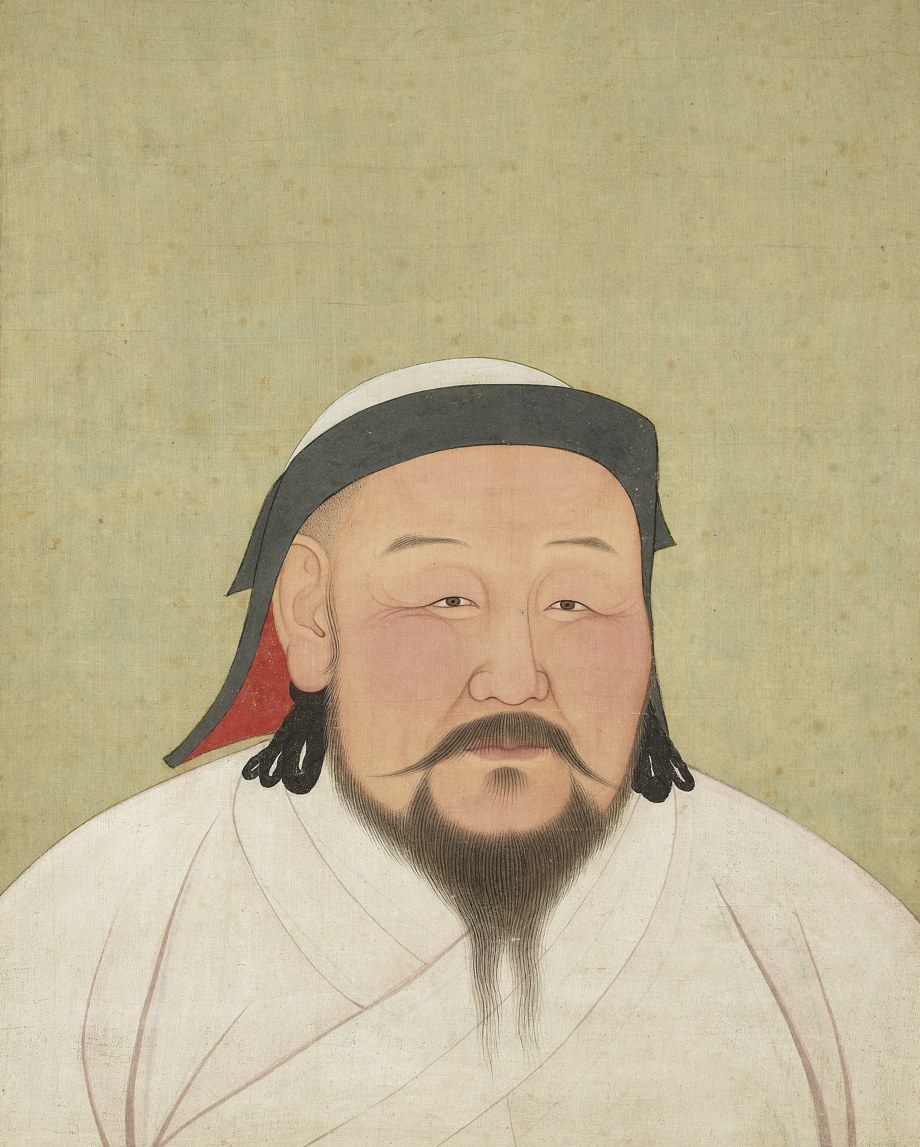
Portrait of Kublai Khan
The Conqueror Who Sat Down
His grandfather had ruled from horseback. Genghis Khan built the largest contiguous land empire in history without ever wanting to govern a city, and is said to have entertained the idea of turning the farmland of North China into pasture for Mongol horses. Kublai inherited the same machine of conquest and pointed it at the opposite ambition. He did not want to raid China; he wanted to be its emperor — to sit on the Dragon Throne, take a dynastic name out of the Book of Changes, perform the Confucian sacrifices, and rule the most populous and sophisticated civilization on earth as one of its own. In 1271 he proclaimed the Yuan; by 1279 he had crushed the last resistance of the Southern Song and become the first non-Han ever to rule all of China. The steppe had finally produced a man who understood that you cannot keep a country you only know how to plunder.
Born in 1215, the son of Tolui and the formidable Sorghaghtani Beki, Kublai came to power not by inheritance but by force of will: he won the throne in a four-year civil war against his younger brother Ariq Böke, a war that broke the unity of the Mongol Empire forever and left Kublai supreme over China but only the nominal overlord of khanates that now went their own way. From his new capital at Dadu — modern Beijing — and his fabled summer city of Shangdu, the Xanadu of Coleridge's dream, he governed an empire of perhaps a hundred million people through a hybrid apparatus of his own design: Chinese bureaucracy harnessed to Mongol command, with foreigners like the Venetian Marco Polo brought in to keep the Chinese literati from monopolizing the state. He was, in the fullest sense, the ENTJ as world-builder — a commander who conquered an empire and then, harder still, set out to administer it.
Kublai Khan was the ENTJ at the scale of empire — a man whose dominant Te built institutions the way his grandfather had built armies, governed by a single unshakable Ni vision of a steppe khan ruling as a Chinese emperor, and undone at the last by the two things command could not reach: an appetite that bloated him and a grief that broke him.
The Builder of the Machine
Te — dominant
Dominant Te wants to impose order on the external world and measures itself by results that stand up in stone, ledger, and law. Kublai's entire reign is a Te project. He did not merely conquer the Southern Song — a campaign that had defeated his predecessors for a generation — he engineered the conquest with a systematizer's patience: building a navy where the steppe had none, recruiting Chinese and Persian siege engineers, and grinding down the fortress city of Xiangyang over a five-year siege rather than risk the open gambits his cavalry ancestors had favored. Te does not need the glory of the charge; it needs the city to fall and stay fallen.
What followed the conquest is the purer evidence. Genghis had governed by terror and tribute; Kublai governed by institution. He resurrected and extended the Grand Canal so that grain could move from the rice-rich south to feed his northern capital. He systematized the jam, the postal relay network, into a continent-spanning courier system of staffed stations and fresh horses that astonished Marco Polo — the Te mind's instinct that an empire is only as real as its ability to move information and command across distance. He issued paper currency backed by the state and tried to make it the sole legal tender, centralizing the economy under his own hand. He commissioned a new universal script from his Tibetan preceptor, the 'Phags-pa alphabet, intended to write every language of the empire in one system — a bureaucrat's dream of standardization that the world was not ready to adopt. Each of these is the same impulse: take a sprawling, conquered reality and run a grid of administration through it.
Crucially, Te governs by deploying the best available tool regardless of sentiment, and Kublai's hybrid state was a masterclass in that cold efficiency. He adopted the Chinese bureaucratic apparatus because it worked, but he refused to be captured by it: he froze the Confucian examination system that produced the scholar-officials, ranking the population into a four-tier caste that kept Mongols and their foreign administrators above the Han majority. He used Chinese methods without surrendering to Chinese control — a calculated division of labor that no purely Sinophile ruler and no purely steppe warlord would have struck. It is Te in its imperial form: not loyalty to a tradition, but ruthless assembly of whatever produces a functioning state.
The Single Vision
Ni — auxiliary
If Te gave Kublai the means, auxiliary Ni gave him the one idea that organized everything the means were for. Ni in the ENTJ is the long convergent vision that all that outward building serves — and Kublai's vision was singular, heretical, and decades ahead of his peers: that the Mongol conquest of China should not end in extraction but in transformation, that a grandson of Genghis could and should rule the Middle Kingdom not as a foreign occupier but as a legitimate Son of Heaven. Where his brother Ariq Böke and the conservative princes of the steppe saw China as a treasury to be looted and a homeland to be defended, Kublai saw a throne to be inherited.
The proof that this was a genuine vision and not mere opportunism is how early and how consistently he committed to it. Long before he was Khan, governing the Chinese borderlands for his brother Möngke, he gathered Confucian advisers around him, studied Chinese statecraft, and built a reputation among the literati as a Mongol who might actually understand them. When he took power he chose a Chinese reign-name, Yuan — “the Origin,” drawn from the Classic of Changes — rather than a Mongol one, signaling that he intended to found a Chinese dynasty in the historical line, not a Mongol regime perched on top of one. He moved his capital from the steppe-facing Karakorum down to Dadu, sited and laid out according to Chinese cosmological principles. Ni works backward from a destination, and Kublai had fixed the destination — a settled, legitimate, sinicized empire — and bent his entire reign toward arriving there.
What keeps this Ni in the ENTJ rather than the INTJ register is that the vision was always yoked to action and never retreated into private contemplation. Kublai did not theorize about a unified empire; he conquered the south, dredged the canal, and built the city that would remain China's capital for most of the next seven centuries. The dream of a Mongol emperor of China was audacious to the point of impossibility — and he made it concrete enough to outlast him by generations. That is auxiliary Ni at its best: a horizon held steady while a dominant Te marches the empire toward it.
The Appetite and the Spectacle
Se — tertiary
Tertiary Se gives the ENTJ its taste for the tangible magnificence of power — the feast, the hunt, the palace, the sheer sensory display of having won. Kublai indulged it on an imperial scale. Shangdu, his summer capital, was the stuff of legend even in his own lifetime: a walled pleasure-city set in a great hunting park, with a marble palace and, according to Polo, a movable cane palace of gilded and lacquered bamboo that could be struck and re-erected. It is no accident that this is the one place in the entire Mongol enterprise that lodged in the European imagination as a vision of earthly paradise — “In Xanadu did Kubla Khan / A stately pleasure-dome decree.” The man built a monument to appetite, and the West remembered him for it.
The hunts and banquets were Se as theater of dominion. Polo describes great ceremonial hunts with thousands of beaters and trained leopards riding to the chase on horseback, and New Year and birthday feasts where tens of thousands dined and the Khan's health was drunk to the sound of every instrument in the empire. This was not idle pleasure; for an ENTJ it was power made visible and edible, the conquered world laid out as a table. Se craves the immediate, physical confirmation that the vision has landed in the real — and few rulers in history staged that confirmation more lavishly.
But tertiary Se is also a trap, and Kublai fell into it hard. The same appetite that filled Shangdu with spectacle filled the Khan himself: in his later years he grew grossly obese, crippled by gout, and increasingly given to drink, his body a ruin of the very sensual excess he had commanded. The lower function that had served as the pageantry of triumph curdled, in grief and old age, into mere overindulgence — the conqueror consumed by the consuming.
The Grief That Command Could Not Reach
Fi — inferior
Inferior Fi is the ENTJ's hidden interior — the private, intensely personal feeling that the commanding outer self has no language for, and that, when it breaks, breaks everything. For most of his life Kublai kept his Fi in its proper subordinate place, expressed as fierce personal loyalty to the few who held his trust. Chief among them was his empress Chabi, who was far more than a consort: she was a political counselor whose judgment he relied on, credited with tempering some of his harsher impulses toward the conquered Chinese and pressing the case for governing them with restraint. The other was their son Zhenjin, the heir Kublai had raised in the Confucian mold to inherit the sinicized empire his Ni had envisioned — the living continuation of the whole project.
Then inferior Fi did what inferior Fi does to the ENTJ: it took its revenge through loss. Chabi died in 1281; Zhenjin in 1286. The man who had out-generaled the Song, who had built a continental postal system and a new capital and a new dynasty, had no apparatus for grief. The same constitution that made him unstoppable in the external world left him defenseless in the internal one. He withdrew, drank, ate, and swelled. The administrative grip loosened; the campaigns of his last decade were managed without his old fire. The empire-builder whom no enemy could break was broken from the inside, by the two deaths that touched the one part of himself he had never learned to govern.
It is the classic ENTJ tragedy, written at imperial scale. The dominant function conquers the world; the inferior function, neglected and unschooled, waits — and collects its debt at the end, in the only currency the commander never managed to master.
Why ENTJ Over INTJ
Why not INTJ?
The INTJ shares the same Ni vision and Te execution, but in reversed priority: a detached strategic planner whose primary life is internal, who engages the world selectively and from a remove. Kublai was the opposite kind of animal — an outward, commanding, expansive doer whose genius was active worldly mastery, not private strategy. He led conquests in person, staged his power in lavish spectacle, governed by ceaseless institution-building, and was driven by an appetite for the tangible that an Ni-dominant would never have indulged so far. His vision served his command; it did not replace it. That is Te over Ni — the ENTJ ordering.
The deciding evidence is where Kublai lived his life: outward, in the field, in the council, at the table, at the head of the state. An INTJ's power flows from the inner model patiently refined and applied with surgical economy; Kublai's flowed from relentless engagement with the physical and political world — armies raised, cities built, rivers redirected, feasts thrown, an entire administration assembled in real time. His singular idea of a sinicized Mongol empire was real and load-bearing, but it was the rudder of a man of action, not the inner sanctum of a strategist. He conquered and governed because he could not do otherwise; the dominant Te needed the world to act upon, and the world it chose was the largest one available.
Connected Figures
Further Reading
- Khubilai Khan: His Life and Times — Morris RossabiThe standard scholarly biography in English — definitive on the reign, the institutions, and the late decline.
- The Mongols — David MorganThe best concise history of the empire as a whole; essential context for the fracture that left Kublai supreme only in the east.
- Genghis Khan and the Making of the Modern World — Jack WeatherfordA sweeping, accessible account of the Mongol enterprise that situates Kublai within his grandfather's legacy.
- The Travels of Marco Polo — Marco Polo (trans. Ronald Latham)The primary eyewitness portrait of Kublai's court, capitals, and ceremonies — the source of the West's enduring image of Cathay.
