 Historical Figure MBTI
#414 · 4-6-26 · The Mongol Khanates
Temür Khan
Second Emperor of the Yuan · Kublai's Heir
1265 — 1307
5 min read
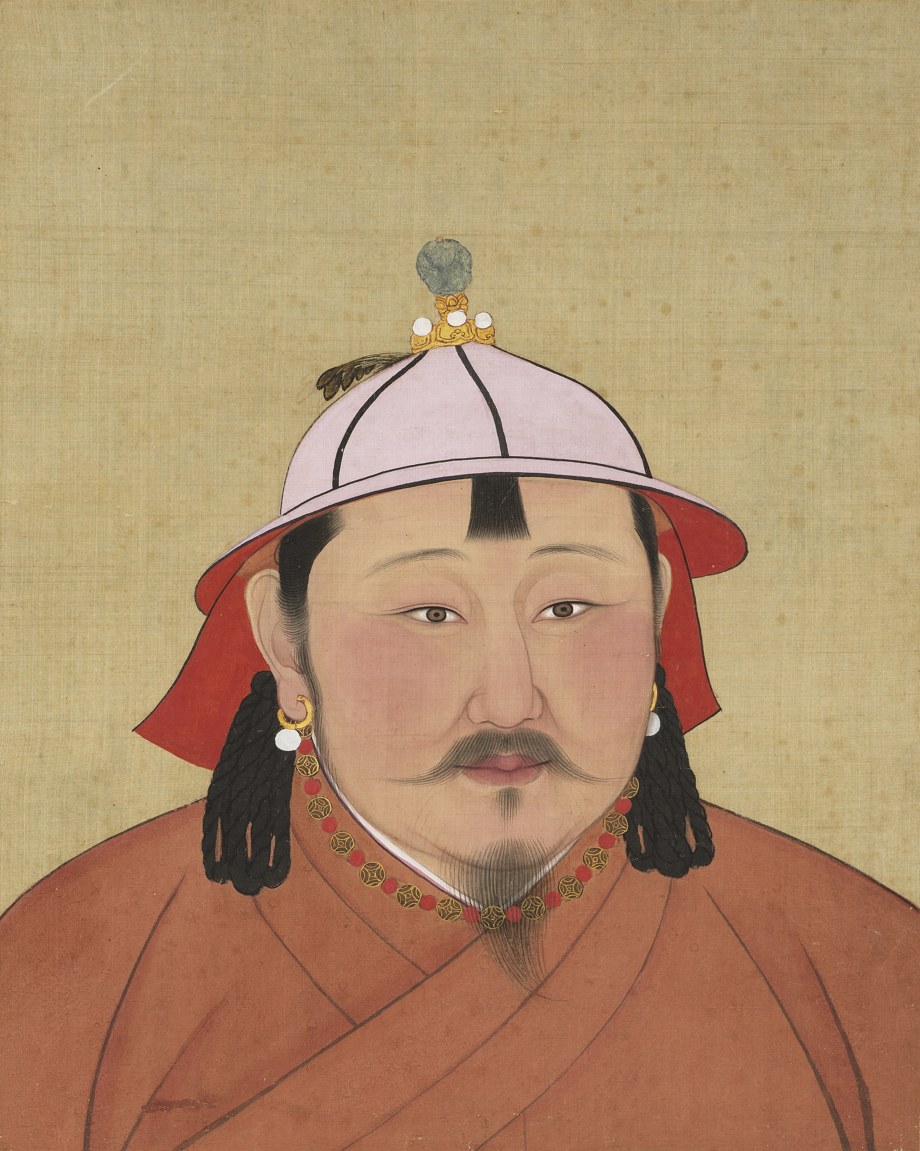
Portrait of Temür Khan
The Steward Who Kept the Inheritance
History remembers the founders and forgets the keepers. Temür Khan — Emperor Chengzong of Yuan in the Chinese histories — was the man who came after the world-builder, and his achievement was the unglamorous one: he held together what his grandfather had made. Grandson of Kublai Khan and son of the late Crown Prince Zhenjin, he inherited the largest contiguous land empire the world had ever seen, already beginning to fracture. He neither expanded it nor lost it. He governed it.
Chosen as heir over his elder brother and enthroned in 1294, Temür ruled for thirteen years as the second Yuan emperor. He ended the ruinous foreign wars his grandfather had pursued to the point of obsession — no more doomed fleets sent against Japan, no more armies bled white in the jungles of Vietnam — and in 1304, after the death of Kublai's great rival Kaidu, he brokered a settlement that briefly did the impossible: the western khanates again recognized the Yuan emperor as supreme overlord. It was the last moment the empire of Genghis would ever be whole on paper.
Temür was the ISTJ in the seat of empire: a dutiful steward governing by precedent, who measured success not by what he built but by what he refused to break.
Governing by Precedent
Si — dominant
Dominant Si trusts what has been established. It does not ask how the world could be reimagined; it asks how the existing order can be preserved and faithfully carried forward. Where Kublai had been a builder — conquering the Song, founding a Chinese-style dynasty, ordering a new capital at Dadu — Temür was a curator of that achievement. He kept the institutions his grandfather had created and ran them as he had received them. His instinct was conservation, not creation.
This is most visible in what he chose not to do. Kublai had poured treasure and lives into foreign invasions — the 1281 expedition against Japan lost an entire fleet to a typhoon, and the southern campaigns into Đại Việt and Champa achieved little at enormous cost. Temür simply stopped, recognizing these wars as expensive departures from sound stewardship and returning the empire to a consolidating posture. A more visionary ruler might have dreamed of new conquests; Temür dreamed of a balanced ledger and a quiet frontier. Even his accession fit the pattern: he was raised over his elder brother by the great ministers and the faction of his grandmother Chabi — the continuity candidate, the steady hand chosen over the bold one.
The Competent Administrator
Te — auxiliary
If Si told Temür what to protect, auxiliary Te told him how to manage it. Ending the foreign wars was not merely a conservative reflex but an administrative judgment: the empire's strength lay in its productive interior, not in unwinnable campaigns at its edges. He cut the losses and reallocated the attention.
His signal accomplishment was diplomatic, and it was Te at its most effective. For decades the house of Kublai had warred with Kaidu, the Ögedeid prince who contested the Great Khan's supremacy across Central Asia. When Kaidu died in 1301, Temür did not press for total victory; he negotiated. By 1304 he had engineered a broad peace that brought the western houses — Chagatai, the Golden Horde, the Ilkhanate — back to acknowledging the Yuan emperor as nominal overlord. It was a settlement, not a triumph: the durable, practical arrangement a Te administrator prefers to a glorious but exhausting war.
Yet Te has limits when it inherits rather than designs. Temür kept the system running but did not reform it; beneath the stability the dynasty's finances began to strain under lavish grants to the nobility and an inflating paper currency. He managed the empire competently. He did not fix its deeper accounts.
Duty as a Private Code
Fi — tertiary
Tertiary Fi in an ISTJ rarely announces itself. It surfaces as a quiet, internalized sense of obligation — loyalty to family, to inheritance, to the duty one was born into. Temür's reign reads as the discharge of an inherited responsibility: the son of a crown prince who died before he could rule, he carried his father Zhenjin's thwarted mandate forward as a personal charge. Preserving Kublai's empire was, for him, less a policy than a debt owed to the men who came before.
This loyalty extended to the Confucian-influenced ideal his father had embraced — that a ruler holds the realm in trust and governs for its stability. Temür was no philosopher-king, but he honored the principle in his conduct: steady, restrained, reluctant to gamble the inheritance on personal ambition. The values were felt rather than argued, expressed through dutiful action rather than proclamation.
No Plan for the Unforeseen
Ne — inferior
Inferior Ne is the blind spot of the ISTJ: a discomfort with open-ended possibility, a difficulty imagining futures that depart sharply from the established pattern. The steward who excels at maintaining what exists can be undone by the contingency he never planned for — and Temür's reign ended on exactly that failure.
He died in 1307 without a surviving heir. His only son had predeceased him, and he had made no settled provision for the succession — the one act of imagination a dynasty most requires from its keeper. The result was the precise disorder his stewardship had been meant to prevent: a contested succession, a scramble among rival branches, and the onset of the chronic instability that would plague the Yuan thereafter. The man who had reunited the khanates on paper could not secure the throne in his own palace.
His final years sharpened the picture: he grew ill and increasingly given to drink, the steady hand faltering without a steady plan for what came after. Inferior Ne does not fail at the routine; it fails at the unprecedented problem — and a succession with no candidate is the most unprecedented problem a hereditary ruler can leave behind.
Why ISTJ Over ESTJ
Why not ESTJ?
The ESTJ is the outward commander — the expansive organizer who leads from the front, builds new structures, and projects authority into the world. That was Kublai, the founder who conquered an empire and remade it. Temür was the opposite temperament: an inward, steady maintainer whose achievement was consolidation and continuity, not conquest or construction. He led with Te, but it followed Si — an executive competence in service of preserving an inherited order, not extending it. The ESTJ asks what can be built next; Temür asked what must be kept whole.
The distinction is one of direction. Both types value order, duty, and competent administration — but the ESTJ's order pushes outward into new territory, while the ISTJ's looks inward to the established system and guards it. Temür's career was a defense of an inheritance: ending wars rather than starting them, settling rivalries rather than crushing them, conserving Kublai's machine rather than rebuilding it. That is the dominant-Si steward, not the dominant-Te commander.
Connected Figures
Further Reading
- Khubilai Khan: His Life and Times — Morris RossabiThe standard English biography of Temür's grandfather; essential for the empire and institutions Temür inherited.
- The Cambridge History of China, Vol. 6: Alien Regimes and Border States, 907–1368 — Herbert Franke & Denis Twitchett (eds.)The authoritative scholarly account of the Yuan, including Chengzong's reign, the khanate settlement, and the dynasty's fiscal strains.
- Conquerors and Confucians: Aspects of Political Change in Late Yüan China — John W. DardessTraces the political culture of the Yuan court and the succession instability that followed Temür's heirless death.
