 Historical Figure MBTI
#412 · 4-6-26 · The Mongol Khanates
Kaidu
Lord of Central Asia · Kublai's Unyielding Rival
c. 1230 — 1301
6 min read
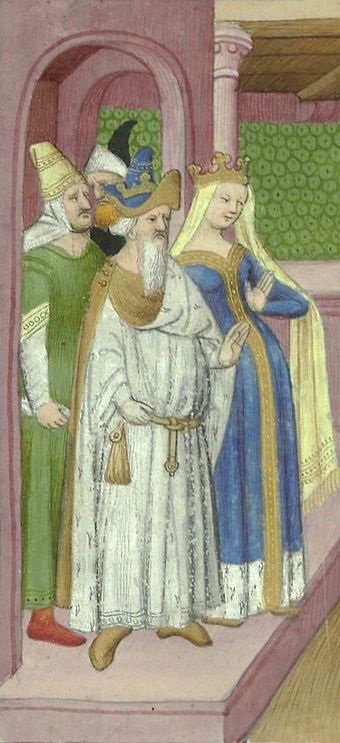
AI-assisted Portrait of Kaidu
The Heir Who Refused to Be Disinherited
He was born into a losing position and spent forty years overturning it. Kaidu was a grandson of Ögedei, the second Great Khan — which should have placed him near the center of the Mongol world. Instead the Toluid Revolution of 1251 stripped the supreme title from the house of Ögedei and handed it to the line of Tolui, executing or exiling the senior Ögedeid princes. Kaidu came of age in a family that had been deliberately broken, meant to disappear into the margins of the steppe. He declined to disappear.
From a modest Central Asian appanage he built, over the second half of the thirteenth century, the dominant power between the Altai and the Oxus. For more than thirty years, from roughly 1269 until his death in 1301, he was the one Mongol prince Kublai Khan could neither buy nor beat. While Kublai ruled China as the Yuan emperor and remade himself as a Chinese sovereign, Kaidu set himself up as keeper of the older, harder, un-Sinicized Mongol way — and made resistance to the Yuan the organizing principle of an entire state.
Kaidu was the ENTJ as state-builder: a commanding will (Te) yoked to a decades-long strategic vision (Ni), turning the grievance of a disinherited line into a durable Central Asian empire that outlived everyone who had tried to write his family out of history.
The Builder of a State From Nothing
Te — dominant
Dominant Te wants control made concrete — institutions, supply, a working machine that produces results. Kaidu inherited none of these and assembled all of them. He did not merely raid and retreat in the old steppe fashion; he organized. He regulated the trans-Asian trade routes crossing his territory, struck his own coinage, garrisoned the cities of the Tarim and Transoxiana, and protected the settled commerce that funded armies — understanding, as a Te operator does, that a thirty-year war has to be paid for every single year.
His command of the Chagatai khanate was a study in Te dominance over a rival power. Rather than conquer it outright and open a war on two fronts, he managed it: he backed pliable khans, deposed the overreachers, and bent the whole Chagataid apparatus toward his own ends until its armies effectively served his. And he never submitted. Kublai offered titles and the comfortable settlement that absorbed so many Mongol princes into the Yuan order; Kaidu refused it all, because submission meant surrendering the one thing dominant Te cannot give up — authorship of his own enterprise.
The Thirty-Year Vision
Ni — auxiliary
What separates a warlord from a state-builder is the time horizon, and Kaidu's was extraordinary. Auxiliary Ni gave his Te a single converging aim he held without wavering across three decades: to deny the Yuan its claim to be the whole Mongol world, and to keep a center of gravity for the old nomadic order in the heart of Asia. He was not chasing the next victory; every campaign and coin served one long arc bending toward a settled end-state in which Central Asia answered to the steppe, not to Khanbaliq.
That vision also told him what to keep. Where Kublai embraced Chinese statecraft and the apparatus of a sedentary empire, Kaidu read the same trend and drew the opposite conclusion — that the Mongols' advantage lay in the nomadic discipline Genghis had forged, and that to become Chinese was to dissolve. He made himself guardian of the jasagh, the traditional law, grasping that an alternative order needs an alternative legitimacy. The proof is the persistence: most rebellions burn out in a season, but Kaidu held a coherent state against the richest empire on earth for the better part of a lifetime — a future kept so steadily in mind that it reorganized the present around itself.
The Commander in the Saddle
Se — tertiary
Tertiary Se kept Kaidu's grand design anchored in the physical realities of the steppe. He was no remote planner; he led in the field across the brutal theater of Central Asia, reading terrain and the shifting loyalties of mobile armies with the tactical alertness the nomadic way demanded. The thirty-year war was fought not on a map but in real cavalry engagements along the Yuan frontier and in the valleys of Transoxiana — an Ni vision executed through hard, repeated action by a man who preferred the saddle to the palace and defended the old ways with the conviction of one who actually inhabited them. It is fitting that the end came in the field: Kaidu died in 1301 after one last campaign against the Yuan, worn down on the very ground he had spent his life contesting.
The Grievance He Never Released
Fi — inferior
Inferior Fi in an ENTJ surfaces as a buried, non-negotiable conviction — a single deep value the otherwise pragmatic operator will not bargain away. For Kaidu it was the wrong done to his house. The Toluid Revolution that disinherited the Ögedeids was, to him, an injustice the whole architecture of his life was built to answer. A purely strategic mind might have made peace once a comfortable settlement was on offer; Kaidu never could, because beneath the statecraft sat a personal cause he would not abandon.
The same weak function shows in how thin his web of trust ran. His alliances were instrumental and provisional, and the cost came after him: Fi is what secures succession through loyalty and shared belief, and there Kaidu was weakest. The realm he built rested so heavily on his own will that it fractured within a generation of his death, his sons unable to hold what his grievance and his genius had assembled.
Why ENTJ Over ISTJ
Why not ISTJ?
The traditionalist resistance to Kublai reads easily as ISTJ — a dutiful defense of inherited custom. But compare Kaidu to his fellow steppe-loyalist Ariq Böke, who fought to conserve the homeland as he found it. Kaidu did what an ISTJ rarely does: he treated tradition as a foundation to build a larger structure on, forging an expansionist state that had never existed before and inventing an alternative Mongol center. That is construction in the service of a vision (Te–Ni), not the careful preservation of an established order (Si–Te).
The distinction is between a guardian and a founder. The ISTJ resists change to keep what is; Kaidu resisted the Yuan in order to make something — a durable, independent realm answerable to his own design. His conservatism was a banner, not a brake: he invoked the old nomadic order because it lent his enterprise legitimacy, but the enterprise itself was relentlessly ambitious and personal, the project of a man building his own power on a continental scale. That is the ENTJ signature — resistance reimagined as empire-building.
Connected Figures
Further Reading
- Qaidu and the Rise of the Independent Mongol State in Central Asia — Michal BiranThe definitive study — a full account of how Kaidu built and held his realm, and the only book-length treatment of the man in English.
- The Mongols — David MorganThe standard one-volume history of the empire; situates Kaidu's war within the wider fracturing of the Mongol world after Genghis.
- The Travels of Marco Polo — Marco Polo (trans. Ronald Latham)The contemporary outsider's view — Polo, writing from Kublai's court, records the western khan who refused to submit.
