 Historical Figure MBTI
#413 · 4-6-26 · The Mongol Khanates
Ghazan
Ilkhan of Persia · The Khan Who Chose Islam
1271 — 1304
9 min read
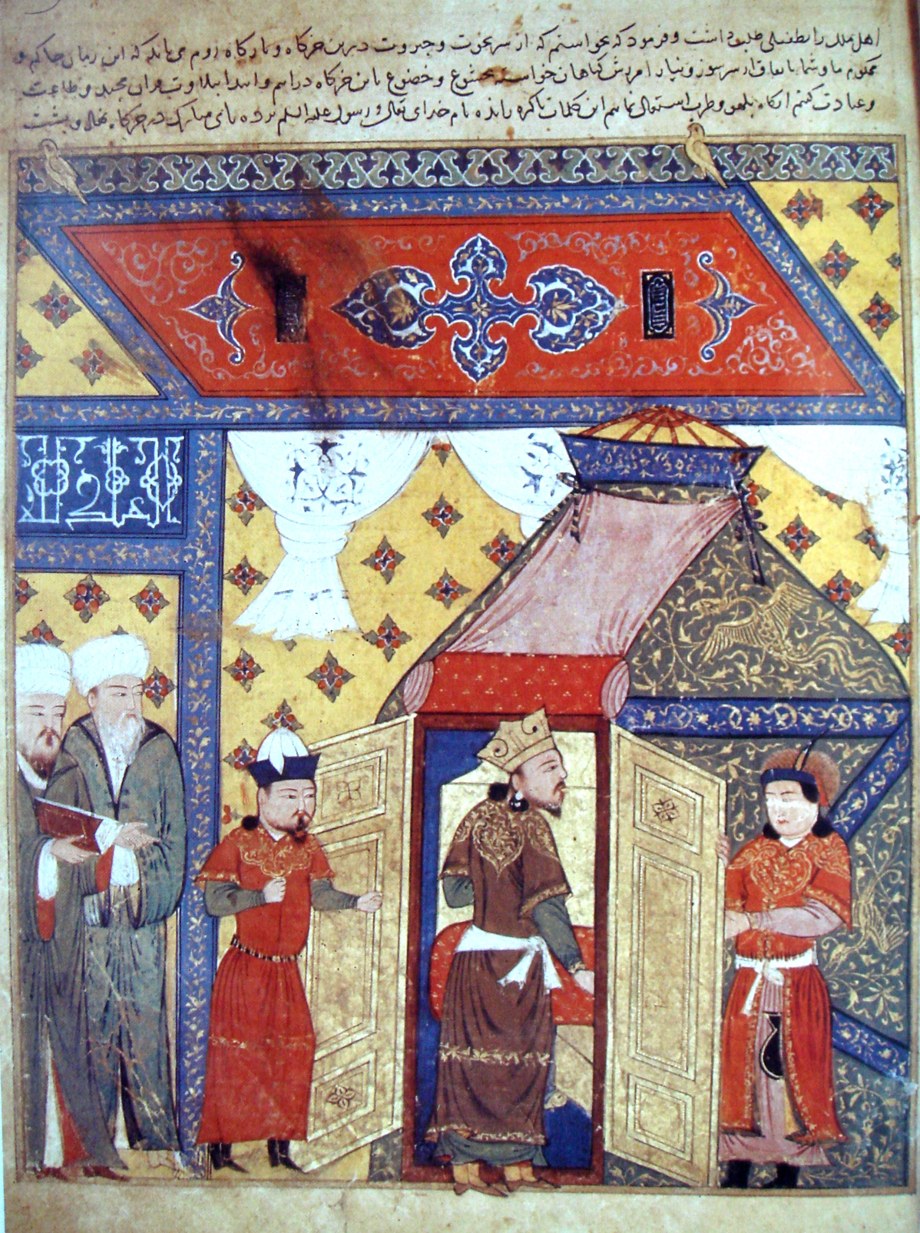
Portrait of Ghazan
The Conqueror Who Conquered Nothing
Four generations after Genghis Khan's horsemen burst out of the steppe, his line had spread across half the world but begun to fray. In Persia, the realm carved out by Hulagu—the Ilkhanate—was exhausted: its treasury looted by its own officials, its currency debased, its farmland abandoned, its Mongol overlords still ruling as foreign pagans over a Muslim population they did not understand. The man who inherited this wreckage in 1295 was a small, reputedly homely warrior-prince of twenty-three with one of the most formidable minds the Mongol dynasty ever produced. He was Ghazan, seventh Ilkhan of Persia, and he is remembered not for what he seized but for what he rebuilt.
His first act on taking the throne was the most consequential of his reign and the least military: he converted to Islam. It was a decision of breathtaking strategic clarity. At a stroke, the dynasty of Buddhist and shamanist outsiders became a Muslim dynasty ruling a Muslim land—legitimate, native, permanent. Then, with his great vizier Rashid al-Din, Ghazan turned to the machinery of the state itself: taxation, coinage, weights and measures, the postal relay, irrigation, the courts. He did not expand the Ilkhanate so much as he redesigned it from the inside, and a war-shattered Persia returned to prosperity under his hand. He is the INTJ reformer in his purest historical form—a man whose genius was not conquest but architecture.
Ghazan's power was the INTJ signature: Ni's long sight paired with Te's ruthless execution—a ruler who saw, decades ahead, what his dynasty had to become, and then rebuilt an entire state to make the vision real.
The Pivot No One Else Could See
Ni — dominant
Dominant Ni is the capacity to perceive, beneath the surface of events, the single hidden trajectory that everything is bending toward—and to act on it before the evidence is undeniable. Ghazan's conversion to Islam was Ni made political. His predecessors had spent decades oscillating: courting the Christians against the Mamluks, leaning on Buddhist clergy, ruling as conquerors atop a population that would never truly accept them. Ghazan saw what none of them had been willing to commit to—that the Mongols of Persia could not remain foreign forever, that legitimacy in this land flowed through one faith, and that the dynasty's survival depended on assimilation, not domination. He did not convert out of piety alone; he converted because he could see the future shape of his realm and chose to build toward it.
The same long sight produced his most astonishing cultural commission. Ghazan directed Rashid al-Din to compile the Jami al-Tawarikh—the “Compendium of Chronicles”—a project that gathered the histories of the Mongols, the Chinese, the Indians, the Franks, the Muslims, and the ancient world into a single integrated narrative. It is arguably the first true world history ever written, and it could only have been conceived by a mind that instinctively reached for the largest possible frame. Ni does not catalogue particulars; it synthesizes them into one coherent vision of how everything connects. Ghazan looked at the fractured, multi-civilizational world his ancestors had conquered and saw that it formed a single story—and then he had it told.
This is the deep difference between Ghazan and the warriors he descended from. They saw territory; he saw systems and centuries. Where Genghis and Hulagu read the world as a map of conquerable ground, Ghazan read it as a structure that could be redesigned—a state to be re-engineered, a dynasty to be made permanent, a history to be unified. The visionary, not the warlord, is the truest expression of his intelligence.
The Machinery of Reform
Te — auxiliary
A vision is inert until it is built, and auxiliary Te is the faculty that builds. Where Ni supplied the destination, Te supplied the engineering—the willingness to tear out a broken system and replace it with one that actually works. The Ilkhanate Ghazan inherited was a study in administrative collapse: tax farmers extorting peasants into flight, the coinage so debased that trade had seized up, weights and measures varying from town to town, the postal relay (the yam) abused by officials who requisitioned mounts and supplies at will. Ghazan attacked every one of these problems with the methodical, results-driven temperament of the natural systems-builder.
With Rashid al-Din as his instrument, he fixed the tax rates and had them published and posted so peasants could not be cheated; he reformed and standardized the currency, weights, and measures across the realm; he disciplined the postal system; he restored abandoned farmland by guaranteeing cultivators the fruits of reclaiming it. These are not the gestures of a romantic. They are the unglamorous, granular levers of statecraft—and Ghazan pulled them with a precision that turned a bankrupt domain prosperous again within a few years. Te measures success by outcomes, and the outcome here was an empire that paid its bills and fed its people.
His intellect ran to the systematic in every direction. He spoke Mongolian, Persian, and Arabic, and was credibly reported to have some command of Latin, Chinese, and Hindi; he studied history, astronomy, alchemy, and natural science with genuine seriousness, building an observatory and surrounding himself with scholars. This is the INTJ's characteristic marriage of the conceptual and the practical: a mind that delights in understanding how things work—states, stars, languages, metals—and then puts that understanding to use. The reformer and the polymath are the same person.
Conviction Beneath the Calculation
Fi — tertiary
It is tempting to read Ghazan's conversion as pure strategy—Ni and Te conspiring to secure a throne—and the strategic logic was certainly there. But tertiary Fi gives the INTJ a private inner compass, a set of convictions held quietly and adhered to with stubborn personal force. Ghazan did not convert nominally and move on. He embraced Islam in earnest, ordered the destruction of Buddhist temples and other non-Muslim structures that had stood under his predecessors, and reoriented the spiritual identity of the entire dynasty around his own. A purely cynical ruler hedges; Ghazan committed, because once his inner conviction settled, it governed.
Tertiary Fi in an INTJ rarely shows itself as warmth toward individuals. It shows as a deep, impersonal sense of how things ought to be—a conviction about justice and order that drove his reforms as much as efficiency did. His insistence on protecting peasants from extortion was good economics, but it also carried the flavor of a man genuinely offended by a corrupt and disordered world. The reforms were Te in their method and Fi in their motive: an empire put right because its ruler could not abide its being wrong.
The Frontier He Could Not Hold
Se — inferior
Inferior Se is the INTJ's least reliable register: the world of immediate physical action, of seizing and holding ground in real time. Ghazan was no coward—he was a Mongol prince bred to war, and he prosecuted the long campaign against the Mamluks of Egypt with vigor. In 1299 he won a major victory at Wadi al-Khazandar and briefly entered Damascus, the high-water mark of Mongol arms in Syria. For a moment the old conqueror's dream seemed within reach.
And then it slipped away. He could win the battle but not keep the country; Mongol control of Syria proved impossible to consolidate, and the Mamluks recovered the ground. There is something fitting in this. The theater where Ghazan fell short was precisely the one his great-grandfather Hulagu had dominated—the open field of conquest, the seizing and holding of territory by force. Ghazan's gifts lay in design, not in the Se domain of raw expansion. The empire he truly mastered was the one he could reorganize from a desk with Rashid al-Din, not the one he had to take and hold at sword-point.
He died in 1304, only thirty-two years old—his body, like many of the early Ilkhans, worn out young. The brevity is its own kind of tragedy: the most capable mind the dynasty produced was given less than a decade to use it. That he transformed Persia anyway, in so short a span, is the measure of how concentrated his genius was.
Why INTJ Over ENTJ
Why not ENTJ?
The ENTJ is the dynasty's native type—the expansive, frontal commander who takes the world by seizing it. That is Hulagu, Genghis, and Kublai: men who built by conquering. Ghazan's genius ran the other way. He inherited a realm rather than carving one, and his decisive moves were internal—a strategic conversion, a fiscal overhaul, a universal history. His failure to hold Syria is exactly where the ENTJ would have pressed and succeeded; his triumph in redesigning the state from within is exactly where the introverted visionary excels.
The distinction is between the conqueror and the architect. The ENTJ's extraverted Te leads outward, into the marshalling of forces and the expansion of frontiers; Ghazan's dominant Ni led inward and forward, into the long-range restructuring of an entire civilization's machinery. He remade a state rather than seizing one—converting a dynasty, rebuilding a treasury, commissioning a history of the world. That is design, reform, and intellect at the helm: the cerebral INTJ visionary, not the expansive warlord his bloodline expected him to be.
Connected Figures
Further Reading
- Medieval Persia 1040–1797 — David MorganThe standard survey of the period; situates Ghazan's reforms and conversion within the long arc of medieval Iranian history.
- Early Mongol Rule in Thirteenth-Century Iran — George LaneA revisionist account arguing the Ilkhanate fostered a genuine cultural and administrative renaissance — essential context for Ghazan's achievement.
- The Cambridge History of Iran, Vol. 5 — ed. J. A. BoyleThe authoritative reference on the Saljuq and Mongol periods, with detailed treatment of the Ilkhanid state and Ghazan's administration.
- Jami al-Tawarikh (Compendium of Chronicles) — Rashid al-DinThe world history Ghazan commissioned — the primary monument of his reign and one of the great works of medieval historiography.
