 Historical Figure MBTI
#415 · 4-7-26 · The Age of Travelers
Marco Polo
Venetian Merchant · Traveler · Chronicler of the Mongol East
1254 — 1324
11 min read
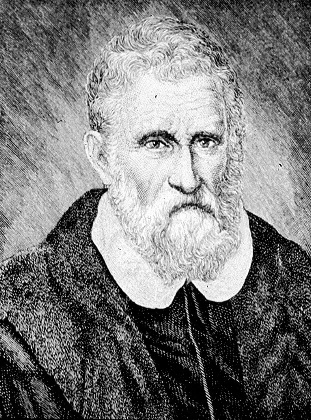
Portrait of Marco Polo
The Boy Who Came Back With a World
In 1271 a seventeen-year-old Venetian set out east with his father and uncle and did not see home again for twenty-four years. He crossed Persia and the Pamir passes, skirted the Taklamakan, and spent more than a month traversing the Gobi before reaching the summer court of the most powerful man on earth. When he finally returned to Venice around 1295 — weathered, foreign-mannered, his clothes Tartar-cut — his own relations are said not to have recognized him. He had been gone so long that the city had given him up. What he brought back was not a fortune in jewels (though the legend insists on those, sewn into his coat) but something stranger and more durable: a description of the world that Europe did not yet know it lived in.
Marco Polo (1254–1324) was a merchant by trade and an envoy, by his own account, in the service of Kublai Khan, whose empire stretched from the Pacific to the edge of Europe. But his lasting role was none of these. It was the one he stumbled into late, in a Genoese prison cell around 1298, when he dictated everything he had seen to a fellow inmate. The book that resulted — Il Milione, the Description of the World, the Travels — described cities greater than any in Christendom, paper that served as money, black stones that burned like wood, a postal network of mounted relays spanning a continent. Much of Europe read it as fiction. The nickname Il Milione was half-affectionate, half-mocking: the man of a million tales, a million exaggerations, a million lies.
The skeptics were not entirely wrong to wonder. Polo's book is vague where a careful witness would be precise, silent on things a long-term resident of China could hardly miss, and prone to the kind of wide-eyed wonder that inflates a good story. Scholars still argue over how much he embellished — and a few over whether he reached China at all. But the argument itself reveals the man. Marco Polo was not a surveyor or a spy. He was a noticer, a marveler, a teller — a mind that ranged across the entire visible world and could not stop pointing at what was astonishing in it.
That is the ENFP signature: dominant Ne drinking in the sheer variety of the world, fused with an Fi so personal that the wonder reads as confession. Polo did not catalogue the East. He fell in love with it — and wrote it down so the rest of us could too.
The Appetite for the Strange
Ne — dominant
Dominant Ne is an appetite for possibility — for the next thing, the stranger thing, the thing no one back home would believe. Read the Travels and you watch that appetite at work on every page. Polo does not move through Asia so much as graze across it, lighting on whatever is novel and holding it up to the reader. A bird in Madagascar so vast it can lift an elephant. The asbestos cloth of the Tartars, washed clean in fire. The unicorns of Sumatra (rhinoceroses, ugly and wallowing, nothing like the tapestries). The crocodiles, the spices, the idol-worshippers and fire-walkers and astrologers. The book's organizing principle is not a route or a thesis but wonder itself — one marvel handing off to the next.
What thrilled Polo most was not gold but the fact of difference: that the world held so many ways of being a city, a king, a faith. Kublai's capital astonished him not merely for its riches but for its arrangements — the paper money backed by nothing but the Khan's word and accepted everywhere; the relay stations a day's ride apart, each with horses standing ready, so that a message could outrun any horseman alive; coal, “a kind of black stone,” dug from the hills and burned for heat. These were not treasures he could pocket. They were ideas, and Ne hoards ideas. He reported them with the delight of a man who has seen the future and wants you to see it too.
This is also why the book frustrates anyone looking for a reliable itinerary. Ne does not keep careful ledgers of where it has been; it keeps the highlights. Polo skips, doubles back, forgets a city he surely passed, and lingers for pages on a legend he heard third-hand. The very texture that makes the Travels feel embellished — the breathless accumulation, the indifference to dull connective fact — is the texture of a mind built to seek out the remarkable and let the ordinary fall away.
The Voice That Believed What It Saw
Fi — auxiliary
If Ne supplied the wonders, auxiliary Fi supplied the voice — and it is the voice, more than any single fact, that made the book immortal. Polo does not write like a clerk filing a report. He writes like a man who cannot quite get over what he has been lucky enough to see. The recurring formula of the Travels — “and now I will tell you of a thing well worth the telling” — is the cadence of personal enthusiasm, the storyteller leaning in. Fi gives the auxiliary ENFP a private compass of value: it knows whatmoves it, and it trusts that feeling completely. Polo's standard for what to include was rarely strategic. It was simply: did this strike me as wonderful?
That sincerity is what defeats the charge of mere fabrication. A liar invents to impress; Polo reports to share. Where he repeats a legend he could not have witnessed — the rocs, the Old Man of the Mountain and his drugged assassins — he is usually careful to say he was told it, marking the boundary between his eyes and his ears. The wide-eyed valuing is genuine, and it is contagious; readers forgave the exaggerations because the enthusiasm underneath them was so plainly real. Fi does not argue you into belief. It makes you feel what the writer felt, and trust him for the feeling.
It surfaces, too, in his deathbed line. Pressed by friends and priests in 1324 to recant the tall tales before he met his maker, the old man is said to have answered that he had not told half of what he saw. That is not the defiance of a fraud caught out. It is the Fi conviction of a man for whom the experience was the truest thing he owned — more real, in the end, than the skepticism of everyone who had stayed home.
The Merchant's Eye
Te — tertiary
Polo was, after all, a Venetian merchant's son, and tertiary Te gives the dreamer a working competence in the world of goods, quantities, and systems. For all its marvels, theTravels is also studded with the hard data of commerce: which province yields the best ginger, where the salt monopoly fills the Khan's treasury, how many ships clear a given harbor, what a bolt of a certain silk fetches. Polo noticed money, and he noticed how power was organized to move it. The famous passages on Kublai's paper currency and his relay post are, underneath the wonder, a businessman's admiration for a system thatworks — efficient, scalable, enviable.
But Te sits third in the stack, and it shows. Polo's figures are unreliable, his numbers inflated to the point that gave Il Milione its mocking name. He gestures at scale — a thousand this, a million that — without the auditor's discipline to get it right. His seventeen years of supposed service to the Khan produced no account a modern administrator would recognize: no tax rolls, no campaign logistics, none of the dry machinery a true Te dominant would have foregrounded. The competence is real but secondary, pressed into the service of wonder rather than the other way round. He uses the merchant's eye to measure the marvelous, then hurries back to the marvel.
The Trouble With Dates
Si — inferior
Inferior Si is the ENFP's blind spot: the realm of precise detail, sequence, and faithful recall. It is exactly where Polo's account is weakest, and exactly where his critics press hardest. The Travels is famously slippery on chronology — how long here, what year there, the order of journeys that blur together. He misremembers, conflates, and leaves gaps a diarist would not. The skeptics who ask whether he truly reached China point to the things a long resident should have logged and didn't: no mention of the Great Wall, of tea, of footbinding, of Chinese script. Whatever the explanation, the silence is the signature of weak Si — a mind that retained the feeling of the marvelous and let the granular, verifiable particulars slip away.
The condition of the book makes this worse, and is itself an Si story. Polo did not write theTravels; he dictated it, years after the fact, from memory, in a prison cell, to Rustichello of Pisa, a writer of chivalric romances who supplied the polish and, almost certainly, some of the flourishes. There were no notebooks to consult, no logs to check — only an aging merchant's recollection of a youth spent at the far edge of the world. Inferior Si does not keep the archive; it keeps the impression. What survives is vivid and unreliable in exactly the proportions the type predicts.
And yet the inferior function has its compensations. The same loose grip on tedious fact that makes Polo a poor witness makes him an irresistible one. A scrupulous Si chronicler would have given us an accurate, forgettable gazetteer. Polo gave us a dream of the East — inexact, inflated, and so alive that Christopher Columbus would carry an annotated copy into the Atlantic two centuries later, hunting for the Cathay its author had described.
Why ENFP Over ENTP or ESFP
Why not ENTP?
The ENTP shares Polo's dominant Ne, but pairs it with Ti — a drive to argue, systematize, and pick apart how things work. An ENTP traveler would have come home with a theory: a model of why the Mongol order outperformed Christendom, a debater's case to press on Venice. Polo came home with wonders. His response to the East was not analytic but affective — he valued it, marveled at it, fell for it. That is Ne governed by Fi, not Ti. He wanted you to feel the world's strangeness, not to win an argument about it.
Why not ESFP?
The ESFP is the great sensor of the present moment — alive to texture, immediacy, the thing in front of the body right now. It is tempting for a man who crossed deserts and tasted foreign spices. But Polo's genius was not sensory; it was imaginative. His subject was always the possible and the elsewhere — the city he had heard of beyond the next range, the marvel reported from an island he never reached. Se lives in what is present; Polo lived in what was astonishing, including much he took on faith. The book is a feat of Ne's reach, not Se's presence.
The distinction comes down to motive. Polo did not travel to conquer (Te), to win debates (Ti), or to drink in sensation for its own sake (Se). He traveled, and then wrote, because the world was larger and stranger than anyone at home believed, and he could not bear for them not to know it. Boundless curiosity carried by a sincere, personal voice — Ne fused with Fi — is the ENFP at its purest. The errors and the wonders come from the same source, and so does the love.
Connected Figures
Further Reading
- The Travels of Marco Polo — Marco Polo (trans. Ronald Latham)The book itself — the source of everything. The Penguin Classics edition is the most accessible English rendering of Il Milione.
- Marco Polo: From Venice to Xanadu — Laurence BergreenThe fullest modern narrative biography in English — vivid on the journey, the court of Kublai, and the long road home.
- Marco Polo and the Discovery of the World — John LarnerThe authoritative scholarly study of the book's making, transmission, and immense influence on European geography.
- Did Marco Polo Go to China? — Frances WoodThe sharpest statement of the skeptical case — arguing from the book's curious silences that Polo may never have reached China at all.
