 Historical Figure MBTI
#416 · 4-7-26 · The Age of Travelers
Niccolò Polo
Venetian Merchant · Marco's Father · Pioneer of the Road to Cathay
c. 1230 — c. 1294
8 min read
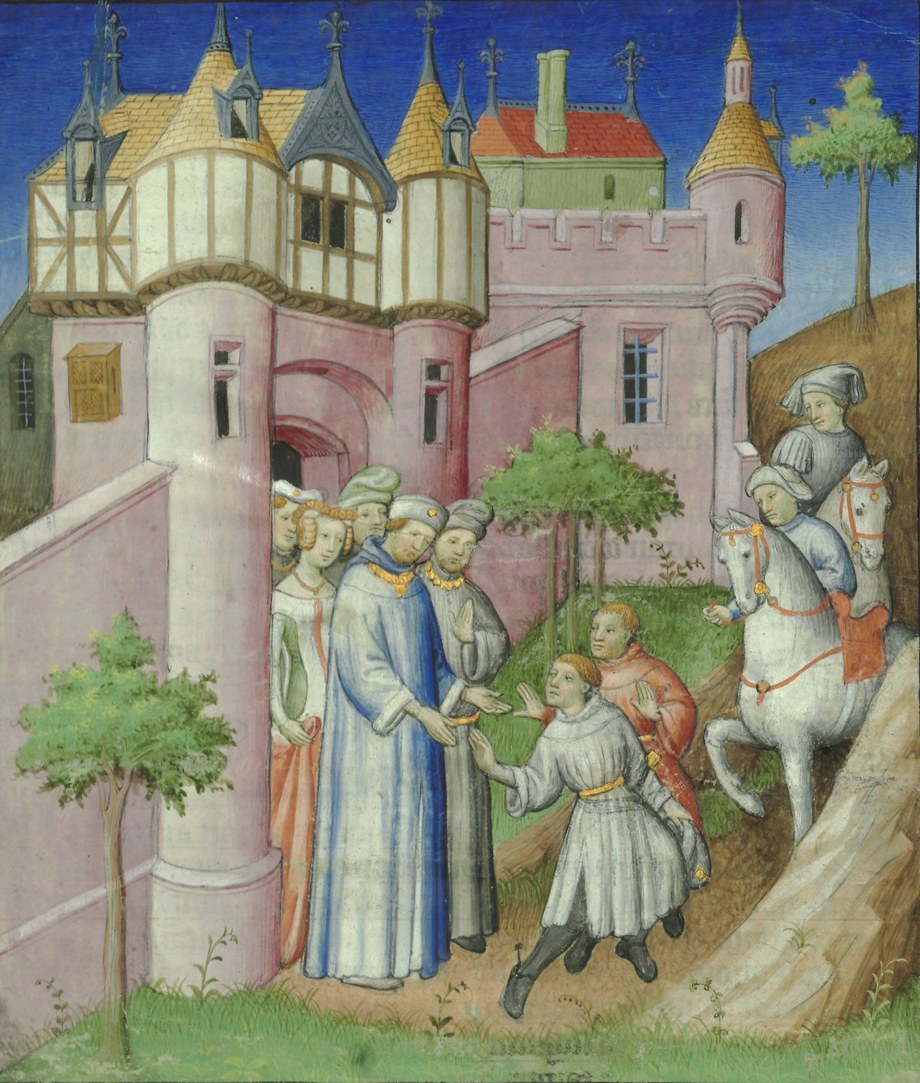
AI-assisted Portrait of Niccolò Polo
The Man Who Walked the Road First
History remembers the son. But the road that Marco Polo made famous was opened a decade earlier by his father—a Venetian merchant who set out east with no map, no guarantee of return, and no idea that the trading run he was improvising would end at the court of the most powerful man on earth. Niccolò Polo was not a writer or a dreamer. He was a businessman who happened to be braver, and luckier, than almost anyone of his age.
Around 1260 Niccolò and his brother Maffeo left Venice's trading colony in Constantinople, ferried a cargo of jewels to the Mongol khan of the Golden Horde at Sarai, and found their way home blocked by war. Rather than turn back, they pushed deeper—east along the caravan roads, across deserts and through cities no Latin merchant had described, until they arrived at the court of Kublai Khan himself. They were likely among the first Western Europeans the Great Khan had ever met. He received them with curiosity, questioned them about the Pope and Christendom, and sent them home as his own envoys, charged with returning bearing a hundred learned men and holy oil from the lamp at Jerusalem.
When he finally reached Venice in 1269, Niccolò learned that his wife had died and that the infant son he had left behind was now a teenager. A different man might have stayed. Niccolò spent two years arranging affairs and then, in 1271, turned around and went back—this time taking the boy. The journey he had made on instinct he now made on purpose, and the son he brought along would spend seventeen years in the Khan's service and a lifetime telling the tale.
Niccolò Polo was the ESTP merchant-adventurer in his natural element—reading a dangerous, shifting world in real time and seizing the opening it offered, pushing forward where caution said turn back, and trusting that a man who keeps moving will find the next deal at the end of the road.
The Man of Action on the Open Road
Se — dominant
Dominant Se lives in the present and acts on it. Where a planner sees risk, Se sees an opening; where a theorist hesitates, Se moves. Niccolò's entire career is the record of a man responding to the world as it actually was in front of him, not the world he had charted in advance. He went to Constantinople because that was where the trade was. He went to Sarai because the jewels would sell. And when the road home closed, he did not retreat to safety—he read the situation, judged that forward was more promising than back, and kept walking into the unknown.
This is the practical man of action at full pitch. The decision to push east toward the Mongol heartland was not romantic adventurism; it was the opportunism of a trader who refuses to sit still while a chance might be slipping away. Crossing deserts and frontier after frontier demanded exactly the Se gifts—physical nerve, adaptability, a tolerance for hardship, and an unsentimental readiness to deal with whoever held power in whatever land he entered. He adjusted to Mongol customs, navigated unfamiliar courts, and turned a stranded merchant venture into an audience with an emperor.
And then he did it twice. The second journey of 1271 is the clearest proof of the type: a man who had already crossed the known world, survived it, and chose—eyes open—to go back. Se does not fear the road. It is most alive on it.
The Trader's Cold Arithmetic
Ti — auxiliary
Se supplies the nerve; auxiliary Ti supplies the calculation that keeps the nerve from becoming recklessness. The merchant's trade is, at bottom, a continuous exercise in logic under pressure—what will this cargo fetch, which route carries the least risk for the most return, when does a known loss beat an uncertain gamble. Niccolò made these judgments on the fly, in markets where he did not speak the language and could not consult a partner. That is Ti running quietly beneath the action: an internal ledger weighing each option for the logic of the deal, indifferent to sentiment.
It shows most clearly in the moment of crisis. Stranded by war with the way home cut off, Niccolò did not panic and did not freeze. He reasoned it through—the eastern roads, however dangerous, offered passage and profit that the blocked western road did not—and committed to the better bet. The same shrewdness let two foreign merchants make themselves useful enough to a Mongol emperor that he entrusted them with a diplomatic mission to the Pope. Niccolò understood, in the cold arithmetic of advantage, that carrying the Khan's commission was worth far more than any single sale: it bought safe passage, standing, and a reason to return.
Reading the Room at a Foreign Court
Fe — tertiary
Tertiary Fe in an ESTP is not deep emotional attunement—it is a working social radar, an instinct for what the people around you expect and how to give it to them. For a merchant in foreign lands this was survival equipment. Niccolò could not have crossed Asia, let alone charmed his way into the Khan's favor, without a feel for the courtesies, hierarchies, and moods of the courts he passed through. He knew how to present himself, when to defer, and how to make a Mongol emperor feel that two Latin strangers were worth keeping close.
That Kublai chose the Polos as his envoys to the Pope says as much about their manner as their information. They had made themselves agreeable—trustworthy enough to carry a sovereign's request across the world. But tertiary Fe is also where the type is least sure-footed, and Niccolò's long absences left their mark at home: the wife he never saw again, the son he scarcely knew until the boy was nearly grown. The social warmth that served the deal abroad was not, in the end, what governed his choices. When the road called again, he answered it.
The Future He Could Not See
Ni — inferior
Inferior Ni is the function the ESTP lives without—the long view, the sense of where a thing is ultimately heading. Niccolò was a man of the immediate move, and the grand historical meaning of his journeys was almost entirely invisible to him. He did not set out to open Asia to Europe or to author one of the great encounters between civilizations. He set out to trade, and when one venture ran into the next, he followed the opening in front of him. The vision belonged to the road, not to the traveler.
It fell to the next generation to supply what the inferior function could not. Where Niccolò walked, his son Marco watched, remembered, and saw the larger picture—turning a merchant's itinerary into a book that reshaped how the West imagined the East. The father's gift was to act; the son's was to grasp what the action had meant. Niccolò opened the door without quite understanding the size of the world on the other side of it. That he opened it at all was enough.
Why ESTP Over ISTP
Why not ISTP?
The ISTP shares the Se-Ti pairing and the practical, hands-on competence—but turns it inward. An ISTP merchant would be the reserved, self-sufficient craftsman of the trade, content to work his niche and disinclined to court power or chase the bigger game. Niccolò was the opposite: outward, enterprising, and actively hunting opportunity across a continent. He did not wait for the deal to come to him; he walked to the ends of the earth to find it, and made himself useful to an emperor when he got there. That forward-leaning drive to seize the moment is dominant Se in an extravert, not the detached economy of the ISTP.
The distinction is one of direction. Both types read the physical world fluently and reason coolly about it, but the ISTP's instinct is to withdraw and master a domain on its own terms, while the ESTP's is to step into the open and act on whatever the world offers. Niccolò's life is a chain of bold outward moves—to Constantinople, to Sarai, into Asia, back again, and out once more—each one a wager placed by a man who would rather risk the road than sit at home. That is the enterprising extravert, not the private technician.
Connected Figures
Further Reading
- Marco Polo: From Venice to Xanadu — Laurence BergreenThe most vivid modern account of both Polo journeys — strong on Niccolò and Maffeo's pioneering first expedition.
- The Travels of Marco Polo — Marco Polo (trans. Ronald Latham)The primary source itself; its opening chapters narrate the elder Polos' first journey to Kublai's court.
- Marco Polo and the Discovery of the World — John LarnerA scholarly study of the Polos in their medieval context and the book's lasting influence on the European image of Asia.
