 Historical Figure MBTI
#417 · 4-7-26 · The Age of Travelers
Maffeo Polo
Venetian Merchant · Marco's Uncle · The Steady Partner
c. 1230 — c. 1309
7 min read
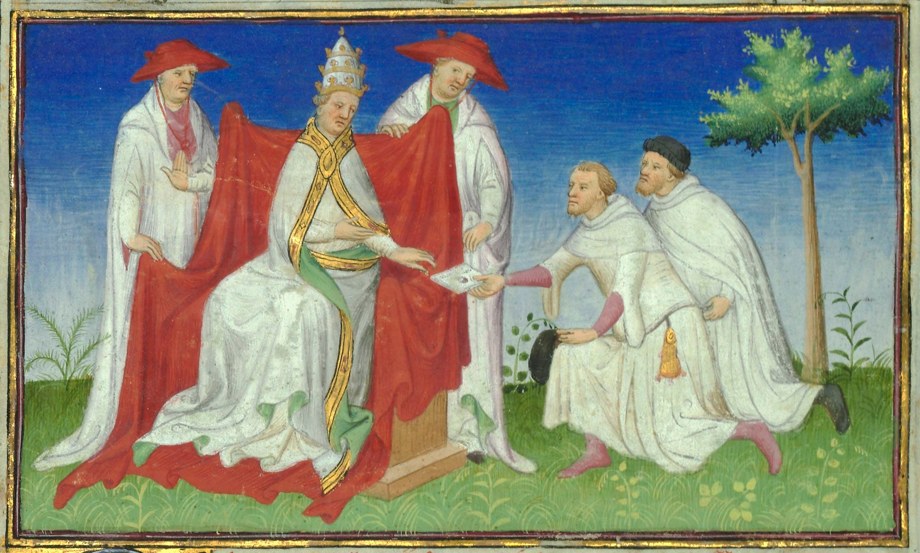
AI-assisted Portrait of Maffeo Polo
The Steady Half of the Partnership
Every famous journey has a name attached to it, and the journey of the Polos belongs to Marco. But Marco was seventeen when he left Venice, a boy carried along on a venture his elders had already proven could be survived. The men who had crossed Asia once and resolved to do it again were his father Niccolò and his uncle Maffeo—and of the two brothers, it was Maffeo who supplied the ballast. He is the figure the legend almost forgets: the experienced merchant who knew what a caravan needed, what a frontier official would demand, and how much silver to keep sewn into a lining. The adventure had a face. It also had an accountant, and the accountant kept it alive.
Born in Venice around 1230 into a family of merchant traders, Maffeo made two crossings of the known world. On the first (c. 1260–1269) he and Niccolò pushed east from their trading post on the Black Sea, were funneled by closed roads and shifting wars deep into Central Asia, and arrived at last at the court of Kublai Khan, who received them with curiosity and sent them home as his envoys to the Pope. On the second (1271–1295) they returned, this time with young Marco, and remained in the Khan's service for some seventeen years before the long voyage home by sea and overland to Venice. Maffeo came back, prospered quietly, and in his old age drew up a careful will. He is the quiet anchor of the most famous journey in history.
Where his brother supplied the boldness and his nephew supplied the wonder, Maffeo supplied the dependability. That is the ISTJ signature—Si memory married to Te logistics, the partner who remembers what worked, packs accordingly, and gets everyone home alive.
The Keeper of What Works
Si — dominant
Dominant Si is a vast internal archive of concrete, lived experience, and it governs by precedent. The Si-dominant merchant does not improvise the route; he remembers the last one—which passes flooded in spring, which border officials took bribes and which took offense, what a string of camels actually costs to provision across a season of desert. This is the accumulated trading know-how that turned the Polos from gamblers into professionals. The first journey east was, in part, an involuntary education—closed roads kept pushing them further than they had meant to go—but every mile of it became data Maffeo carried home and drew on when they set out again.
That second departure is the clearest portrait of Si at work. Where a thrill-seeker might have plunged back in on momentum, the brothers waited—for a new Pope, for the holy oil from Jerusalem the Khan had asked them to bring—and then retraced a route they already knew, provisioned from hard memory of what it would take. Si does not find the experience of crossing Asia exhilarating so much as instructive; the second crossing was the first one done properly, with the mistakes edited out. Caution here is not timidity. It is the refusal to pay twice for a lesson already learned.
The Manager of the Caravan
Te — auxiliary
If Si held the memory, auxiliary Te did the arithmetic. A long-distance trading venture is nothing but logistics extended over years: someone had to convert goods into coin and coin into safe-conduct, weigh what the markets along the road would bear, decide what to carry and what to liquidate before a mountain crossing. This was Maffeo's native register—the practical administration of a business whose warehouse was a string of pack animals and whose ledger was carried in the head.
Te is also what made the brothers useful to Kublai. The Khan did not detain them as curiosities; he employed them, and later trusted them with a commission—a request to the Pope for a hundred learned men, and for sacred oil from Jerusalem. To be made someone's envoy is to be judged reliable: capable of carrying a charge across a continent and discharging it as instructed. The Polos delivered the oil; the hundred scholars never materialized, through no fault of theirs. Te measures itself by results and by competence demonstrated, and the brothers' standing at court was the verdict of a shrewd ruler on exactly that.
Loyalty Without Display
Fi — tertiary
Tertiary Fi in an ISTJ is a private, undemonstrative core of values—loyalty, obligation, an inward sense of who one's people are. It does not announce itself, and in Maffeo it expresses as the simplest and most durable of bonds: he kept faith with his brother for decades and across thousands of miles. The decision to go back out a second time was not, for him, the lure of adventure; it was a venture undertaken with Niccolò, and he saw it through. When the family is the firm, loyalty and business are the same commitment, and Maffeo honored both without ever needing to say so.
That quiet attachment extended to the boy. Marco was Niccolò's son, but for the seventeen years in the East and the long passage home he was Maffeo's charge as much as his father's—a nephew brought safely to adulthood on the road. Tertiary Fi rarely makes grand gestures of affection; it makes itself known by showing up, year after year, and not letting go. The careful will at the end—providing for those who came after, settling each obligation—is Fi in its most characteristic ISTJ form: love expressed as duty discharged, and accounts left clean for the people one is responsible to.
The Unknown Road, Endured Not Sought
Ne — inferior
Inferior Ne is the ISTJ's blind spot and quiet strain: the realm of open-ended possibility, of roads whose end cannot be known in advance. For most people of Maffeo's stamp, life keeps the unknown at a manageable distance. His did the opposite—it marched him straight off the edge of every map he trusted. The first journey kept overshooting its own intentions; each blocked route opened onto a stranger one, until two Venetian merchants stood in a court at the far end of the earth. For an Si-dominant mind, that is the inferior function turned loose: the precedent runs out, and there is nothing ahead but the new.
What is telling is how he met it. He did not become an explorer in temperament. He never courted the unknown the way his brother courted the bold stroke or the way Marco drank in every marvel; he treated the strange road as a problem to be managed, mile by mile, with the tools Si and Te gave him. Inferior Ne under that much pressure can break a person, or it can be quietly mastered through sheer method—and Maffeo mastered it, surviving two crossings of the world by refusing to be dazzled by it. The wonder, he left to his nephew. His job was to make sure the wonder had somewhere to come home to.
Why ISTJ Over ESTP
Why not ESTP?
The ESTP is the obvious confusion, because the role—merchant adventurer on the far frontier—sounds like an Se opportunist's natural habitat. But that description belongs to his brother Niccolò, the bold half who read the moment and seized it. Maffeo was the foil: cautious where Niccolò was daring, governed by remembered precedent (Si) rather than live opportunity (Se), methodical where the ESTP improvises. The two crossings were not Se thrill-seeking; they were Si-Te endurance—the same route done twice, the second time properly.
The distinction is one of motivation, not behavior. Put an Se-dominant and an Si-dominant on the same caravan and they will both cross the desert—but one is drawn by the unknown ahead and the other is steadied by the known behind. Maffeo never shows the ESTP's appetite for novelty or its hunger for the next gamble; he shows the ISTJ's steadiness, its caution, its loyalty to the partnership, and its instinct to convert experience into reliable method. He was the brake to Niccolò's accelerator, and a venture this long needed both to survive.
Connected Figures
Further Reading
- Marco Polo: From Venice to Xanadu — Laurence BergreenThe most vivid modern narrative of the Polos' two journeys — good on the brothers' role and the texture of the overland route to Kublai's court.
- The Travels of Marco Polo — Marco Polo (trans. Ronald Latham)The primary source itself; the brothers' two crossings frame the whole account, and the prologue is the closest thing we have to Maffeo's own story.
- Marco Polo and the Discovery of the World — John LarnerThe authoritative scholarly study of the Polos and their book — careful about what can and cannot be known of the family enterprise.
