 Historical Figure MBTI
#403 · 4-6-26 · The Mongol Khanates
Chabi
Empress of the Yuan · Kublai's Counsel · Patron of the Lamas
1225 — 1281
6 min read
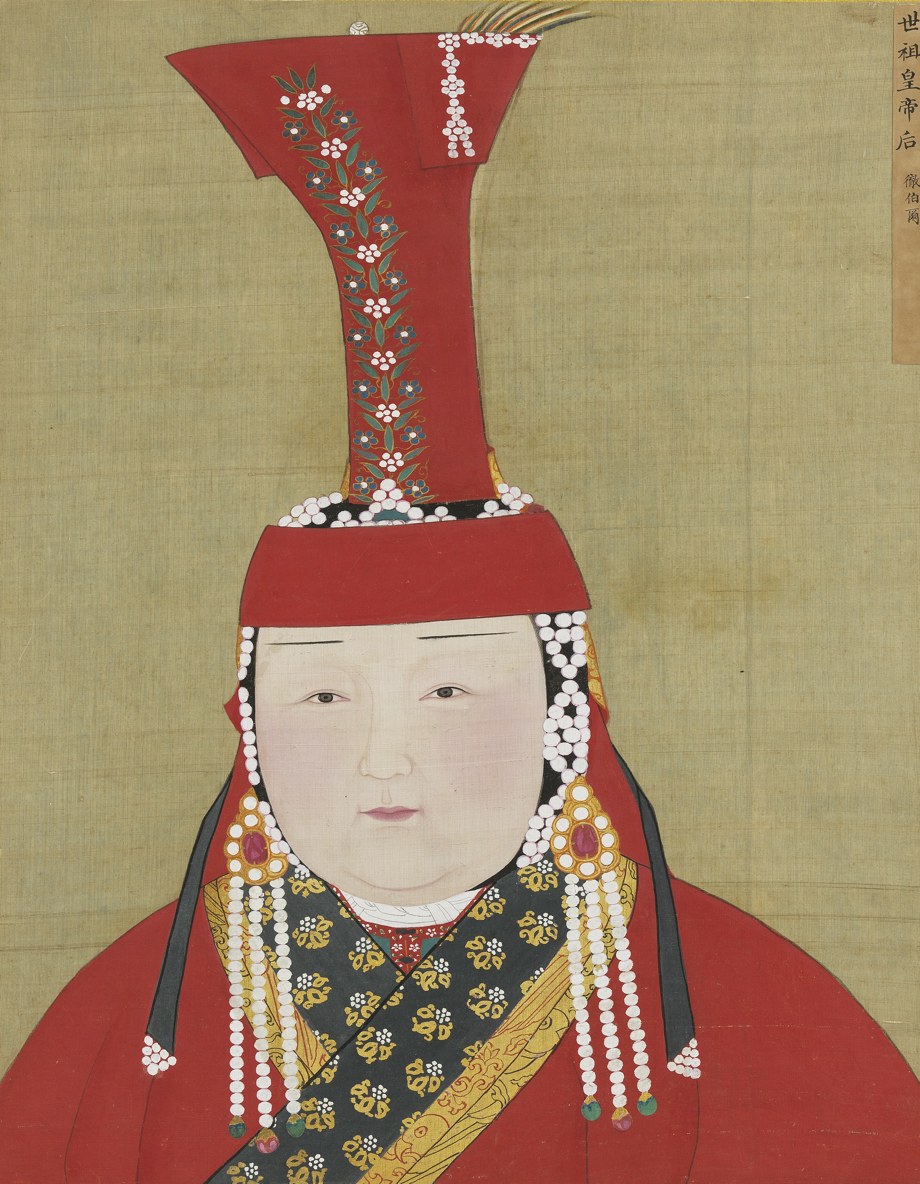
Portrait of Chabi
The Conscience Behind the Throne
When the Mongol generals proposed that the newly conquered farmland of north China be cleared of its peasants and turned to pasture for their horses, it was not a minister or a general who talked Kublai out of it. It was his wife. Chabi—principal empress of the Great Khan, daughter of the Khongirad, mother of his heir—understood something her husband's war captains did not: that an empire is held by the loyalty of the living, not the width of the grazing. Tax the farmers and you have a treasury; slaughter their fields and you have a desert that hates you.
She was born around 1225 and married Kublai before he was Khan of anything, sharing the long ascent from a contested succession to the throne of a Yuan dynasty that ruled China. Through all of it she was less a consort than a counsel—the one voice he trusted without reservation, and the one most willing to tell him when conquest had tipped into cruelty. Where Kublai calculated, Chabi tended: the dynasty's human climate, its religious life, its reputation among the millions it now governed.
Chabi was the ENFJ at the center of an empire—Fe warmth bent toward Ni foresight, persuading her husband not merely to be merciful, but to be merciful because mercy was how a conqueror became a sovereign.
Mercy as Statecraft
Fe — dominant
Dominant Fe governs by reading the emotional temperature of a room and moving it. Chabi did not command—she persuaded, working on what people felt was right before they could argue about what was expedient. Her power was entirely informal and entirely real: she held no office, yet she shaped the moral posture of the most powerful court on earth.
The fall of the Song dynasty is the clearest case. When the Song imperial family was captured, the instinct of a victorious court is humiliation—the captives paraded, made into a spectacle of total defeat. Chabi is said to have urged the opposite: treat the fallen dynasty with dignity, spare the imperial women the worst. That is Fe at the scale of statecraft, an insistence that how the vanquished are treated is itself a statement about what kind of ruler you intend to be. None of it was soft sentiment—she was the partner of a man who conquered an empire—but the conviction, felt before it was reasoned, that a regime which governs without cruelty earns a loyalty fear never buys.
The Long View of an Empire
Ni — auxiliary
What separates Chabi from a merely kind-hearted queen is auxiliary Ni—the foresight that let her see, where the generals saw only the spoils of the moment, the shape of the decades to come. The pasture proposal was not refused because plowed fields are pretty. It was refused because Chabi grasped a single strategic truth: a dynasty that wanted to rule China rather than merely raid it had to become legible to the Chinese—had to tax them, protect them, and let them recognize their own world in the new order.
Her patronage of Tibetan Buddhism carried the same forward logic. Bringing Phagpa Lama into the orbit of the court was not only private devotion; it furnished the Mongol state with a religious framework and a legitimacy that military power could not supply. A conquering house needs a story about why it should rule, and Chabi understood that the story mattered as much as the army.
Where her husband's generals saw grazing land, Chabi saw the next century: an empire is not held by the horses you pasture but by the people you persuade to belong to it.
The Frugal Hand
Se — tertiary
For all her influence over grand strategy, Chabi kept her hands in the material world. Tertiary Se in an ENFJ shows up as a practical, tactile competence—an empress who noticed how things were actually made and used. She was famously frugal: she had worn-out silk and old bowstrings recycled rather than discarded, an austerity she practiced from a throne that could have afforded any extravagance.
That same hands-on instinct made her a designer. She is credited with reshaping practical Mongol garments—a brimmed cap to shade a rider's eyes against sun and dust, a sleeveless jacket cut for movement on horseback. Small things, but they reveal the cast of mind: a sensory attention to how a body meets its work, paired with the frugality of a woman who never confused power with waste. The empire's conscience was also its quartermaster.
Influence Over Argument
Ti — inferior
The inferior function names a person by its absence, and Chabi's is Ti—cold, impersonal logic. She did not win her battles by out-reasoning the generals on their own terms; she moved Kublai through relationship and moral appeal, not through a brief that demolished the opposing case point by point. Her instrument was suasion, and it worked precisely because it bypassed the ledger.
The risk in such a person is that a cause carried by warmth and presence depends on the person being present. Chabi's authority was woven into who she was to Kublai—and when she died in 1281, it could not be inherited by anyone else. The moderating voice fell silent precisely because it had never been a system or a doctrine that could outlive her. It was her.
Why ENFJ Over ESFJ
Why not ESFJ?
The ESFJ is the loyal keeper of an established order—dutiful, warm, devoted to the customs and people already in front of her. Had Chabi been ESFJ, we would expect her to preserve Mongol tradition and tend her household with conscientious care. But her great interventions were the opposite of custodial: she argued against the Mongol instinct to make pasture of farmland, and she steered the dynasty toward an unfamiliar Chinese future. That is Ni-driven vision, not Si-driven tradition.
The distinction is the direction of the gaze. The ESFJ looks to what is owed and what is kept; the ENFJ looks to what could be, and persuades people toward it. Chabi's warmth was real, but it was always in service of a horizon—a vision of how a Mongol house could become a lasting Chinese dynasty. She did not preserve the world she was handed. She argued, gently and relentlessly, for a better one.
Connected Figures
Further Reading
- Khubilai Khan: His Life and Times — Morris RossabiThe standard modern biography of Kublai — strong on Chabi's political role and her influence over the court.
- The Secret History of the Mongol Queens — Jack WeatherfordRestores the Mongol women, Chabi among them, to the center of the empire's story rather than its margins.
- Daily Life in the Mongol Empire — George LaneA grounded portrait of the world Chabi inhabited — its dress, religion, court customs, and household economy.
