 Historical Figure MBTI
#422 · 4-8-26 · The Medieval Islamic World
Muhammad bin Tughluq
Sultan of Delhi · The Brilliant, Ruinous Visionary
c. 1290 — 1351
8 min read
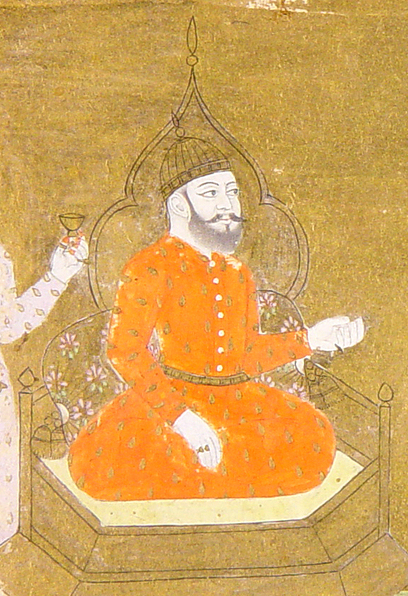
AI-assisted Portrait of Muhammad bin Tughluq
The Genius Who Could Not Stop
No ruler in the history of the Delhi Sultanate was so admired and so reviled by the same observers as the man who took the throne in 1325. Contemporaries agreed that Muhammad bin Tughluq was among the most learned princes of his age—fluent in philosophy, medicine, astronomy, logic, and mathematics, capable of debating the subtleties of jurisprudence with the scholars he summoned to his court from across the Islamic world. They agreed, too, that he was a calamity. He inherited the largest empire the sultanate would ever hold and spent twenty-six years devising one ingenious scheme after another, each defensible in the abstract, each ending in disaster.
He moved his capital roughly fifteen hundred kilometres south to Daulatabad and forced the population of Delhi to march with him, then reversed himself and left the old city half-empty. He introduced a token currency of brass and copper—fiat money centuries before the idea would be understood—and watched the economy collapse as every household minted its own coins. He raised taxes in the Doab during famine and ignited the first of the revolts that would consume the rest of his reign. He is the ENTP in its most dangerous form: an intellect that could generate brilliance endlessly and ground none of it.
Muhammad bin Tughluq was the ENTP undone by his own gifts—dominant Ne forever hatching novel schemes, auxiliary Ti certifying each as rational, and a blind inferior Si that could not see the famine, the forgers, or the fifteen hundred kilometres of road until the scheme had already failed.
The Inexhaustible Schemer
Ne — dominant
Dominant Ne sees possibility everywhere and treats the existing arrangement of things as merely the first draft. Where another sultan would have managed the empire he inherited, Muhammad could not look at Delhi without imagining a better capital, could not look at a silver coinage without imagining a cheaper one, could not look at a frontier without imagining the campaign that would extend it. The token currency is the purest expression of this mind. Confronted with a silver shortage, he reasoned that the value of money lay in the authority that stood behind it, not in the metal—and so issued brass and copper coins as legal tender, redeemable at the treasury. It was, in pure idea, the principle on which every modern economy runs.
The same generative restlessness produced the capital transfer to Daulatabad, conceived to anchor his rule in the newly conquered Deccan, and the grand military projects that punctuate the reign—a planned expedition to Khurasan for which he assembled and paid an army of some hundreds of thousands, and a Himalayan campaign meant to push beyond the mountains. Ne is fertile, not selective; it generates the next bold scheme before the last has been tested. Each project began as a genuinely original answer to a real problem. None survived contact with the ground.
The token currency was, as pure idea, the principle on which every modern central bank now operates—issued five hundred years before any institution existed that could make it hold. That gap between the brilliance of the conception and the absence of its preconditions is the whole tragedy in miniature.
The Logician on the Throne
Ti — auxiliary
If Ne supplied the schemes, auxiliary Ti supplied the proofs. Muhammad did not act on impulse or appetite; he acted on argument. Every catastrophic policy of his reign can be reconstructed as a syllogism that is, on its own terms, valid. Coined value derives from sovereign authority; therefore base metal stamped by the sultan is as good as silver. The Deccan is the empire's strategic centre of gravity; therefore the capital belongs at Daulatabad. The treasury needs revenue and the Doab is the richest land in the realm; therefore that is where the assessment should rise. The reasoning is clean. It is the premises—drawn from theory rather than from the world—that are poisoned.
This is why his learning made him more dangerous, not less. A less intelligent sultan would have lacked the conviction to carry an abstraction to its conclusion against the advice of everyone around him; Muhammad had the rigour to follow the logic all the way down, and the certainty that the logic, being sound, must prevail. Ti trusts the internal consistency of a model over any messy external signal that contradicts it. When the brass coins were forged in every household and the economy seized, his instinct was not that the theory was wrong but that the people had cheated it—and so he honoured the counterfeits at face value when they were surrendered, draining the treasury to defend a principle reality had already refuted.
Splendour and Terror
Fe — tertiary
Tertiary Fe in an ENTP rarely reads as warmth. It surfaces instead as a theatrical command of atmosphere—an instinct for spectacle, for lavish generosity, for the gesture that impresses a court—running alongside a startling capacity for coldness when the room turns. Muhammad embodied both poles. The Moroccan traveller Ibn Battuta, who served as a qadi at his court, left the most vivid portrait we have: a sovereign of staggering largesse, heaping gold and honours and offices on scholars and strangers, presiding over a court of almost theatrical magnificence.
The same man could turn in an instant to the executioner. Ibn Battuta records that Muhammad's gifts and his punishments arrived from the same hand, that men he had showered with favour might be put to death the following week, and that the chronicler himself—having fallen under suspicion—came to fear for his life and withdrew into religious retreat until he could escape the court entirely. Tertiary Fe wants to move an audience and is wounded by disloyalty, but it has no stable ethical core to restrain it; when his schemes provoked the endless revolts that defined his reign, he crushed them with a ferocity that the chroniclers found genuinely horrifying. The performer who could fill a court with awe was the same ruler who could empty a province with terror.
The Fifteen Hundred Kilometres He Did Not See
Si — inferior
Inferior Si is the blind spot through which every Tughluq scheme drained away. Si is the function of concrete reality—precedent, logistics, the stubborn weight of physical fact and accumulated practical experience. In the ENTP it sits at the bottom of the stack, undervalued and undeveloped, and in Muhammad it was almost wholly absent at exactly the moments it was needed most. The capital transfer is the definitive illustration. The strategic argument for Daulatabad was real; what the plan omitted was the human and physical detail of moving an entire population fifteen hundred kilometres across the subcontinent. Thousands died on the road. The blindness was not to the idea but to the ground the idea would have to cross.
The pattern repeats with terrible consistency. The token currency ignored the concrete fact that a brass coin is trivially counterfeited in a kingdom of village smiths—a detail obvious to any merchant and invisible to a sovereign reasoning from monetary theory. The Doab tax increase ignored the famine already gripping the land. The Khurasan expedition collapsed because the assembled army could not actually be supplied and provisioned, and the Himalayan force was annihilated by terrain and resistance the plan had never reckoned with. None of these failures was a failure of intelligence; each was a failure to consult the world.
What makes the case so clarifying is that the genius and the catastrophe were not separate men but the same cognition seen from two sides. The brilliance that generated the schemes and the blindness that wrecked them issued from a single source—a mind that lived in the space of possibility and could not be made to inhabit the space of fact until the fact had already destroyed the plan.
Why ENTP Over ENTJ
Why not ENTJ?
The ENTJ is the obvious guess for a sweeping reformer-emperor, and the contrast is exactly what fixes the type. An ENTJ leads with Te—extraverted thinking, the function of execution, feedback, and results—and would have stress-tested the token currency against the obvious objection, piloted the capital move in one province before forcing a whole population onto the road, and abandoned the Doab assessment the moment the revenue came back wrong. Muhammad did none of this. His failures were never failures of will or command; he could compel the entire apparatus of the state to obey. They were failures to ground an idea in reality before committing to it—the signature of Ne-Ti ideation untethered from Te's discipline.
The decisive distinction is between conceiving and executing. An ENTJ's genius is for marshalling means toward an end and adjusting course against the result; Muhammad's genius was for invention—novel, rigorous, and indifferent to whether the world could bear it. He could generate the boldest idea in the room and was constitutionally unable to grind it against the friction of fact. That is not the empire-builder's mind. It is the ENTP's: brilliant ideation with no inner mechanism to test the brilliance before reality does it for him.
Connected Figures
Further Reading
- The Delhi Sultanate: A Political and Military History — Peter JacksonThe authoritative modern scholarly history — essential on the Tughluq reign, the capital transfer, and the currency experiment.
- The Travels of Ibn Battuta — Ibn Battuta (trans. H. A. R. Gibb)The primary source — the chronicler's own firsthand account of years spent at Muhammad's court, its magnificence and its terror.
- The Adventures of Ibn Battuta: A Muslim Traveler of the Fourteenth Century — Ross E. DunnThe best narrative reconstruction of Ibn Battuta's world, with rich context on the Delhi court he served and fled.
