 Historical Figure MBTI
#426 · 4-8-26 · The Medieval Islamic World
Ghiyath al-Din Tughluq
Founder of the Tughluq Dynasty
c. 1270 — 1325
9 min read
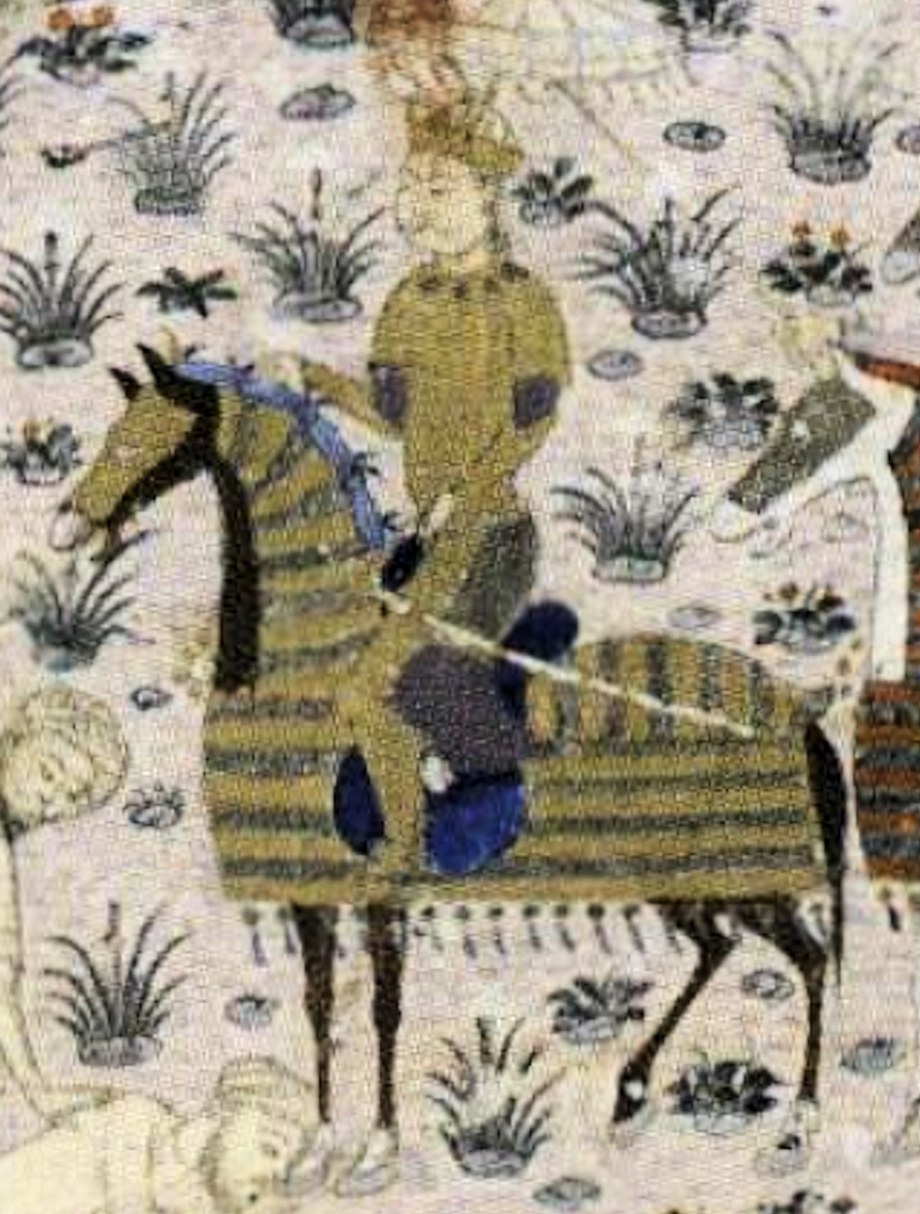
AI-assisted Portrait of Ghiyath al-Din Tughluq
The Soldier Who Picked Up a Falling Crown
He came to the throne of Delhi the way a capable foreman comes to run a collapsing firm—not by birthright or intrigue, but because he was the one man visibly competent enough to stop the bleeding. Ghazi Malik, as he was known before he took the regnal name Ghiyath al-Din Tughluq, had spent decades on the Sultanate's northwest frontier, the hard country where the Mongols came down out of the passes year after year. He held the line. He won a reputation as a soldier who delivered results and did not lose battles he could win. When the Khalji dynasty rotted from within and a low-born favorite seized the capital, the frontier general marched on Delhi, put down the usurper, and in 1320 founded a dynasty that would outlast him by seventy years.
What followed was the rule of a working administrator in a hurry. In barely five years he steadied a treasury the Khaljis had drained, pulled back the ruinous tax rates of the previous reign, encouraged cultivation and dug irrigation, repaired the postal and intelligence networks a sultan needed to actually govern, and raised the colossal fortress-city of Tughlaqabad on the rock southeast of Delhi—a statement in stone that order had returned and had a builder's name on it. He led his own campaigns into Bengal and the Deccan rather than delegating the glory. He was not a visionary or a mystic or a poet. He was an executive, and the empire under him ran like one.
Ghiyath al-Din Tughluq is the frontier ESTJ in its purest civic form—dominant Te restoring an institution by main force of competence, backed by the disciplined, tested, tradition-grounded reliability of Si. He did not reimagine the Sultanate. He repaired it, and made it obey.
The Manager of the Realm
Te — dominant
Dominant Te is the drive to impose order on the external world—to take a situation that is failing and make it function. Ghiyath al-Din inherited exactly that situation. The Khalji collapse had left Delhi with a looted treasury, punitive tax demands that had hollowed out the countryside, and a chain of command nobody trusted. His response was not philosophy but a program. He set land revenue at a sustainable share of the harvest instead of the back-breaking rates of the previous reign, on the plain logic that a peasant who is not ruined keeps farming and keeps paying. He rebuilt the relay-post and spy networks so that a sultan could see his own empire. He audited and restored discipline among officials. These are the moves of a man who measures a policy by whether it works, not by whether it is bold.
The fortress-city of Tughlaqabad is Te written across a hillside. It was raised fast, on a defensible rock, with massive sloping walls built for the single practical purpose of never falling—a capital that doubled as a citadel against the very Mongol threat he had spent his career repelling. And he led his own armies, marching into Bengal to settle its succession and turning toward the Deccan, rather than handing campaigns to subordinates and collecting the credit. The Te executive does not supervise from the rear; he takes operational command, because results are his and he will own them directly.
What makes his Te specifically his, and not just a textbook trait, is its source: it was forged on a frontier, not in a chancery. He had governed Dipalpur and the marches before he ever governed an empire, and he ran the empire the way he had run the border—as a problem of logistics, defense, and reliable supply. The realm was a command he had been given. His job was to make it hold.
The Veteran's Reliability
Si — auxiliary
If Te supplied the will to fix things, auxiliary Si supplied the method: do what has been proven to work, and do it the same way every time. Ghiyath al-Din was a career soldier whose authority rested on consistency. The Mongol raids he repelled came not once but again and again across years on the frontier, and the man who meets that kind of threat survives by discipline, drilled routine, and a sober respect for what experience has already taught him about how a border is held. That is Si: the accumulated, tested knowledge of the veteran, distrustful of novelty for its own sake.
It shows in how he governed. His reforms were corrective, not experimental—he rolled the Sultanate's finances back toward a workable older balance rather than inventing some untried scheme. He restored institutions the Khaljis had let decay instead of replacing them. He grounded his legitimacy in the conventional posture of a sound Muslim sultan defending the realm and its order. Where his son Muhammad would later gamble the empire on radical, abstract projects—moving the capital, issuing token currency—the father's instinct was the opposite: trust the tried, distrust the clever, build walls that have proven they will stand.
This is the quiet engine beneath the conqueror. Te made him decisive; Si made him dependable—and in a Sultanate that had just torn itself apart through instability, dependability was the rarest and most valuable thing a ruler could offer.
The Practical Improviser
Ne — tertiary
Tertiary Ne in an ESTJ is not vision; it is the saving flexibility that keeps a Te-Si executive from becoming a mere rule-follower. It surfaces as tactical resourcefulness—the ability to read a fluid situation and seize the opening in it. Ghiyath al-Din showed exactly this in the act that made him sultan. The Khalji crisis was chaos; most great nobles waited to see who would win. He read the moment, saw that the usurper held the throne but not the loyalty of the army, and moved. Marching the frontier troops on the capital and toppling a sitting ruler is not a cautious man's play. It was an opportunist's gamble taken on a sound reading of where power actually lay.
On campaign the same faculty served him as adaptability—adjusting to the politics of Bengal, weighing how far to press into the Deccan, managing alliances and rivals within his own court. But tertiary Ne stays in its lane. It improvised in service of the Te-Si project; it never reshaped it. He used possibility to seize and secure the existing order, not to dream up a new one. The expansive, world- remaking imagination would belong to his son—and would nearly destroy everything the father had so carefully repaired.
The Father and the Pavilion
Fi — inferior
Inferior Fi is the ESTJ's blind spot: the inner world of personal values and private loyalties that a Te-driven man manages poorly because he lives so much on the outside. He honors duty, hierarchy, and the obligations he can name—but the unspoken emotional currents close to him, especially the resentments of those he commands, can blindside him. Ghiyath al-Din's relationship with his brilliant, restless son Muhammad is where this becomes the story's hinge. The disciplined father and the radical heir were temperamental opposites, and tradition holds that tension ran between them.
Then came 1325. Returning in triumph from his Bengal campaign, the sultan was received at a wooden welcome-pavilion built to honor him—and it collapsed and crushed him. Chroniclers, then and since, have suspected the structure was rigged, and that the hand behind it was Muhammad's. We cannot prove it. But the possibility is the perfect, terrible expression of inferior Fi: the great manager who could read an empire's finances and a frontier's defenses to the last detail may not have read the heart of the one person standing closest to him. The man who built walls to keep out every external enemy died under a ceiling raised by his own blood.
He fortified a capital against the Mongols and steadied a treasury against ruin—and was killed by a pavilion built to welcome him home. The Te-Si master of external order was undone in exactly the domain his inferior Fi could not govern: the private loyalty of his own son.
Why ESTJ Over ISTJ
Why not ISTJ?
The ISTJ and the ESTJ share the same Te-Si backbone of duty and proven method, which is why the temptation is real—Ghiyath al-Din was disciplined, sober, and tradition-grounded. But the ISTJ runs that competence inward and quietly: the loyal administrator, the steward who keeps a system honest from within and prefers the back office to the front line. Ghiyath al-Din did the reverse. He marched on the capital and seized a throne, he led his own armies into the field, and he built an entire order around the public projection of his own command. That is dominant Te—authority directed outward and worn openly—not the reserved, behind-the-scenes Si-dominant temperament of the ISTJ.
The distinction is the placement of the engine. For the ISTJ, the organizing function is internal: a private store of how things are properly done, applied with conscientious consistency. For the ESTJ, it is external: the world itself is the material to be put in order, and the self steps forward to do it. Ghiyath al-Din did not keep the books for someone else's realm—he took a falling realm, set himself at its head, and ran it. The crown was not handed to him by descent; it was a problem he solved by walking into it. That outward, commanding, take-charge motion is the signature of the ESTJ, and it is the whole shape of his five-year reign.
Connected Figures
Further Reading
- The Delhi Sultanate: A Political and Military History — Peter JacksonThe authoritative modern survey of the Sultanate — sets Ghiyath al-Din's seizure of power and frontier career in their full political and military context.
- Histories of the Tughluq Dynasty — VariousThe standard accounts of the dynasty's founding, the reign of Muhammad bin Tughluq, and Firuz Shah's restoration — the arc from soldier-founder to visionary heir to custodial restorer.
