 Historical Figure MBTI
#425 · 4-8-26 · The Medieval Islamic World
Firuz Shah Tughluq
Sultan of Delhi · The Builder Who Followed the Storm
1309 — 1388
8 min read
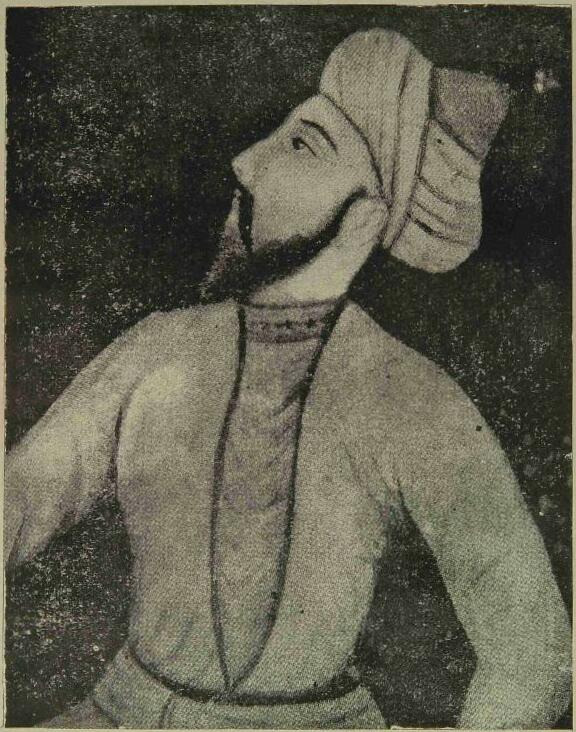
AI-assisted Portrait of Firuz Shah Tughluq
The Builder Who Followed the Storm
Some rulers are remembered for what they conquered. Firuz Shah Tughluq is remembered for what he repaired. He inherited the throne of Delhi in 1351 from his cousin Muhammad bin Tughluq, a brilliant and erratic visionary whose grand experiments — a forced relocation of the capital, a token currency that collapsed into counterfeit, punitive taxation that emptied the countryside — had left the sultanate exhausted, depopulated, and in revolt. Firuz was his temperamental opposite: mild where Muhammad was volatile, cautious where Muhammad was bold, conservative where Muhammad was relentlessly inventive. He did not dream of a remade world. He set about mending the one he had been handed.
Over a reign of nearly four decades he cut the crushing taxes, abolished torture and mutilation as instruments of punishment, and built on a scale few medieval sovereigns ever attempted — a new city, Firuzabad; vast canals and irrigation works that greened the land around Delhi; hospitals, mosques, colleges, and caravanserais by the hundred. He repaired the Qutb Minar, and he had two ancient Ashokan pillars carried to his capital and re-erected, a ruler reaching back across sixteen centuries to anchor himself in something older than his dynasty. He stabilized a shrinking realm rather than expanding it — and left, in his own hand, a short memoir cataloguing what he had done.
Firuz was the ISFJ on the throne — dominant Si as conservation made policy, paired with the paternal Fe that governs by care rather than command. He did not want to invent a new order. He wanted to restore a good one, and tend it.
The Steward Who Undid the Innovation
Si — dominant
Dominant Si trusts what has worked before. It is the function of precedent, of the tried path, of the conviction that stability is built by preserving and maintaining rather than by overturning. Firuz governed almost entirely in that key. Where his cousin had treated the realm as a laboratory for untested schemes, Firuz reversed course on nearly every one of them. He rolled back the experimental taxes, restored the older fiscal arrangements, and ruled by the maxim that a sultan's first duty is not to dazzle but to keep things steady.
Si also grounds itself in the concrete and the lasting, and Firuz left his mark in stone, brick, and moving water. The canal networks he dug carried the Yamuna and other rivers across dry country to irrigate fields and feed his new towns; some of those channels were still in use centuries later. He built Firuzabad, repaired the Qutb Minar, and raised hospitals and colleges that long outlived him. This is the builder's temperament — legacy measured not in territory seized but in infrastructure that endures and serves.
His reverence for the past ran deeper than policy. When he discovered two ancient inscribed pillars from the age of Ashoka, he had them transported with enormous care to Delhi and re-erected as monuments — a characteristically Si gesture, the instinct to honor and conserve what came before rather than to clear it away. He even wrote his reign down himself, a short memoir that reads as an inventory of duties discharged and works completed. The Si ruler keeps the ledger of what has been preserved.
Mercy as a Governing Principle
Fe — auxiliary
If Si gave Firuz his caution, auxiliary Fe gave his caution a moral direction. Fe governs by attending to the welfare of the community — it reads what a people needs to feel cared for and secure, and it acts to provide it. Firuz's reforms read almost as a checklist of paternal concern. He lightened the tax burden on the peasantry because the land had been bled dry. He founded hospitals where the sick could be treated without charge and an office to arrange marriages and relief for the poor. He governed as a father to his subjects, not as an engineer optimizing a system.
The clearest sign of his Fe is what he could not stomach. Muhammad's reign had been notorious for its cruelty — torture, mutilation, and ingenious savagery as routine instruments of rule. Firuz abolished them. He forbade the maiming and bodily punishments his predecessor had used freely, recoiling from the deliberate infliction of suffering in a way that was less a calculated policy than a temperament. A more impersonal ruler might have kept the terror as a tool of order. Firuz found it intolerable.
That same communal feeling had a harder edge. Fe binds itself to the values of a particular group, and for Firuz that group was the orthodox Sunni community. His piety was deep and conventional, and it made him less tolerant of heterodoxy: he enforced religious law with new strictness and applied the jizya tax more rigidly than his predecessors. His warmth flowed toward the community he identified with, and hardened at its borders — the devotion and the narrowness were two faces of the same orthodox feeling.
The Administrator's Logic
Ti — tertiary
Tertiary Ti in an ISFJ is the quiet competence behind the steady hand — an internal sense of how things ought to fit together that keeps the practical work coherent. It surfaces in Firuz as a genuine administrative orderliness. The canal systems were not pious gestures but feats of hydraulic planning; the fiscal rationalization that replaced his cousin's chaos required a working grasp of how revenue and provision actually connect. He brought structure to a state that had nearly come apart, and structure is Ti's contribution to the ISFJ.
But tertiary functions serve the dominant rather than leading. Firuz's logic was always in the employ of his Si conservatism and his Fe care; it organized the work of preservation and provision, it did not set out to question first principles. He was a capable steward of systems, not a theorist of them — and when his ordering instinct outran his judgment, it could produce its own troubles, as with the swollen hereditary slave establishment and entrenched land grants he built up, which calcified the army and weakened the throne he meant to secure.
The Suspicion of the Untried
Ne — inferior
Inferior Ne is the ISFJ's deep distrust of untested possibility — the conviction that novelty is more likely to bring ruin than reward. Firuz had every reason to feel it. He had watched, from close range, a genuinely visionary mind drive a powerful sultanate to the edge of collapse through one bold improvisation after another. The lesson he drew was the inferior-Ne lesson: that the speculative leap is dangerous, that the proven way is safer, that a ruler's job is to consolidate rather than to gamble.
And so where Muhammad had expanded and experimented, Firuz contracted and preserved. He largely abandoned ambitious campaigns of conquest, content to hold and stabilize a shrinking realm rather than risk it on the open-ended chance of more. It was the wisest possible response to the wreckage he inherited — and also its own kind of limitation. The sultanate he steadied did not grow; it settled, and after his death the structural weaknesses he had not reimagined helped hasten its decline. The ISFJ heals the storm's damage. He rarely imagines the next horizon.
Why ISFJ Over ISTJ
Why not ISTJ?
The ISTJ is the natural rival reading: both types are conservative, dutiful, and precedent-bound, and an ISTJ restorer would have rolled back the same reckless experiments. But the ISTJ governs from impersonal duty and the logic of the system, and that is not where Firuz's reforms come from. His policies are warm and paternal — lower taxes because the people were suffering, free hospitals, an end to torture and mutilation out of evident revulsion at cruelty. That is the welfare-driven feeling of an auxiliary Fe, not the rule-driven order of a Te. He governed by care for his people and his faith, not by the dispassionate machinery of administration.
The distinction is one of motive. An ISTJ keeps a realm steady because order is owed and the system must run; an ISFJ keeps it steady because the people in it must be looked after. Firuz's abolition of torture is the tell — a pure ISTJ might have weighed its usefulness as a deterrent, but Firuz reacted to it the way a person reacts to suffering, with the immediate moral recoil of Fe. His was a government of mercy and devotion before it was a government of procedure, and that warmth is what makes him an ISFJ rather than its thinking twin.
Connected Figures
Further Reading
- The Delhi Sultanate: A Political and Military History — Peter JacksonThe authoritative modern survey of the sultanate — essential for placing Firuz's restorationist reign within the dynasty's wider arc.
- The Travels of Ibn Battuta — Ibn Battuta (trans. H. A. R. Gibb)The fourteenth-century traveler's firsthand account of Tughluq Delhi — the closest contemporary window onto the court and country Firuz inherited.
- A Comprehensive History of India: The Delhi Sultanate — ed. Mohammad Habib & K. A. NizamiA detailed scholarly treatment of the Tughluq dynasty, including Firuz's building program, fiscal reforms, and religious policy.
