 Historical Figure MBTI
4 min read
#53 · 2-18-26 · The Tang Dynasty
Du Fu
Poet-Historian of a Fractured Empire
712 — 770
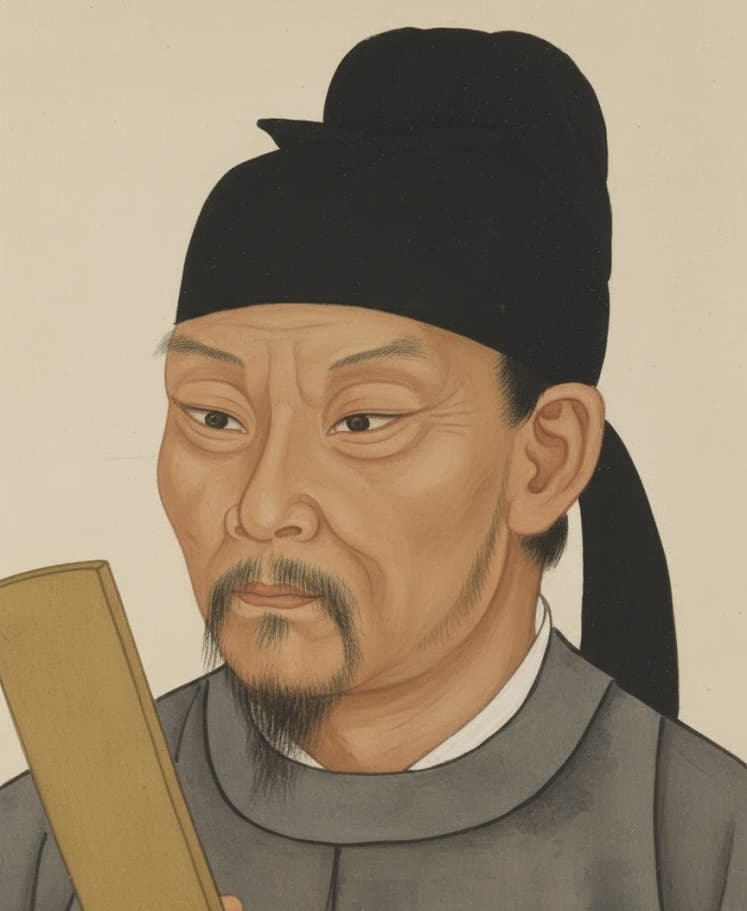
AI-assisted Portrait of Du Fu.
The Man Who Stayed
Born in 712 during the height of the Tang dynasty, Du Fu inherited a world already glittering with cultural prestige. Then history split open. The An Lushan Rebellion devastated the dynasty — famine, displacement, conscription, political collapse. Du Fu did not transcend the chaos through intoxication or myth. He documented it.
Separated from his family, trapped in poverty, frequently ill, Du Fu wrote through instability rather than escaping it. His poems describe starving villagers, exhausted soldiers, abandoned homes, the moral fracture of a once-great state. Later generations would call him the "Poet Sage" — not because he was flamboyant, but because he endured and interpreted.
Du Fu is often typed as ISFJ due to his loyalty and reverence for tradition. Yet his work does not merely preserve memory — it synthesizes suffering into moral vision. He aligns with INFJ. He was not simply recording events; he was translating history into meaning.
He did not escape the winter. He recorded it — and ensured it would never be forgotten.
Ni — Dominant
Du Fu compresses chaos into structure. His poetry does not scatter into imaginative possibility. It distills. It refines. It identifies the underlying arc of societal decline and human endurance.
Where others see famine, he sees moral consequence. Where others see displacement, he sees the fragility of order. That is not Si cataloguing — it is Ni interpretation. He does not describe suffering for its own sake. He frames it within a larger trajectory of empire, responsibility, and decay.
Fe — Auxiliary
Du Fu internalized collective pain. His empathy is outward-facing. He grieves for peasants, soldiers, widows — people beyond his personal circle. His poems function as moral witness.
He is not centered on his own authenticity, as a dominant Fi type might be. Instead, he speaks toward society. Toward posterity. His writing asks, implicitly: what kind of nation allows this? That is Fe ethical gravity.
Ti — Tertiary
His structure is disciplined. Du Fu's verse is carefully constructed, balanced, layered. There is internal logic and refined composition — but it serves meaning rather than efficiency. This is not Te reforming institutions; it is Ti shaping internal coherence.
Se — Inferior
Unlike his contemporary Li Bai, Du Fu does not dissolve into sensory intoxication. He does not romanticize wine as escape. He does not seek transcendence in immediate pleasure. When overwhelmed by external chaos, he retreats inward, toward reflection rather than sensation. Inferior Se in INFJs often manifests as exhaustion with instability — and Du Fu's later years reflect exactly that tension.
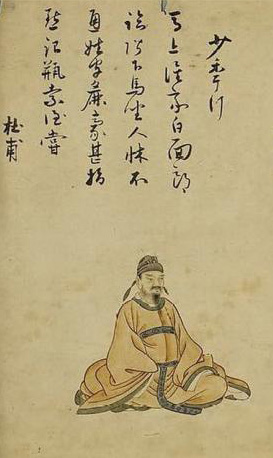
Why Not INFP?
Why not INFP?
INFPs lead with Fi — an internal compass of personal authenticity and individual value. While Du Fu's poetry is deeply personal, it is not primarily self-referential. He does not explore the subjective "I" as much as he bears witness to the objective "We." His empathy is Fe — a communal weight that identifies with the collective suffering of the state. He is not searching for his own truth; he is synthesizing the structural truth of his era. His gravity is shared, not solitary.
The High Tang Triangle
Placed beside his famous contemporaries, Du Fu occupies the central moral axis of the High Tang:
- • Li Bai: expansion, spontaneity, emotional radiance (Ne–Fi)
- • Du Fu: moral compression, collective weight (Ni–Fe)
- • Wang Wei: distilled perception, cool structural quiet (Ni–Te)
One wandered. One mourned. One subtracted. Where Li Bai became myth and Wang Wei became a lens, Du Fu became the conscience of the empire.
Connected Figures
Further Reading
- The Selected Poems of Du Fu — Burton Watson (trans.)The standard English-language selection, with clear translations and notes on the historical context of each poem.
- Du Fu: China's Greatest Poet — William HungThe foundational scholarly biography in English, tracing Du Fu's life and work against the backdrop of the An Lushan Rebellion.
- The Poetry of Du Fu — Stephen Owen (trans. and ed.)A comprehensive six-volume set from De Gruyter — the most complete critical edition in English, covering all surviving poems.
- The Great Age of Chinese Poetry: The High T'ang — Stephen OwenPlaces Du Fu within the full context of High Tang verse alongside Li Bai, Wang Wei, and their contemporaries.
