 Historical Figure MBTI
#468 · 4-14-26 · Plantagenet England
Eleanor of Castile
Queen of England · Edward I's Beloved · The Eleanor Crosses
1241 — 1290
8 min read
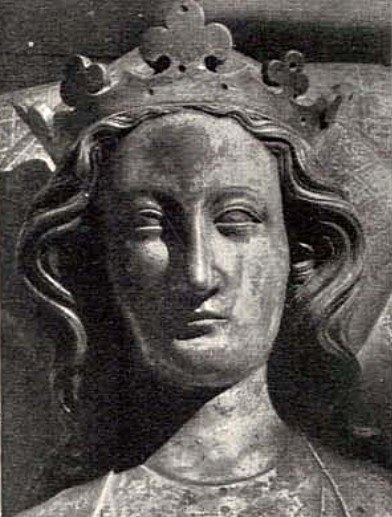
AI-assisted Portrait of Eleanor of Castile
The Queen Who Never Left His Side
Most medieval royal marriages were treaties dressed as weddings, and the spouses often spent more time apart than together. The marriage of Eleanor of Castile and Edward I was the rare exception. Betrothed for diplomacy in 1254, when she was a Castilian princess of about thirteen and he the heir to the English throne, the two became almost inseparable for the next thirty-six years. She followed him on crusade to the Holy Land. She traveled with him on campaign in Wales and Gascony. She bore him around sixteen children, often giving birth on the road. When she finally died in 1290, the most fearsome king of his age was so undone by grief that he marked her last journey across England in stone.
Behind that devotion was a woman both more cultured and more formidable than the legend of the loving wife suggests. Eleanor was a serious patron of books and learning who kept a scriptorium and read widely; she was also a shrewd, relentless builder of estates who bought up lands and the debts of others to enlarge her holdings — a habit that made her quietly unpopular with those she dispossessed. Loyalty, cultivation, and a patient instinct for accumulation all ran together in her. She is, in the language of cognitive type, the ISFJ consort: constant, careful, and far stronger than her gentleness let on.
Eleanor was the ISFJ at its most devoted — dominant Si's patient, methodical constancy fused with auxiliary Fe's lifelong loyalty, a queen who built quietly and steadily for the family and household she loved.
The Patient Builder
Si — dominant
Dominant Si is the function of continuity, accumulation, and steady return to what has been established. It does not seek the new horizon; it deepens and secures the ground already held. In Eleanor this showed first as constancy — the loyal, ever-present consort who organized a vast traveling household and kept it running through decades of movement between England, Wales, and the Continent. Where other queens governed from a fixed court, Eleanor made the moving household itself her domain, ordering it with a careful, methodical attention that never seemed to flag.
The same instinct drove her famous estate-building. Across her years as queen Eleanor assembled a large personal landholding, acquiring manors and taking over the debts that Jewish moneylenders held against indebted gentry — debts she could convert into land when they went unpaid. This was patient, incremental work, done parcel by parcel over years, and it made her one of the wealthiest landholders in the kingdom. It also made her resented: contemporaries grumbled, and a famous rhyme had it that “the king desires to get our gold, the queen our manors fair to hold.” Si builds by steady accretion, and Eleanor built relentlessly.
Her cultivation, too, was the Si of patient tending. She founded a scriptorium, employed scribes and illuminators, collected manuscripts, and brought Castilian tastes — in gardens, in tapestry, in carpets laid on floors — into the English court. None of it was restless innovation. It was the careful, accumulating curation of a woman who loved fine, lasting things and gathered them around her with care.
The Devotion That Bound a Marriage
Fe — auxiliary
If Si supplied the constancy, auxiliary Fe supplied the warmth that made that constancy a love rather than a duty. Fe orients toward bonds, harmony, and the emotional life of those one is responsible for, and the central fact of Eleanor's life was the depth of her attachment to Edward. She did not merely tolerate his absences by waiting at home; she refused them, traveling with him across Europe and into the field of war so that they would not be parted. By the standards of thirteenth-century kingship, this was remarkable — and it was mutual.
The legend of Acre captures the Fe instinct at its most vivid. When an assassin stabbed Edward with a poisoned dagger during the crusade of 1272, the story goes, Eleanor sucked the venom from his wound to save his life. The tale is almost certainly embroidered — contemporaries credited a surgeon's blade rather than a wife's mouth — but it endured precisely because it fit her. The image of a queen who would take the poison into herself rather than lose him was the kind of story people believed of Eleanor, because the devotion behind it was real.
That same Fe extended to her enormous brood of children and to the household and dependents in her care. The acquisitiveness that critics resented was, seen from inside, the labor of a woman provisioning a dynasty: lands to endow her children, wealth to secure her people. Her warmth was not abstract benevolence toward humanity but a fierce, concrete loyalty to her own.
The Ledger Behind the Largesse
Ti — tertiary
Tertiary Ti in an ISFJ surfaces as a private competence with logic and structure that serves the dominant values rather than overruling them. In Eleanor it appeared as a real head for the technical machinery of property: rents, debts, charters, the legal mechanics of acquiring and holding land. Building an estate the size of hers was not a matter of sentiment. It required understanding how bonds and obligations could be bought and foreclosed, how a manor was secured in law, how the numbers added up. She clearly grasped all of it.
But tertiary Ti is a tool, not a throne. Eleanor used her analytical command of property in service of Si's accumulating instinct and Fe's loyalty to her family — never as a cold, freestanding strategy pursued for its own elegance. The logic ran the ledger; the values chose what the ledger was for. That ordering is exactly what separates her from the colder strategist she can superficially resemble.
The Reputation She Could Not Foresee
Ne — inferior
Inferior Ne is the ISFJ's blind spot: the field of unintended consequences and shifting public meaning that the Si-Fe mind, focused on duty and on those near to it, does not naturally scan. Eleanor felt the cost of this. She built her estates by the book, provisioning her children as a conscientious queen should — and was bewildered, even wounded, that the kingdom read her diligence as rapacity. The grumbling rhymes and the resentment of the dispossessed were an outcome she had not foreseen and could not quite grasp, because from inside her own values the work was simply responsible.
Tellingly, the worry that did reach her came through that same dim Ne channel as anxiety. Late in life Eleanor sought, and received, releases and absolutions touching her land dealings — a faint apprehension that something in all her careful accumulation might not stand clean before God or posterity. It was the inferior function flickering: a vague unease about how the whole edifice might finally be judged, in a woman otherwise serenely certain that she had only done her duty.
Why ISFJ Over INTJ
Why not INTJ?
The relentless land-buying can look, from the outside, like cold INTJ strategy — a long-range plan to dominate the property map of England. But the INTJ builds toward a detached personal vision, indifferent to whether the world approves and unmoved by the particular people displaced along the way. Eleanor was the opposite of detached. Her acquisitiveness served a household and a dynasty she was bound to by deep feeling, not a freestanding ambition; she built quietly, parcel by parcel, for those she loved, and she was hurt rather than coolly unbothered when others resented it. That is Si-Fe constancy, not Ni-Te calculation.
The deciding question is what the acquisition was for. An INTJ accumulates in pursuit of a vision that stands apart from any one relationship; the strategy comes first and the people are incidental. Eleanor reversed that order entirely. Loyalty and duty came first — to Edward, to her children, to her household — and the careful, methodical building of wealth was simply how a devoted, dutiful queen provisioned the people she loved. The logic served the bond. That is the ISFJ to its core.
Connected Figures
Further Reading
- Eleanor of Castile: The Shadow Queen — Sara CockerillThe fullest modern biography — recovers Eleanor as a cultured, capable, and far more substantial figure than the loving-wife legend allows.
- Eleanor of Castile: Queen and Society in Thirteenth-Century England — John Carmi ParsonsThe scholarly study of her queenship, household, and estate-building; authoritative on the land dealings and their reputation.
- A Great and Terrible King: Edward I and the Forging of Britain — Marc MorrisThe leading life of Edward I — essential context for the marriage, the crusade, and the grief behind the Eleanor Crosses.
