 Historical Figure MBTI
#469 · 4-14-26 · Plantagenet England
Henry III
King of England · The Pious, Ineffective Father
1207 — 1272
7 min read
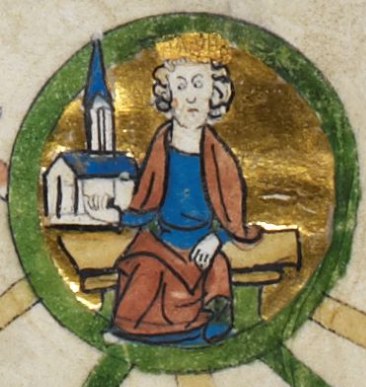
AI-assisted Portrait of Henry III
The Artist Who Wore a Crown
Henry III came to the throne of England in 1216, a frightened boy of nine, and did not leave it until his death fifty-six years later. It was one of the longest reigns in English history and one of the least successful. The son of King John—the most reviled monarch England had yet produced—Henry inherited a kingdom that had just been forced to grant Magna Carta, and he spent half a century proving that a gentle man can mismanage a realm as thoroughly as a cruel one.
He was pious, soft-spoken, and devoted to beauty. His great passions were not war or statecraft but God and art: he revered Edward the Confessor as his personal patron saint and poured a fortune he did not have into rebuilding Westminster Abbey in the soaring new Gothic style—the one enduring masterpiece of his reign. Everywhere else he failed. He showered wealth on his foreign relatives, the Lusignans and the Savoyards; he chased a fantastical scheme to buy the crown of Sicily for his son; and his debts and favoritism so enraged his barons that they rose against him under his own brother-in-law, Simon de Montfort, who defeated and captured Henry at the Battle of Lewes and briefly ruled England in his name.
Henry was the ISFP on a throne—a tender, inward, beauty-loving soul whose private devotions (Fi) and craving for sensory splendour (Se) ran far deeper than any instinct to command, organize, or rule.
The Private Faith of a Public Failure
Fi — dominant
Dominant Fi lives by an inner compass of personal value, and what it values it serves with quiet, stubborn sincerity—regardless of whether the outside world finds it useful. Henry's religion was exactly this. His devotion to Edward the Confessor was not the political piety of a king performing for his subjects; it was a deeply felt, almost private attachment. He named his eldest son Edward after the saint, kept the Confessor's feast with extravagant ceremony, and made the dead Anglo-Saxon king the emotional center of his entire reign.
That same inward feeling shaped how he governed—or failed to. Henry followed his affections rather than the cold demands of rule. He loved the people he loved, and he loaded them with gifts and offices: his Lusignan half-brothers, his wife's Savoyard kin, the favourites who pleased him. To the barons this looked like reckless, alien favoritism, and it was; but to Henry it was simply loyalty to those his heart had chosen. The Fi user does not ask whether a kindness is politic. He asks whether it is felt—and Henry's, fatally, always was.
A Hunger for Beauty
Se — auxiliary
If Fi gave Henry his devotion, auxiliary Se gave it form. Se craves the richness of the physical world—colour, texture, light, splendour—and Henry channelled his whole soul into making the sacred visible. The rebuilding of Westminster Abbey was the masterpiece of his life: he tore down the old Romanesque church and raised in its place a luminous Gothic shrine of soaring stone and stained glass, modelled on the great cathedrals of France and intended as a worthy resting place for the Confessor's relics. It very nearly bankrupted him, and it remains, eight centuries later, the coronation church of England.
The same sensory appetite ran through everything he touched. Henry adorned his palaces with painted walls and gilded ceilings, commissioned jewels and goldsmith work, and loved the elaborate pageantry of court ceremony. He was, in the most literal sense, an aesthete on the throne—a man who understood beauty far better than budgets, and who reached instinctively for the magnificent gesture where a shrewder king would have counted the cost. Se builds cathedrals; it does not balance treasuries.
The Single, Fixed Vision
Ni — tertiary
Tertiary Ni gave Henry the capacity for a sustained, almost obsessive private vision—and, less happily, the capacity to fixate on it past all reason. At its best, this was Westminster: a decades-long project he held in his mind and pursued with a constancy his governance otherwise lacked. He could see, year after year, the finished shrine he meant to build, and he never let the dream go.
At its worst, the same fixated imagination produced the Sicilian fiasco. Lured by the Pope's offer of the crown of Sicily for his second son, Henry committed England to a wildly unaffordable war for a throne in a land he would never see—a glittering future-image he chased while the practical machinery of the realm collapsed around him. Tertiary Ni in an unworldly dreamer is a double-edged thing: it can hold a cathedral steady in the mind for thirty years, and it can mistake a fantasy for a plan.
The King Who Could Not Command
Te — inferior
Inferior Te is the heart of Henry's tragedy. Te is the function of external order—of organizing men and resources, imposing structure, issuing the firm command and seeing it obeyed. In Henry it was his weakest faculty, and a king has no business being weakest exactly there. He could not master his own finances, could not control his magnates, could not impose a coherent policy or hold to one once chosen. He veered between concession and resistance, made promises he could not keep, and let the great offices of state drift toward whoever had his affection that year.
The reckoning came in 1258, when the barons forced the Provisions of Oxford upon him, and again in open war. Under Simon de Montfort the baronial reformers seized the government; at the Battle of Lewes in 1264 they captured the king outright, and for a year Henry was a crowned figurehead in Montfort's hands. It took his son Edward—everything his father was not: hard, decisive, commanding—to break the rebels at Evesham in 1265 and hand the throne back. The inferior Te that wrecked the father would become the dominant strength of the son.
Why ISFP Over ISFJ
Why not ISFJ?
The ISFJ is the dutiful guardian—the steady, structured servant who subordinates personal feeling to the needs of the institution in its care. Had Henry been an ISFJ, he would have governed England as a sacred trust, tending its laws and revenues with patient reliability. But Henry did the opposite: he served his own private pieties and aesthetic passions, not the realm, and indulged his favourites at the kingdom's expense. His loyalties ran inward to what he personally loved (Fi), never outward to the impersonal duty an ISFJ would have honoured.
The distinction is the whole of him. An ISFJ king would have been a conscientious caretaker of England; Henry was a gentle artist who happened to wear a crown he could not manage. He poured his sincerity into a saint and a cathedral while the practical business of ruling—the one duty an ISFJ would never have neglected—slipped through his hands. He followed his heart, and his heart was never in the kingship.
Connected Figures
Further Reading
- Henry III: The Rise to Power and Personal Rule, 1207–1258 — David CarpenterThe definitive modern biography — exhaustive and authoritative on the king's character, piety, and the slow unravelling of his rule.
- A Great and Terrible King: Edward I and the Forging of Britain — Marc MorrisA vivid life of Henry's son that illuminates, by contrast, just how weak the father was and how the crown was saved.
- Simon de Montfort — J. R. MaddicottThe standard study of the rebel earl who broke Henry at Lewes — essential on the baronial reform movement and the Second Barons' War.
