 Historical Figure MBTI
#470 · 4-14-26 · Plantagenet England
Simon de Montfort
Earl of Leicester · The Rebel Who Summoned the First Parliament
c. 1208 — 1265
8 min read
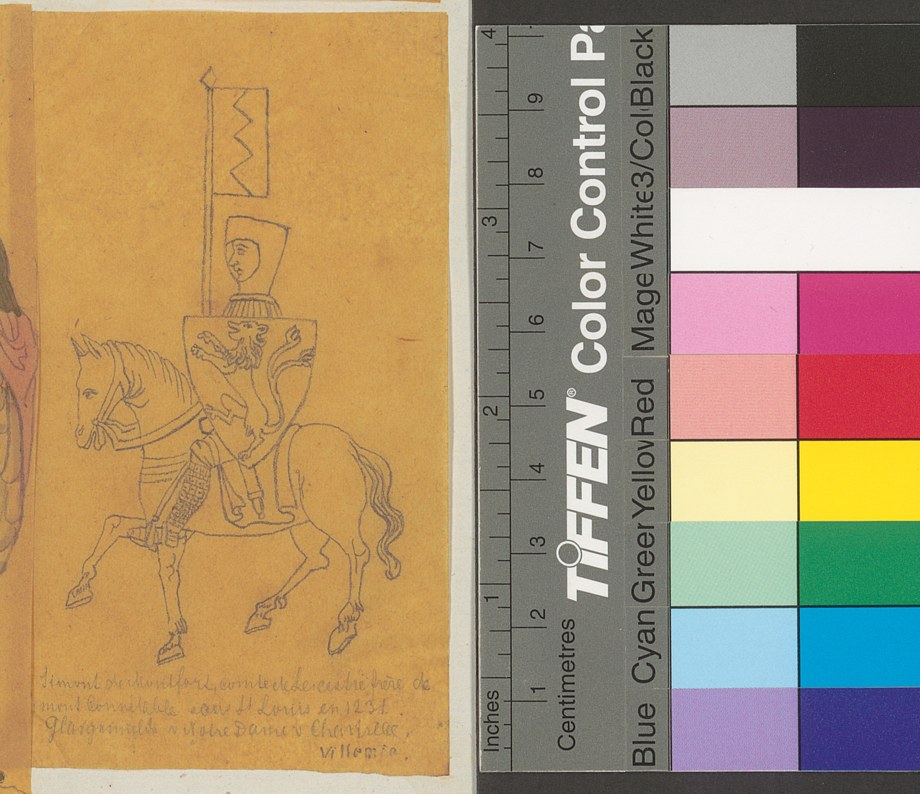
AI-assisted Portrait of Simon de Montfort
The Foreigner Who Tried to Govern England
He was a younger son of a French crusading family with no English land and a tenuous claim to a forfeited earldom — and within thirty years he had married a king's sister, defeated that king in pitched battle, taken him prisoner, and ruled England in his name. Simon de Montfort, sixth Earl of Leicester, arrived in England around 1230 as an ambitious outsider chasing an inheritance. He died in 1265 on the field at Evesham, his body so savagely mutilated by the victors that the pieces had to be gathered for burial. Between those two points sits one of the most consequential careers in the history of English government.
What makes Montfort extraordinary is not that he rebelled — barons rebelled against kings all the time — but that he tried to replace personal monarchy with something like accountable institutions. When he and his allies forced the Provisions of Oxford on Henry III in 1258, they were not simply seizing power for themselves; they were attempting to bind the Crown to a permanent council and a regular schedule of reform. And when, in 1265, Montfort summoned a parliament that for the first time included elected knights of the shire and burgesses from the towns, he reached past his own century toward an idea of representation that would outlast him by seven hundred years. He governed by command and strategy, not by charm, and it is precisely that hard, institution-building drive that marks him as an ENTJ.
Montfort is the ENTJ as constitutional architect: a commander who beat a king on the battlefield and then ran a kingdom by force of will, all in service of a reform vision he would break the realm to impose — and did.
The Commander Who Beat a King
Te — dominant
Dominant Te organizes the external world: it gives orders, builds structures, and measures everything against whether it works. Montfort had it in abundance, and contemporaries felt it as a kind of cold competence. As royal lieutenant in Gascony in the early 1250s he imposed order on a fractious province so ruthlessly that the locals complained to the king of his severity — an early sign of the man who would always reach for control over consensus. On campaign he was the rare medieval rebel who could actually out-general a crowned monarch. At the Battle of Lewes in 1264, outnumbered, he seized the high ground at dawn, divided the royal army, and won so completely that Henry III and his son were both taken captive. A baron who merely wanted concessions does not take the king prisoner; Montfort did, because Te wants the decisive outcome, not the negotiated one.
Then came the harder test. With the king in his hands, Montfort had to actually run the country, and for roughly a year he was the de facto head of state — issuing writs in Henry's name, controlling the great offices, governing through a council answerable to him. This is Te at full stretch: not the romance of rebellion but the grinding administrative labor of holding a kingdom together by will and apparatus. He did not rule because he was loved; he ruled because he had built the machinery and could work it. The 1265 parliament itself was a Te instrument — a structural innovation designed to broaden and stabilize his support by summoning men who had never been called before, the knights and townsmen whose backing he needed to keep the great barons in check.
The Vision of Accountable Power
Ni — auxiliary
Auxiliary Ni gave Montfort's ambition something most baronial rebels lacked: a singular, long-range idea of how things ought to be. Where his fellow barons in 1258 mostly wanted redress for specific grievances, Montfort grasped — and clung to — an abstract principle: that royal power should be limited and accountable, bound by a council and by law rather than exercised at the king's whim. The Provisions of Oxford were the first draft of that vision, and Montfort treated them not as a bargaining position to be traded away but as a constitutional settlement to be defended. When Henry secured a papal annulment of the Provisions and reneged, the other barons drifted; Montfort, almost alone, held the line and went to war. Ni does not negotiate away the thing it has seen.
The 1265 parliament is where the vision became permanent. Calling elected representatives of the shires and boroughs to sit in a national assembly was not, for Montfort, a one-off expedient — it was the logical extension of the idea that government rests on a wider base of consent than the will of one man. He could not have foreseen the House of Commons in any modern sense, but the institution he improvised pointed unmistakably in that direction, and it survived his death and his disgrace because the idea behind it had its own gravity. That posthumous durability is the Ni signature: the man is destroyed, but the thing he envisioned keeps unfolding.
His allies wanted concessions; Montfort wanted a constitution. That gap — between fixing a grievance and remaking the machinery of rule — is the distance between an ordinary baron and an ENTJ with a vision he will not surrender.
The Soldier in the Saddle
Se — tertiary
Tertiary Se shows up as physical decisiveness — a readiness to act in the real, tactical present and to risk the body to do it. Montfort was, before anything else, a fighting man, and his Te strategy was carried out through Se nerve. The dawn march to the ridge above Lewes, the willingness to give battle against a larger force, the personal command in the field: these are the moves of a man comfortable seizing the decisive moment as it appears. He read terrain and timing the way a gambler reads a table, and at Lewes the gamble paid in full.
But tertiary Se also tends toward overreach — the bold stroke attempted once too often. By 1265 Montfort had pressed his advantage so hard that he had alienated the very barons who once stood with him, and when the captive Prince Edward escaped and raised an army, Montfort found himself cornered at Evesham, outnumbered and outmaneuvered. Seeing the trap close, he is said to have remarked of the advancing enemy that they had learned their order of battle from him — and then he fought to the death rather than yield. The same Se boldness that won Lewes refused to retreat at Evesham, and the victors cut his body apart on the field.
The Rigid Conscience
Fi — inferior
Inferior Fi in an ENTJ is the buried moral core — a private sense of right that the personality cannot easily examine or soften, and that, under pressure, hardens into righteousness. Montfort had a genuine streak of principle that set him apart from purely self-interested magnates: he was famously pious, close to reforming churchmen like Robert Grosseteste, and he seems to have believed sincerely in the justice of the cause he led. That conviction is what carried him into war when more pragmatic allies made their peace with the king. He was, in his own eyes, in the right — and being in the right mattered to him.
But inferior Fi is unsupple, and in Montfort it curdled into the inflexibility that destroyed him. The same certainty that let him stand alone for the Provisions also made him deaf to the resentments building among his peers, who came to see his reform government as a cover for the enrichment of his own family and the dominance of his own will. He could not bend, could not conciliate, could not read the private feelings he was trampling. A more emotionally fluent leader might have held his coalition together by giving way here and flattering there; Montfort, sure of his cause, drove straight on until the cause and the man went down together at Evesham.
Why ENTJ Over ENFJ
Why not ENFJ?
A charismatic reform leader who rallies a movement might look like an ENFJ — the warm, harmonizing visionary who leads through people. But Montfort led through command, strategy, and institution-building, not through the people-pleasing Fe of an ENFJ. He imposed reform on a reluctant realm rather than coaxing it; he was severe enough in Gascony to draw formal complaints, deaf enough to his allies' feelings to lose them, and willing to take his own king prisoner. An ENFJ builds consensus and reads the room; Montfort built machinery and overrode it.
The distinction is dominant Te over dominant Fe. An ENFJ's authority flows outward through emotional attunement — sensing what a group needs and harmonizing it toward a shared good. Montfort's authority flowed through structure and force of will: he won battles, ran a government, and engineered a new institution, and where feeling entered at all it entered as the rigid, private righteousness of inferior Fi, not the supple warmth of Fe. He was a hard, principled visionary who would break the kingdom to remake it — and that is an ENTJ to the core.
Connected Figures
Further Reading
- Simon de Montfort — J. R. MaddicottThe definitive scholarly biography — authoritative on the reform movement, the Provisions, and the 1265 parliament.
- With All For All: The Life of Simon de Montfort — Darren BakerA vivid, accessible modern narrative of Montfort's rise, rebellion, and fall.
- A Great and Terrible King: Edward I and the Forging of Britain — Marc MorrisTells the story from the other side — the prince who beat Montfort at Evesham and inherited his parliamentary legacy.
