 Historical Figure MBTI
#471 · 4-14-26 · Plantagenet England
Llywelyn ap Gruffudd
The Last Native Prince of Wales
c. 1223 — 1282
7 min read
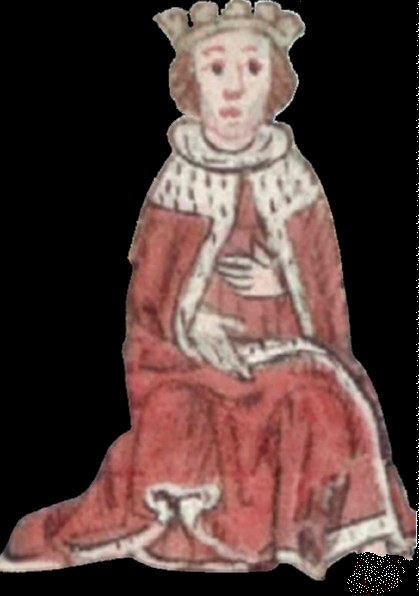
AI-assisted Portrait of Llywelyn ap Gruffudd
The Prince Who Held a Country
For one generation in the thirteenth century, Wales was a country and not a collection of quarrelling lordships—and the man who made it so was Llywelyn ap Gruffudd, grandson of Llywelyn the Great and the last native to bear the title Prince of Wales. By force, alliance, and a hard instinct for the opening, he subdued his own brothers, bent the lesser Welsh lords to his will, and in 1267 wrung from a weakened English crown the one thing no Welshman had ever held by treaty: formal recognition, in the Treaty of Montgomery, of a single Welsh principality with himself at its head.
He did it the only way it could be done—by fighting. He raided the marches, seized castles, and pressed his advantage whenever an enemy stumbled. That same talent could not save him. When the strong king he had outmanoeuvred gave way to a far stronger one, Llywelyn met the new reign as he met everything else—head-on, by defiance and the sword—and was destroyed. He is the ESTP as warlord: bold, present, tactically brilliant, and finally outrun by a force he never paused long enough to see coming.
Llywelyn was the daring of the warrior-prince made into a country—dominant Se reading the ground and the moment, Ti turning that read into the maneuvers that united a fractious Wales. He won every fight he could see. He could not see the empire.
The War in Front of Him
Se — dominant
Dominant Se lives in the field of action—alert to the opening and the threat of the present moment, most alive when something physical is at stake. Llywelyn did not inherit a united Wales; he seized it, campaign by campaign, in a landscape of shifting alliances where the man who moved first and hit hardest set the terms. He governed by presence, reading the broken politics of the English march the way a swordsman reads an opponent's guard—looking always for where the next blow could land.
When the final war came in 1282, Se is exactly what we see: Llywelyn in the field, in motion, cut down at Cilmeri in a sudden skirmish away from his main army—out at the edge of the action, where a dominant-Se man always is. It is the great strength and the fatal limit of the type. No one in Wales could match him at the war happening in front of him; he simply never stopped fighting it long enough to reckon with the larger one closing in.
The Cold Read of Power
Ti — auxiliary
Raw aggression does not unite a country; many Welsh princes were aggressive and died with their lordships no bigger than they found them. What set Llywelyn apart was the auxiliary Ti that organized his daring into strategy—the impersonal reckoning of who held what, who could be turned, and where the levers of advantage sat. Montgomery is the proof: he timed his bid for the title to the years when civil war had gutted royal authority in England and negotiated recognition as the logical price of peace with a man too well-placed to dislodge.
But Ti in the auxiliary seat is a tactician, not a grand strategist. It excels at the logic of the situation at hand and is weaker at the long arc—the decade-out calculation of how a rival's resources compound. Llywelyn could out-think any single confrontation; he could not out-think a kingdom that simply had more of everything and the patience to bring it all to bear.
The Pride of a Prince
Fe — tertiary
Tertiary Fe in an ESTP is not soft sociability; it is a charged sense of standing, honour, and how one is seen—the pull of the group's regard registered through pride. Llywelyn carried his grandfather's name and the dignity of the only Welsh principality ever recognized by treaty, and he wore it fiercely. The title Prince of Wales was not merely useful to him; it was identity. His refusal to do homage to the new English king was, on one level, a tactical miscalculation—but on another it was tertiary Fe at full heat, a proud man unable to perform submission before a court that demanded it.
That sense of standing helped him hold the loyalty of Welsh lords who saw in him the embodiment of their nation; it also goaded him into the defiance that gave Edward the pretext he wanted. The same pride that made him a unifying figure made him an unbending one—at precisely the moment when bending, or even delay, might have bought the survival that defiance threw away.
The Storm He Did Not Foresee
Ni — inferior
Inferior Ni is the ESTP's blind side: the single, convergent long-range forecast the present-focused mind does not naturally produce. The Se warrior trusts what is in front of him and improvises brilliantly against it—and so he can be ambushed by the future, by the slow accumulation of an enemy's strength into something no tactical genius can answer. This is the precise shape of Llywelyn's ruin. He had spent a career outmanoeuvring an England that was divided, distracted, and broke, and he treated the new king as another such opponent. He did not foresee how completely Edward's resources and machinery of conquest would overwhelm him. Edward invaded once, in 1277, and forced him to terms; when war came again in 1282 the king brought the full weight of an empire that did not run out of men, money, or castles. Llywelyn was still fighting the war in front of him; Edward was fighting the one that was coming, and had planned it years out.
The end was abrupt and total, as inferior-function catastrophes tend to be. In December 1282 Llywelyn was killed at Cilmeri, cut down in a skirmish away from his main force. His head was struck off and sent to London, where it was displayed crowned with ivy—a grim mockery of the princely dignity he had defended to the last. With him died Welsh independence. The man who could see every battle never saw the one that would erase his nation from the map.
Why ESTP Over ENTJ
Why not ENTJ?
The ENTJ is the long-range strategic empire-builder—the type that plans the whole conquest years out, marshals resources toward a fixed objective, and wins by out-organizing the future. That is what defeated Llywelyn, not what he was. Llywelyn was a reactive warrior-prince who held his ground by daring and tactics: he seized the opening, exploited the immediate weakness, and won the battle in front of him (Se-Ti). He could not out-strategize an empire because the convergent, long-arc planning that defines the ENTJ is exactly his inferior function, not his strength.
The contrast was made flesh in the war that killed him. One man fought the present; the other engineered the future. The ESTP's genius is the live read of the field—and its tragedy is that a field can be surrounded by someone thinking on a horizon the present-focused mind never scans.
Connected Figures
Further Reading
- Llywelyn ap Gruffudd: Prince of Wales — J. Beverley SmithThe definitive scholarly biography — exhaustive on the rise of the principality, the Treaty of Montgomery, and the final war.
- A Great and Terrible King: Edward I and the Forging of Britain — Marc MorrisTells the conquest of Wales from the English side; indispensable for seeing the empire-building strategist who overwhelmed Llywelyn.
- A History of Wales — John DaviesThe standard one-volume national history; situates Llywelyn's reign and fall within the long sweep of Welsh independence and its end.
