 Historical Figure MBTI
#467 · 4-14-26 · Plantagenet England
Edward I
King of England · Longshanks · The Hammer of the Scots
1239 — 1307
13 min read
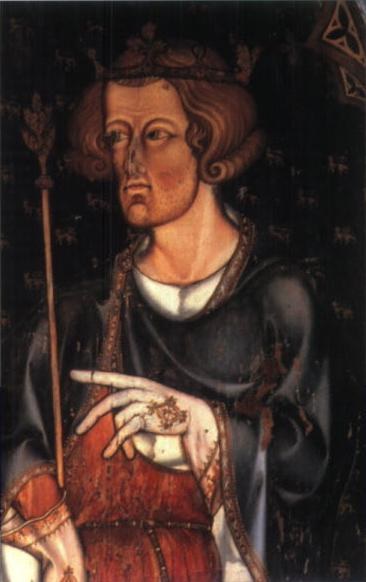
AI-assisted Portrait of Edward I
The Iron in the Crown
He stood a head taller than the men around him—close to six foot two in an age when that made a man a giant—and the nickname stuck for it: Longshanks. But the height was the least intimidating thing about Edward I. When the Dean of St Paul's came before him to protest a tax and dropped dead of fright on the spot, no one at court found it especially surprising. This was a king whose temper was a documented hazard of public life, who once tore out a handful of his own son's hair in a rage, who pursued his enemies with a cold, methodical relentlessness that did not stop at their deaths. He was, by any reasonable measure, the most formidable man of his century in Britain—and he meant for everyone to know it.
Born in 1239 to the pious, vacillating Henry III, Edward learned statecraft by watching his father fail at it. Where Henry was indecisive, swayed by favorites, and humiliated by his own barons, Edward would be decisive to the point of brutality. He cut his teeth crushing the baronial revolt of Simon de Montfort, annihilating the rebel army at Evesham in 1265 in a battle so one-sided his own men called it “the murder of Evesham.” By the time he took the throne in 1272, returning unhurried from crusade because he knew no one would dare challenge his succession, he had a fixed idea of what kingship was for: the imposition of order, by law where possible and by force where necessary, over every inch of ground a king could claim. He spent the next thirty-five years doing exactly that—conquering Wales, hammering Scotland, and rebuilding English law from the statute up.
What drove him was not vision in the dreamer's sense. Edward did not reimagine the realm; he took what already existed—feudal rights, royal prerogatives, the old claims of the English crown over its neighbors—and enforced them to the letter with a will that never bent. He is the ESTJ rendered in stone and statute and castle wall.
Edward I was the ESTJ as conqueror-administrator: dominant Te driving the relentless imposition of order, anchored by an Si that revered precedent, record, and the literal letter of the law. He did not invent a new England. He took the old one and made it obey.
The Hammer
Te — dominant
Dominant Te does not persuade; it commands, and it measures its success in results on the ground. Edward's whole reign is the function made flesh. Confronted with a problem—a rebellious prince, an unruly borderland, a tangle of contested rights—he reached instinctively for the most direct and effective instrument available and applied it without sentiment. When Llywelyn ap Gruffudd, the prince of Gwynedd, refused to do homage, Edward did not negotiate at length. He raised the largest army England had fielded in generations, cut off Gwynedd's grain supply by seizing the harvest of Anglesey, and ground the principality into submission. When Llywelyn rose a second time, Edward had him killed and his severed head sent to London to be crowned with ivy and mounted on the Tower—a public, unmistakable demonstration of what defiance cost.
The conquest of Wales shows Te's defining instinct: don't just win, build the apparatus that makes the win permanent. Edward ringed his new territory with the most ambitious castle-building program in medieval Europe—Caernarfon, Conwy, Harlech, Beaumaris, the “Iron Ring”—fortresses engineered by Master James of St George to be supplied by sea and to garrison a hostile country indefinitely. He planted walled English boroughs beneath their walls, imposed English administrative shires, and gave his infant son the title Prince of Wales, folding the conquest into the permanent structure of the crown. This is Te thinking in systems: a victory is worthless unless it is institutionalized, garrisoned, taxed, and recorded.
The same engine drove him north. Invited to arbitrate the disputed Scottish succession in 1292, Edward chose John Balliol—and then proceeded to treat Scotland not as an ally but as a vassal estate to be managed, summoning its king to English courts like a delinquent tenant. When the Scots finally resisted, he answered with a savagery that earned his tomb its epitaph: Malleus Scotorum, the Hammer of the Scots. He sacked Berwick and put thousands to the sword. He carried off the Stone of Scone, the very seat on which Scottish kings were made, and installed it under the English coronation chair—a Te gesture par excellence, seizing not merely the territory but the physical instrument of its sovereignty. He hunted William Wallace for years and, when he caught him, had him hanged, drawn, and quartered as a traitor to a king Wallace had never served. He was riding north to finish Robert the Bruce when death finally stopped him in 1307. Even then, legend has it, he ordered his bones carried at the head of the army until Scotland was subdued. The will did not switch off; it simply ran out of body.
Te does not ask whether a thing is inspiring. It asks whether it works, whether it lasts, and whether it can be made to obey. Edward conquered like an engineer—and then built the castles, the courts, and the records to keep what he had taken.
The Letter of the Law
Si — auxiliary
If Te supplied the will to dominate, auxiliary Si supplied the instrument: a deep, almost reverent attention to precedent, record, and the established order of things. Edward was not only a warrior. He was one of the great lawgiver-kings of English history, and the cast of his legalism is unmistakably Si. He did not theorize about justice in the abstract; he combed through the existing body of custom and statute, found where it had grown slack or been usurped, and tightened it. The Statutes of Westminster—sweeping codifications of land law, criminal procedure, and the duties of subjects—were the work of a mind that trusted the accumulated weight of precedent and wanted it set down, clarified, and enforced.
The Quo Warranto proceedings are Si in its purest administrative form. Edward sent his justices across England demanding that every baron holding a franchise produce the warrant— by what right, quo warranto—he exercised it. The story, perhaps apocryphal but perfectly characteristic, has the Earl Warenne brandishing a rusty sword and declaring that his ancestors won their lands with it at the Conquest. Edward's instinct was the opposite: not the romance of how a right was won, but the paper that proved it, the record that established it, the precedent that could be checked. He wanted the realm's rights—his own above all—documented, audited, and unassailable. His entire Scottish claim rested on exactly this Si logic: a sheaf of old homages and feudal precedents, marshaled as if a kingdom were a disputed manorial title to be settled by the older deed.
Si also explains the tangible, concrete texture of everything Edward built. He did not deal in abstractions; he dealt in stone, grain, garrisons, and ink. The Iron Ring of castles, the walled boroughs, the meticulous exchequer rolls, the Model Parliament of 1295 that summoned knights and burgesses in a form precise enough to become precedent itself—all of it bears the mark of a mind that builds in the physical and the documented, that trusts what can be measured, counted, and stored. Even his darkest act carried this concrete finality. In 1290 he expelled the entire Jewish population of England, the first such mass expulsion in medieval Europe—a decision executed with the same bureaucratic thoroughness he brought to a tax assessment, and one that would stand on the books, unreversed, for nearly four hundred years.
The Tactician's Improvisation
Ne — tertiary
Tertiary Ne in an ESTJ is not visionary; it is opportunistic. It surfaces as a knack for the unexpected angle, the adaptive maneuver, the willingness to reach for a new tool when the familiar one will not serve—always in service of a concrete objective, never as free-floating speculation. Edward had this in the field. As a young commander at Evesham he executed a maneuver of real tactical cunning, seizing the high ground and flying the captured banners of de Montfort's own son to lure the rebel into thinking reinforcements had arrived. In Wales he grasped that the old style of chevauchée would never subdue Gwynedd and improvised a new model of conquest: naval supply, sea-fed fortresses, the systematic colonization of the terrain. The means were inventive even when the end was utterly conventional.
His statecraft shows the same flickers. The Model Parliament was, in its way, a creative solution to a practical problem—Edward needed money for his wars, and broadening the body that granted taxation gave his levies a wider base of consent. He experimented with alliances, played the kings of France and the princes of the Low Countries against one another, and adjusted his instruments as circumstances shifted. But Ne sat third in the stack, subordinate always to Te's objectives and Si's respect for precedent. Edward used novelty; he did not love it. Every improvisation served the fixed and traditional goal of extending the rights of the crown.
And like all tertiary functions, his Ne could mislead him. He was prone, late in life, to overreach—opening too many fronts at once, picking simultaneous fights with France, Wales, and Scotland, straining the realm's finances and the patience of his barons to the point of near-revolt in 1297. The same restless reach that made him an adaptable commander made him, unchecked, a king who could not stop conquering. Ne offered him possibilities; Te could never resist trying to seize all of them at once.
The Eleanor Crosses
Fi — inferior
Inferior Fi in an ESTJ is rarely visible and, when it surfaces, surfaces all at once and out of all proportion—a deep private well of feeling in a man who governs by impersonal logic. For most of his life Edward kept it locked away. He felt loyalty and obligation in the conventional, dutiful register—to the crown, to the dynasty, to God—but the terrifying temper, the public cruelties, the cold pursuit of enemies all bespeak a man for whom personal feeling was almost never the operative variable. He could have Wallace torn apart and a rival's head crowned with ivy without apparent disturbance. The inner life did not show.
And then there was Eleanor of Castile. He had married her at fifteen, in a match arranged for the usual dynastic reasons, and against every expectation of medieval royal marriage he loved her—completely, for thirty-six years. She traveled with him everywhere, even on crusade; the story that she sucked the poison from his wound at Acre is probably legend, but it captures a bond contemporaries found genuinely unusual. When she died in 1290 at Harby in Nottinghamshire, the iron king broke. He had her body carried in solemn procession to Westminster, and at each of the twelve places where her funeral cortège rested for the night he raised an ornate stone monument—the Eleanor Crosses, the last of them at Charing. It was a grief made visible in the only idiom Edward truly trusted: stone, permanence, and public record. He never recovered the same warmth. The marriage he made afterward was duty; Eleanor had been the one thing in his life that was not.
This is the inferior function in its classic form—a feeling so rarely expressed that, when it finally found its object, it overwhelmed the man and demanded to be carved into the landscape forever. The same Edward who hammered Scotland and expelled a people without flinching spent years and a fortune marking the road his dead wife's body had traveled. The Te king built castles to dominate a country. The Fi man built crosses to mourn one woman. They were the same man, and the second is the only crack through which the first ever let the light show.
Why ESTJ Over ENTJ or ISTJ
Why not ENTJ?
The ENTJ is the obvious temptation for a conquering king, and the one to resist. ENTJ command is driven by Ni—a grand strategic vision that reimagines the future and reorganizes the world toward it. Edward's genius was the opposite kind: concrete, traditional, precedent- bound. He did not dream up a new political order; he took the existing rights of the English crown—feudal homages, old claims of overlordship, the established body of law—and enforced them to the letter with overwhelming force. He conquered and codified what was already there. That is Te in the service of Si, not Te in the service of Ni—a builder of castles and statutes, not a visionary remaking the realm.
Why not ISTJ?
ISTJ shares Edward's exact Te–Si machinery and his reverence for record and precedent—but introverted. The ISTJ administrator works through the system, dutiful and often self-effacing. Edward was neither. He was a towering, theatrical, dominating physical presence who led armies from the front, crowned severed heads as warnings, and projected the crown's authority outward with relentless extraversion. His Te faced the world and bent it; the ISTJ's tends inward, serving an order it did not seek to impose by force.
The distinction that matters is between extending an order and envisioning one. Edward I was the supreme medieval example of the former: a king who found the realm's rights written in old law and won by old conquest, and who spent a lifetime of iron will enforcing them to their literal limit—with statutes, with castles, with the sword. He did not ask what England might become. He asked what the crown was owed, found the record that proved it, and made the world pay. That is the ESTJ verdict in a single life.
Connected Figures
Further Reading
- A Great and Terrible King: Edward I and the Forging of Britain — Marc MorrisThe most vivid and readable modern biography — captures both the administrative genius and the ferocity.
- Edward I — Michael PrestwichThe definitive scholarly life in the Yale English Monarchs series; authoritative on the wars, the law, and the finances.
- The Plantagenets — John GillinghamPlaces Edward within the dynasty that ruled England for three centuries, sharpening what set him apart from his predecessors.
- The Origins of the English Parliament, 924–1327 — J. R. MaddicottThe standard account of how the institution Edward summoned in 1295 took shape — essential context for the Model Parliament.
