 Historical Figure MBTI
4 min read
#84 · 3-2-26 · The Founding Generation of USA
Elizabeth Sanders Mulligan
American colonial resident of New York and participant in the Revolutionary intelligence network.
1754 — 1824
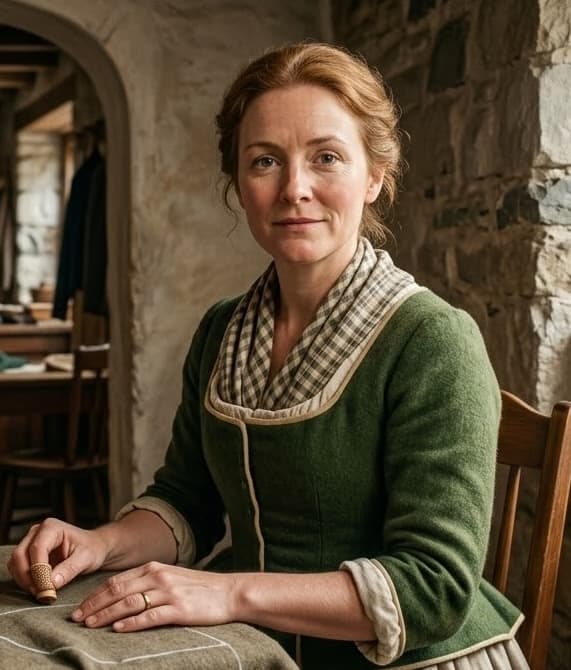
Ai-assisted Portrait of Elizabeth Sanders Mulligan.
The Quiet Keeper of the Household Front
Born in the mid-18th century, Elizabeth Sanders Mulligan lived during one of the most turbulent moments in early American history.
In 1773 she married Hercules Mulligan, a New York tailor whose shop would soon become an unlikely intelligence hub during the American Revolution.
When British forces occupied New York City, Mulligan maintained his business and cultivated relationships with British officers, many of whom visited his shop for uniforms and clothing. These interactions allowed him to quietly gather military intelligence, which he passed along to the network serving George Washington.
Elizabeth lived in the center of this dangerous environment.
Their home and business functioned as a small but effective intelligence node. British officers frequently visited, conversations were overheard, and information sometimes traveled through the household before reaching Washington’s network.
Operating under these circumstances required discretion, composure, and the ability to maintain an outward appearance of normal life while extraordinary events unfolded behind the scenes.
Elizabeth Mulligan did not appear in the public political sphere.
Yet her household stood at the intersection of espionage, war, and revolutionary change.
The Psychological Verdict
Elizabeth Mulligan is best understood as ISTJ.
Although the surviving historical record about her is limited, the available context suggests a personality oriented around responsibility, discretion, and stability.
While revolutionary figures such as Hamilton or Lafayette were driven by ideological visions of political change, Elizabeth’s role was grounded in maintaining the household and supporting a covert operation that depended heavily on reliability and secrecy.
This pattern aligns with the Si–Te cognitive framework.
Her contribution to the revolutionary cause was not through speeches or political writings.
It was through quiet endurance and careful responsibility.
Si — dominant
Elizabeth’s life reflects the stabilizing qualities associated with dominant Introverted Sensing (Si).
Living in British-occupied New York required maintaining a carefully controlled domestic environment. The Mulligan household needed to appear ordinary and trustworthy while secretly supporting revolutionary intelligence activities.
Si-dominant personalities often excel at preserving order and stability even under pressure.
Elizabeth’s role required precisely that kind of steadiness.
Te — auxiliary
Supporting a covert intelligence operation also required practical judgment.
Information gathered from visiting officers had to be handled carefully, shared selectively, and managed without attracting suspicion. This practical focus on execution rather than ideology reflects the presence of Extraverted Thinking (Te) as a supporting function.
Elizabeth’s contribution was not theoretical.
It was operational.
Fi — tertiary
Although little is recorded about her personal beliefs, Elizabeth’s willingness to live within a household secretly aiding the revolutionary cause suggests a quiet personal loyalty to the people and commitments closest to her.
This kind of reserved, internally held value system is consistent with Fi in a supporting role.
Her motivations likely centered not on political ambition but on personal commitment and trust.
Ne — inferior
Unlike many revolutionary figures who were drawn to bold political ideas and sweeping visions of social change, Elizabeth’s role remained grounded in the immediate realities of daily life.
Her focus appears to have been maintaining stability within a dangerous and uncertain environment.
This contrast reflects the more cautious relationship to uncertainty associated with inferior Ne.
The Household Behind the Spy
The American Revolution depended not only on soldiers and statesmen, but also on individuals who quietly sustained the operations behind the scenes.
The Mulligan household represents one such example.
Hercules Mulligan gathered intelligence from British officers. Couriers carried information across enemy lines.
And Elizabeth helped maintain the stable environment that allowed this dangerous work to continue.
Revolutions often celebrate their generals and political leaders. But they also depend on those who keep the household standing while history unfolds around them.
Connected Figures
Further Reading
- Washington's Spies: The Story of America's First Spy Ring — Alexander RoseCovers the Mulligan household's cover for Washington's intelligence network that Elizabeth quietly sustained.
- Alexander Hamilton — Ron ChernowTraces Hercules Mulligan's close friendship with Hamilton, the circle Elizabeth's household anchored.
- Liberty's Daughters: The Revolutionary Experience of American Women, 1750-1800 — Mary Beth NortonFrames the domestic risk a wife like Elizabeth carried while her husband ran a covert operation from their home.
