 Historical Figure MBTI
3 min read
#85 · 3-2-26 · The Founding Generation of USA
Cato
Courier in the American Revolutionary intelligence network and assistant to Hercules Mulligan.
dates unknown
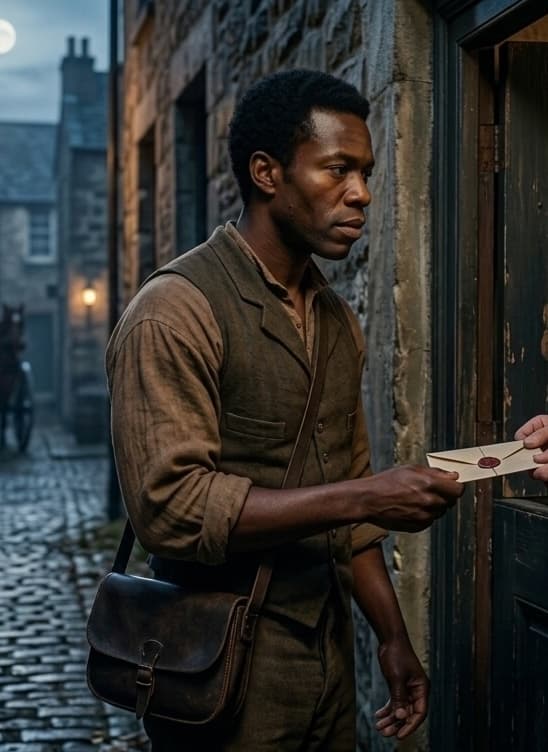
Ai-assisted Portrait of Cato.
The Invisible Courier of the Revolution
Very little is known about Cato, yet his actions placed him at the center of one of the most dangerous intelligence operations of the American Revolution.
Cato was an enslaved man who worked alongside Hercules Mulligan, a New York tailor who secretly gathered intelligence for George Washington while the city was occupied by British forces.
Mulligan’s shop attracted British officers who often spoke freely about military plans, troop movements, and strategic operations. The information Mulligan gathered needed to reach American forces outside the city.
That responsibility frequently fell to Cato.
Acting as a courier, he carried intelligence between British-controlled New York and American positions across the Hudson River in New Jersey. These journeys required moving through hostile territory where discovery could have resulted in severe punishment or execution.
Despite the extreme risks, Cato repeatedly carried out this role, helping ensure that valuable intelligence reached Washington’s network.
Like many individuals who participated in covert operations during the war, his contributions were rarely recorded in detail. As a result, much of his personal story remains hidden from the historical record.
Yet the success of revolutionary intelligence networks depended on individuals like him.
Without couriers willing to carry information across enemy lines, the system would not have functioned.
The Psychological Verdict
Unlike many prominent historical figures, there is not enough information to assign a reliable MBTI type to Cato.
Most surviving sources mention him only briefly, usually in connection with Mulligan’s espionage activities. We do not have personal letters, recorded conversations, or detailed descriptions of his behavior that would allow meaningful analysis of his cognitive patterns.
Because of this, any attempt to assign a specific personality type would be speculative rather than evidence-based.
For historical figures whose inner lives are poorly documented, the most responsible conclusion is sometimes the simplest one: Cato’s psychological profile remains unknown.
What His Role Reveals
Even though his personality type cannot be determined, Cato’s role in the Revolutionary War still reveals important traits.
Operating as a courier required courage, composure, and reliability. Intelligence networks depend heavily on individuals who can move unnoticed through dangerous environments while maintaining strict secrecy.
Cato carried information across British-controlled territory, a task that demanded both discipline and situational awareness.
These qualities made him an essential part of Washington’s intelligence system.
The Hidden Participants of History
History often remembers revolutions through the names of generals, politicians, and philosophers. But revolutions also depend on individuals whose names rarely appear in official records.
Cato represents one of those figures.
While leaders debated strategy and armies fought battles, he quietly carried messages through enemy territory, helping ensure that critical information reached the people who needed it most.
His story reminds us that the success of great historical movements often depends on individuals whose contributions remain largely unseen.
The revolution produced many heroes. Some of them history barely recorded.
Connected Figures
Further Reading
- Washington's Spies: The Story of America's First Spy Ring — Alexander RosePlaces Cato's courier work for Hercules Mulligan inside the wider intelligence operations feeding Washington.
- Alexander Hamilton — Ron ChernowTraces Hamilton's ties to Mulligan's shop, the same network node through which Cato passed intelligence.
- Founding Brothers: The Revolutionary Generation — Joseph J. EllisGeneral context for the wartime New York in which an enslaved courier like Cato risked his life unnoticed.
