 Historical Figure MBTI
#1305 · 9-28-26 · Heian Japan
Emperor Ichijō
Emperor · Patron of Two Imperial Households
980–1011
5 min read
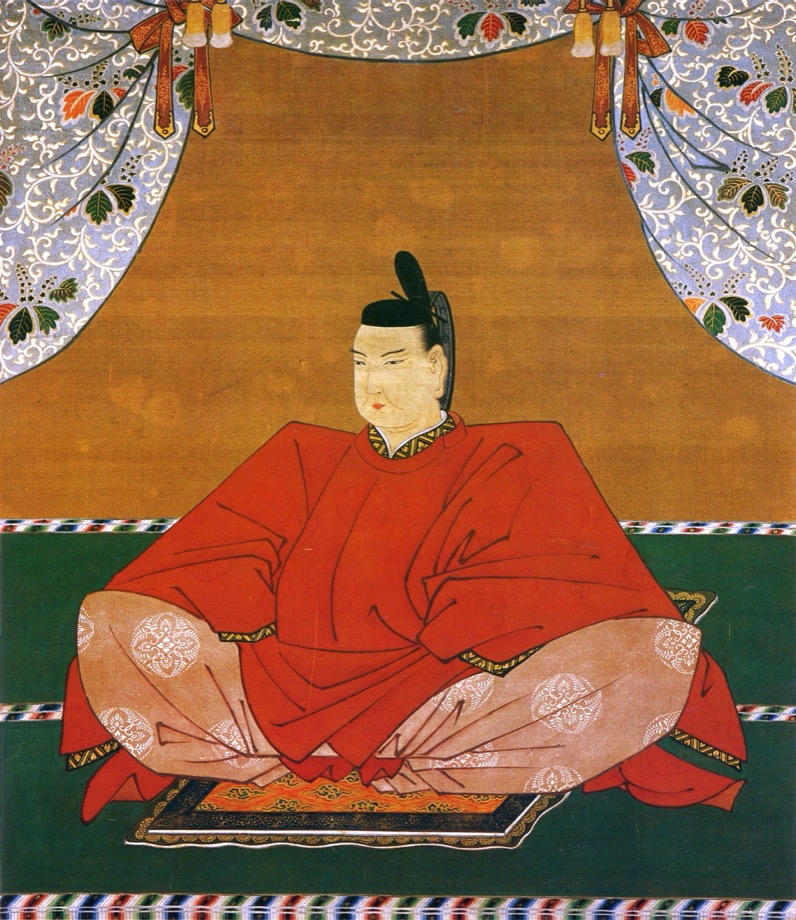
Portrait of Emperor Ichijō — Edo period (1603–1868) (later depiction)
The sovereign glimpsed through other households
Emperor Ichijō appears in the literature of his reign as the person whose arrival rearranges a room. Curtains, attendants, gifts, clothing, and the visible order of rank become important because the sovereign is coming. Such scenes offer unusually rich evidence about an imperial court. They offer a more restricted view of the individual who occupies its central position. Attention to a person’s presence does not necessarily reveal the preferences that person would express outside the ceremony.
Ichijō reigned from 986 to 1011, ascending as a child into a court shaped by powerful maternal relatives. The households of his empresses Teishi and Shōshi became settings for the work of Sei Shōnagon and Murasaki Shikibu. His reign is therefore central to the surviving literary image of Heian Japan. He remains Untyped here because the selected evidence does not securely separate his temperament from the obligations, privileges, and staged appearances of his office.
A royal visit as a carefully arranged event
Murasaki’s diary records the emperor’s visit following the birth of Shōshi’s son in 1008. In the early English translation by Annie Shepley Omori and Kōchi Doi, the account attends closely to the imperial chair, curtains, attendants bearing the sword and seals, and the colors and movements of the women serving him. The description makes royal presence visible through a sequence of other people’s preparations. Readers encounter the sovereign’s household as an arrangement of bodies, objects, and permissions.
This is a valuable distinction for historical interpretation. The ceremony is evidence of what the court considered appropriate and of what Murasaki noticed from her position within it. It is not a test of whether Ichijō preferred order for psychological reasons. A king might comply with an elaborate ritual through conviction, habit, duty, or the absence of an acceptable alternative. The observable result cannot choose among those explanations without further personal evidence.
The diary’s perspective also places limits on intimacy. Murasaki can notice a small attendant’s shyness and compare the effect of different costumes while the emperor remains principally the focus around which the occasion is organized. That asymmetry should be preserved rather than filled with speculation. A vividly described reign can contain many recoverable social experiences and still leave the ruler’s private habits of thought comparatively obscure.
Two empresses and unequal family resources
Teishi’s household and Shōshi’s household belonged to the same imperial world but had different fortunes. The death of Teishi’s father and the reversal of her brothers undermined one family’s position. Michinaga’s power supported the other. The existence of two empresses and the importance of their children made household culture inseparable from succession and access. Literature could provide distinction, but the resources that sustained literary distinction were also political.
Ichijō should not consequently be reduced to an empty instrument of the Fujiwara. Marriage networks explain important constraints, not every act of a sovereign. Equally, attachment to a consort does not establish a complete autonomous program of resistance to those networks. Affection, ritual legitimacy, kinship, and ministerial influence could coexist. The surviving narratives allow these relationships to be examined without forcing them into a modern opposition between a fully independent ruler and a powerless puppet.
The women’s writings give those arrangements texture. The Pillow Book’s remembered exchanges and Murasaki’s account of Shōshi’s household are different works with different purposes. Placing them together reveals multiple centers of literary activity around one emperor. It does not make either narrator an impartial observer of every imperial decision. The differences between their vantage points are part of the evidence, rather than inconsistencies to be resolved by declaring one writer the sovereign’s authentic interpreter.
Learning as a courtly practice
Fukumori’s study of Chinese learning emphasizes its performance within these households. Recognizing an allusion could be an act of social participation, and the presentation of learning depended on who was speaking and who could respond. The imperial setting gave such activity significance without making every participant’s scholarship equivalent. Ichijō’s court supported a cultural environment in which written knowledge circulated through conversation, patronage, and the arrangement of occasions.
It would be easy to turn that environment into a type. A literary court might suggest an intuitive ruler; a ceremonially ordered court might suggest a judging ruler; imperial affection might suggest a feeling ruler. Each inference mistakes a context containing many people’s labor for a discriminating personal pattern. The problem is not that Ichijō lacked individuality. It is that these descriptions would fit substantially different individuals occupying the same historical role.
Untyped therefore preserves a positive historical account. We can discuss his reign, family relationships, and the surviving representations of his appearances without assigning an unsupported psychological hierarchy. The distinction also keeps the cultural achievement from being attributed entirely to a single royal mind. Writers, empresses, attendants, ministers, and material resources all helped make the literary court whose works continue to shape the memory of his reign.
Connected Figures
Further Reading
- The Diary of Lady Murasaki — Murasaki Shikibu; translated by Richard BowringAn account from Shōshi’s household that supplies a different vantage on imperial visits, literary display, and the pressures surrounding an empress.
- The Pillow Book — Sei Shōnagon; translated by Meredith McKinneyRead the lists alongside the court narratives, attending to the difference between remembered occasions and the narrator’s presentation of them.
- Chinese Learning as Performative Power in Makura no sōshi and Murasaki Shikibu nikki — Naomi FukumoriExplains how classical knowledge could become a social performance within women’s court households, rather than a simple measure of solitary scholarship.
