 Historical Figure MBTI
#1300 · 9-27-26 · Heian Japan
Fujiwara no Michinaga
Court Minister · Dynastic Patriarch · Patron
966–1028
7 min read
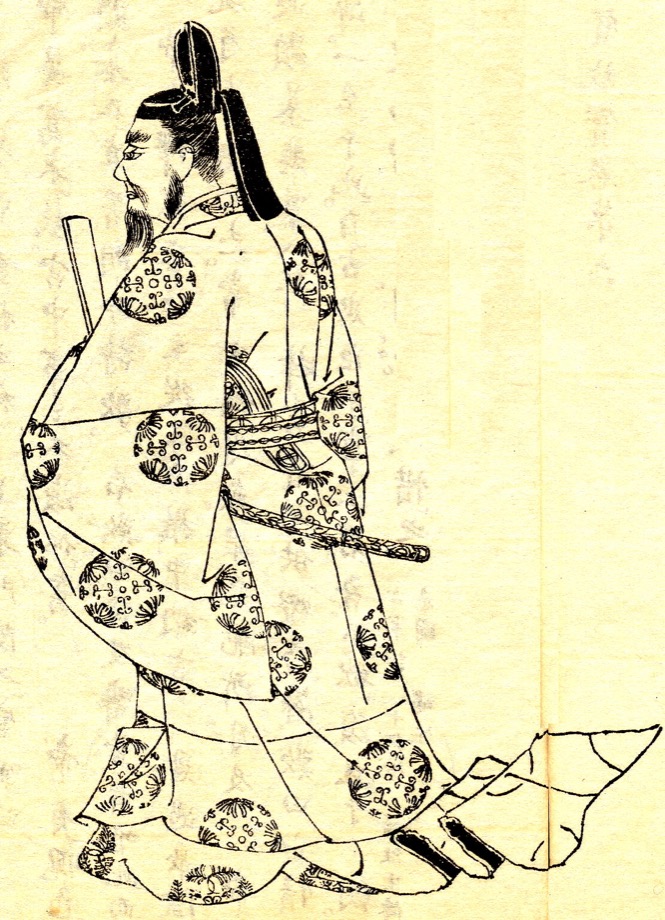
Portrait of Fujiwara no Michinaga — 19th-century drawing; source publication 1868 (later depiction)
Power Joined Through a Household
Fujiwara no Michinaga's authority did not depend on replacing the imperial dynasty. It depended on making his household indispensable within it. Office, daughters' marriages, royal grandchildren, and conspicuous religious patronage reinforced one another. A tentative ENTJ interpretation concerns that coordination of resources and relationships. It remains low confidence because successful dynastic politics does not disclose every motive or establish a temperament by itself.
Born in 966, Michinaga was a younger son of the powerful Fujiwara no Kaneie. His eventual prominence was not the uncomplicated execution of a plan begun in childhood. The deaths of his elder brothers Michitaka and Michikane in 995 changed the available succession within the family. Michinaga secured responsibility for inspecting documents submitted to the emperor and became a leading minister. Opportunities created by illness and mortality were as consequential as choices made by the surviving politician.
His diary, known as Midokanpakuki, offers unusually substantial evidence for court life. Its title should not lead readers to give him an office he never held: Michinaga did not become kanpaku. He exercised extensive authority through other positions, including the brief regency for his grandson in 1016–1017. The difference between a conventional title attached to a text and an actual appointment matters in explaining how his power worked.
ENTJ is a low-confidence reading of dominant Extraverted Thinking: Michinaga repeatedly connected offices, family alliances, and public observances into an effective arrangement of court authority.
An Arrangement That Could Act
The authority acquired after 995 involved access to documents, precedence in the council, and the capacity to influence appointments. These were practical mechanisms inside an imperial government, rather than simply honors reflecting a famous family name. Michinaga's position gave him opportunities to shape the business that passed through court and to support the advancement of people connected to his household.
The setback of his nephew Korechika in 996 helped remove a serious competitor. Accounts of Korechika's offenses and the politics of his punishment require caution: events were interpreted within an interested court world, and later narration could make the victorious household's ascendancy seem inevitable. The outcome is clearer than a complete reconstruction of every accusation or Michinaga's private role. His authority expanded after a rival's removal; that does not establish that he invented every charge.
Extraverted Thinking is proposed for the recurrent coordination of concrete positions and obligations. Michinaga made influence effective through an arrangement other courtiers had to encounter in their work. The inference does not rest on the mere fact that he commanded resources. His inherited connections made those resources available, and the administrative demands of a great household can resemble a personal preference for organization even when that preference remains unobserved.
Succession Carried Through Relationships
Shoshi's place as Ichijo's consort made the birth of her sons especially important to Michinaga. The birth of Atsuhira in 1008, later Emperor Go-Ichijo, connected his household to a prospective sovereign as the maternal grandfather's family. Other daughters' imperial marriages extended the pattern across reigns. Kinship did not guarantee uninterrupted control, but it could place the same household near successive centers of authority.
Introverted Intuition is a tentative interpretation of the longer arrangement visible across these decisions. Marriages, appointments, and succession were not isolated transactions. Their consequences could accumulate over generations, and Michinaga's household benefited from their connection. Yet it would be excessive to claim that he foresaw each death, birth, or imperial transition. The relevant pattern combines preparation with adaptation to contingencies, rather than a flawless private blueprint.
Women were not interchangeable pieces in that arrangement. Shoshi's household possessed its own relationships, resources, and cultural activity. Rinshi, Michinaga's wife and Shoshi's mother, also appears prominently in accounts of the family and the birth ceremonies. Describing Michinaga's coordination should not erase the people whose status, labor, and obligations made a dynastic strategy possible. Nor does the resulting family success establish the consent or satisfaction of everyone involved.
The Diary Was a Working Record
Court diaries recorded what descendants might need to know about ceremony, office, and precedent. Michinaga's record belongs to that practical tradition. Its extant portions cover years between 998 and 1021, with detailed attention to family events of political consequence. The diary is therefore neither a modern confidential journal nor merely propaganda composed for strangers. Its household use helps explain both its specificity and its selective field of vision.
Murasaki's diary provides a different view of the same world. In her account, public celebration can become boisterous, and a great patron can intrude on an attendant's space. These observations complicate a portrait assembled only from successful appointments and grand buildings. They reveal the inequality of access and the behavior of people during festivities without allowing one evening to stand for Michinaga's entire personality.
The famous image of complete satisfaction associated with his full-moon poem should likewise be kept in proportion. Court poetry was performance within an occasion and a literary tradition. A triumphant utterance can express achieved status without proving lifelong security, absence of fear, or unlimited power. Illness, succession, ritual obligation, and the instability of human relationships remained part of his world. The man should not disappear behind a single memorable emblem of prosperity.
Religious Patronage and the Transfer of Office
In 1017 Michinaga transferred the regency to Yorimichi. Withdrawal from that particular office did not end his influence. He retained the prestige and relationships of the senior household figure, while his son acquired a recognized governing position. The transfer illustrates how a family could distribute authority among generations rather than make every decision depend on one person's continuous possession of a title.
His later religious patronage, notably the great Hojo-ji complex, belonged to a setting where devotion, social standing, and material resources were intertwined. It need not be reduced either to insincere political display or to a sudden rejection of worldly power. Aristocrats could pursue religious benefit through the same household capacity that supported their public position. Buildings required property, skilled work, ritual personnel, and continuing provision.
Michinaga died in 1028 in modern Gregorian dating; some older accounts give the corresponding Japanese year as 1027. The prosperity of his household survived him, but later developments cannot be read as simple extensions of his intention. Yorimichi faced his own political circumstances, and imperial authority remained a participant in court politics. The father's achievement established advantages without determining every outcome for those who inherited them.
Testing the ENTJ Reading
Why not ESTJ?
ESTJ is a strong alternative because Michinaga operated through inherited offices, precedents, and ceremonial practices. ENTJ is preferred only tentatively for the coordination of those resources toward a succession arrangement extending beyond a single office or reign. The distinction remains weak: the court’s established methods and the politician’s personal habits cannot be cleanly separated.
The type is an editorial hypothesis about a recurring public pattern, not a psychological explanation for Fujiwara ascendancy or a verdict on the legitimacy of his power.
Connected Figures
Further Reading
- The Cambridge History of Japan, Volume 2: Heian Japan — Donald H. Shively and William H. McCullough, editorsStudies of court government, aristocratic households, religion, and the institutions within which these lives unfolded.
- A Tale of Flowering Fortunes: Annals of Japanese Aristocratic Life in the Heian Period — William H. McCullough and Helen Craig McCullough, translatorsAn annotated translation of Eiga monogatari, to be read as an interested literary account of aristocratic fortunes rather than a neutral transcript.
- The Diary of Lady Murasaki — Murasaki Shikibu; translated by Richard BowringA modern translation with historical commentary, useful for distinguishing the writer’s observations from the identities and claims surrounding them.
- The World of the Shining Prince: Court Life in Ancient Japan — Ivan MorrisAn influential account of court society and its literature, best read alongside subsequent scholarship and direct translations.
