 Historical Figure MBTI
#1299 · 9-27-26 · Heian Japan
Murasaki Shikibu
Court Writer · Author of The Tale of Genji
c. 973–after 1013; death date uncertain
10 min read
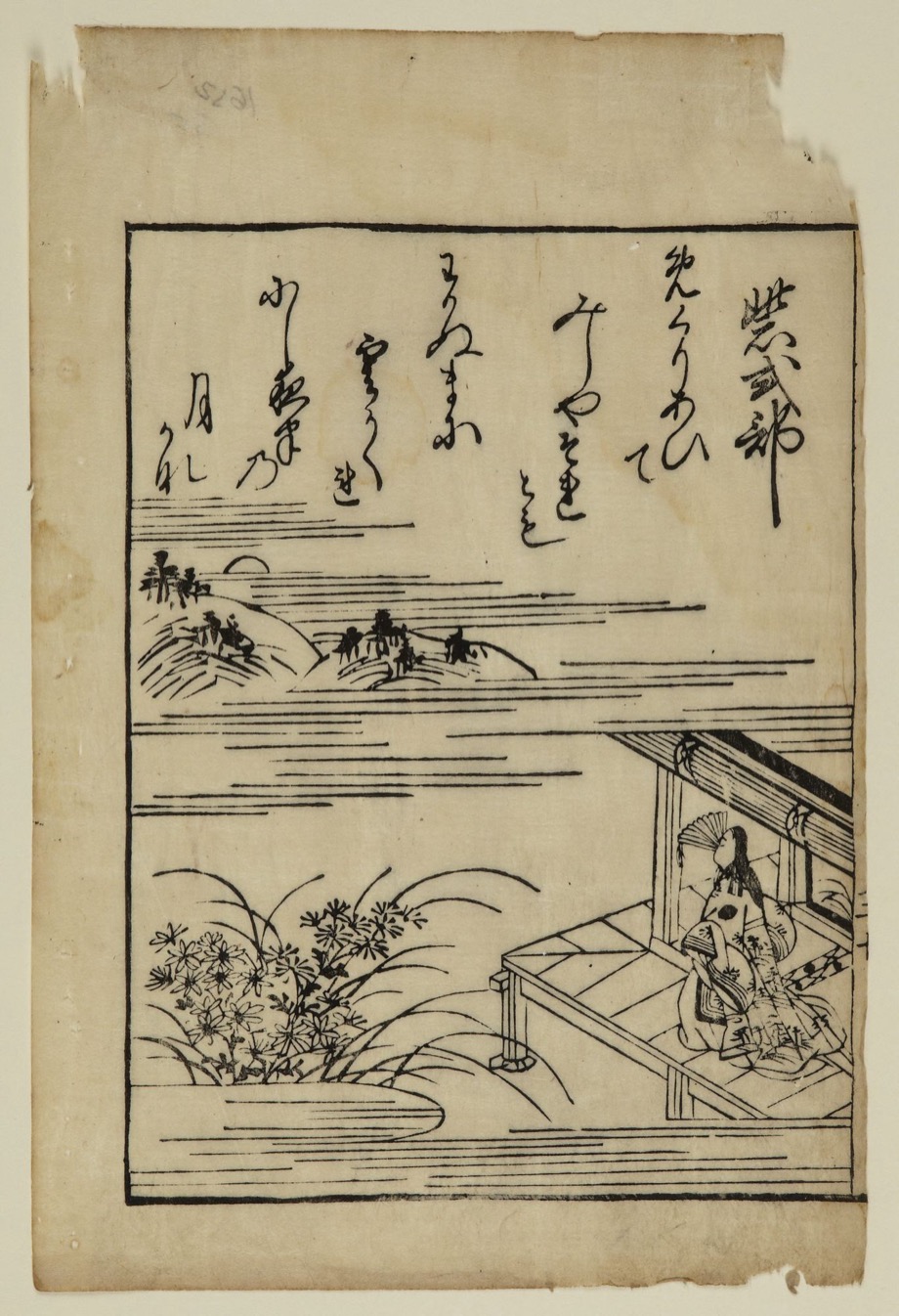
Murasaki Shikibu — c. 1652 (later depiction)
The Observer Behind the Screens
Murasaki Shikibu knew that being watched changed what a person could safely reveal. At court, a display of learning might invite criticism; a letter might travel beyond its intended reader; apparent reserve might become a reputation for arrogance. Her diary examines these pressures while participating in them. A tentative INFJ reading begins with this sustained interpretation of people inside a shared social world. It does not come from assigning the traits of Genji, his lovers, or the novel's narrator to their author.
Her life is less securely documented than her fame suggests. The conventional birth date around 973 is an estimate, and her death date remains uncertain. Murasaki Shikibu is a court designation rather than a securely recovered personal name. Her father, Fujiwara no Tametoki, was a learned official. She married Fujiwara no Nobutaka and had a daughter; widowhood preceded her service in the household of Shoshi, a daughter of Fujiwara no Michinaga and consort of Emperor Ichijo.
The surviving diary concentrates on 1008–1010, including the birth of Shoshi's first imperial son. It brings public ceremony into contact with the writer's reflections on friendship, education, reputation, and religious withdrawal. These passages offer more individual evidence than a later portrait or a legend about the composition of Genji. They are still selected and shaped writing, addressed in part to another person, rather than a continuous record of everything Murasaki thought or did.
INFJ is a tentative interpretation of dominant Introverted Intuition: Murasaki repeatedly draws individual encounters into a considered understanding of relationships and their consequences.
The Consequences Beyond the Encounter
Murasaki's strongest claim to this reading lies in interpretation rather than merely in imaginative power. Her diary does not simply list people as pleasant or unpleasant. It considers how reputation develops, why a reserved person is misunderstood, and what changes when someone enters a new household. Individual gestures become evidence within a larger account of social exposure. The writer is interested in the gap between what another person sees and what an action means to the person performing it.
Her reflections on returning home after court service are particularly revealing. The old surroundings remain, but her relationships no longer have the same ease. Former correspondents may understand her advancement in ways she cannot control, while new acquaintances may circulate what she writes. This is not just dislike of company. It is an interpretation of how a changed position alters the meaning of ordinary communication. Murasaki recognizes that the same letter, written by the same hand, can become a different social object.
Introverted Intuition offers a tentative description of this movement from an incident to a pattern with implications beyond it. The inference concerns a recurring method of assessment in first-person writing. It is stronger than typing her from the existence of a long novel, but weaker than observing her across a lifetime. A writer can cultivate an interpretive voice that differs from her conduct in other situations. Literary skill and personality overlap imperfectly, and the account must leave room for that difference.
Intimacy with an Audience Outside It
Court service required attention to other people without guaranteeing the privacy of a relationship. Screens, curtains, layered clothing, and formally mediated speech structured access, but they did not eliminate scrutiny. Murasaki understands that a woman's bearing can be judged even when her opportunities to explain herself are narrow. Her attention to embarrassment, companionship, and the reception of words belongs to this historical arrangement, not to a timeless category of a naturally sensitive woman.
The diary also records affection and dependence. Companions make service bearable, and separation from a trusted fellow attendant produces longing. Such connections complicate the familiar image of an isolated genius disdaining everyone around her. She could value closeness while fearing what careless disclosure might cost. A desire for a trustworthy audience is not the same as a desire to escape all audiences, especially for someone whose work relied on being read and discussed.
Extraverted Feeling is proposed for the continuing attention to how expressions are received and how relationships can be maintained under those conditions. It does not mean that Murasaki approves of everyone, avoids harsh judgment, or subordinates every conviction to harmony. Her assessments can be severe. The relevant pattern is that she weighs personal conduct through its place in relationships, including the risks and obligations that make those relationships possible.
Learning That Could Be Concealed
Murasaki's account of education challenges a simple division between learned men and unlearned court women. She remembers absorbing Chinese historical learning while her brother studied. Later, she taught Shoshi material from Bai Juyi's collected writings. She also describes concealing the extent of her knowledge. The contrast is between possession and display: knowing a text did not mean it was always prudent to advertise that knowledge before a particular audience.
This evidence supports a cautious interpretation of Introverted Thinking as a concern for her own discriminating judgment rather than an automatic response to prestige. She can assess a reputation without accepting it, including the reputation of another accomplished writer. Yet mastery of Chinese literature alone proves neither a function nor a type. Her intellectual preparation belonged to a learned household, and her educational opportunities were shaped by that circumstance as well as by personal ability.
Her famous criticism of Sei Shonagon needs the same restraint. It comes from a writer serving Shoshi, while Sei had served the household of Teishi. Murasaki's objection to conspicuous learning is evidence of her own standards and of tensions among courtly reputations. It is not an impartial assessment of every aspect of Sei's character. Reading the passage alongside The Pillow Book preserves two distinctive literary voices without turning an interested remark into a definitive psychological diagnosis.
A Novel Is Not a Disguised Diary
The Tale of Genji opens with a contradiction: exceptional imperial favor cannot make a woman's position secure when her rank and family support remain inadequate. Affection changes the distribution of attention and creates grievances, but does not simply erase hierarchy. The opening establishes a world in which feelings have consequences that their possessors cannot wholly direct. Personal relations are inseparable from residence, status, succession, and the people required to sustain a household.
Across the work, memory and unequal access shape what characters can know about one another. A message can arrive late, be interpreted wrongly, or carry expectations its recipient cannot meet. These are literary constructions, however, rather than a catalogue of the author's own experiences. The novel's sustained attention to constrained relationships can be discussed as an artistic achievement without claiming that a heroine's suffering reproduces Murasaki's marriage or that Genji's choices express her private desires.
Nor should the beauty of court culture soften the asymmetry of the relationships represented. Rank, gender, age, and dependence affect whose wishes can become action. Genji's charm does not remove those disparities, and readers need not equate narrative attention with moral approval. An author can render a character's attraction and vulnerability while leaving the consequences of his behavior visible. That complexity is lost if every scene is reduced to either celebration or condemnation.
The distinction matters especially for personality inference. An accomplished novelist can imagine motives unlike her own, shift perspective, and make contradiction productive. The novel corroborates the scope of Murasaki's literary intelligence, but the diary offers the more appropriate starting point for a tentative account of her habitual judgment. Even there, the speaker is a constructed self, and comparison with the fiction cannot turn an interpretation into an observed psychological fact.
The Work Had to Be Made and Circulated
Genji was also an object produced in a court household. Paper, brushes, copying, and readers mattered alongside invention. Murasaki describes book preparation in Shoshi's service, and Michinaga appears as a patron who supplies materials while also intruding on the writer's control of her manuscripts. The relationship afforded resources and access, but it was unequal. Literary prestige did not mean that the author could decide every circumstance in which an unfinished text would be encountered.
This material setting prevents the familiar picture of a solitary author creating an entirely private masterpiece. Reading aloud, copying, exchanging books, and responding to literary reputations connected the work to other people. The household's women were not simply an audience waiting for a completed product. Their participation helped constitute the conditions under which literature circulated. Murasaki's achievement remains hers without requiring the disappearance of the people, labor, and patronage around it.
No autograph manuscript of The Tale of Genji survives. Copyists transmitted the text through manuscripts with variations, omissions, and altered readings. Later scholars organized and compared those witnesses, and later artists visualized its scenes. The work now encountered by readers is therefore inseparable from a long history of preservation and interpretation. A surviving painted image of Murasaki is evidence of that reception, not a contemporary observation of her face or temperament.
Religious Reflection Without a Retrospective Diagnosis
Murasaki's religious reflections belong to a court where Buddhist practice and aristocratic life were deeply connected. Aspirations toward withdrawal coexist with attachment to friends, worry about conduct, and continuing service. These tensions do not require a story in which her authentic spiritual self was trapped beneath a false public one. They show a writer considering obligations and desires that did not fit together easily.
The record also cannot justify diagnosing depression, a collapse of an inferior function, or a clinical condition from elegiac passages. Mourning, seasonal poetry, Buddhist reflection, and letter writing supplied recognized ways to express distress. Taking her unhappiness seriously means reading its circumstances and forms, rather than translating every statement into a modern symptom. The type proposal remains an account of recurrent interpretive habits, not an explanation for all suffering or all artistic achievement.
Testing the INFJ Reading
Why not INFP?
INFP is a credible alternative because the diary contains private attachments, self-questioning, and resistance to expectations. INFJ is preferred tentatively where Murasaki repeatedly interprets those feelings through the relationships and reputations surrounding them. The distinction is limited: neither literary introspection nor reluctance to disclose oneself can decide the question alone.
Why not INTJ?
Her learning and penetrating criticism could suggest INTJ. The diary, however, repeatedly centers the reception of words, the need for trusted companionship, and the costs of social misunderstanding. That emphasis supports the proposed reading more than an account organized chiefly around impersonal plans. It does not imply that scholarship belongs to one type or that an emotional subject rules out another.
Confidence is moderate only relative to much thinner historical records. A substantial first-person work permits a reasoned proposal while leaving the author’s full life and the shaping of her literary persona beyond reconstruction.
Connected Figures
Further Reading
- The Diary of Lady Murasaki — Murasaki Shikibu; translated by Richard BowringA modern translation with historical commentary, useful for distinguishing the writer’s observations from the identities and claims surrounding them.
- The Tale of Genji — Murasaki Shikibu; translated by Royall TylerA complete modern translation whose notes clarify court relationships and allusions; fictional speakers should not be equated with the author.
- A Tale of Flowering Fortunes: Annals of Japanese Aristocratic Life in the Heian Period — William H. McCullough and Helen Craig McCullough, translatorsAn annotated translation of Eiga monogatari, to be read as an interested literary account of aristocratic fortunes rather than a neutral transcript.
- The Cambridge History of Japan, Volume 2: Heian Japan — Donald H. Shively and William H. McCullough, editorsStudies of court government, aristocratic households, religion, and the institutions within which these lives unfolded.
- The Tale of Genji: A Japanese Classic Illuminated — John T. Carpenter and Melissa McCormick, editorsEssays on the novel’s manuscripts, images, and reception that help distinguish its author from later visual traditions.
