 Historical Figure MBTI
#1302 · 9-27-26 · Heian Japan
Fujiwara no Yorimichi
Regent · Court Minister · Founder of Byōdōin
992–1074
5 min read
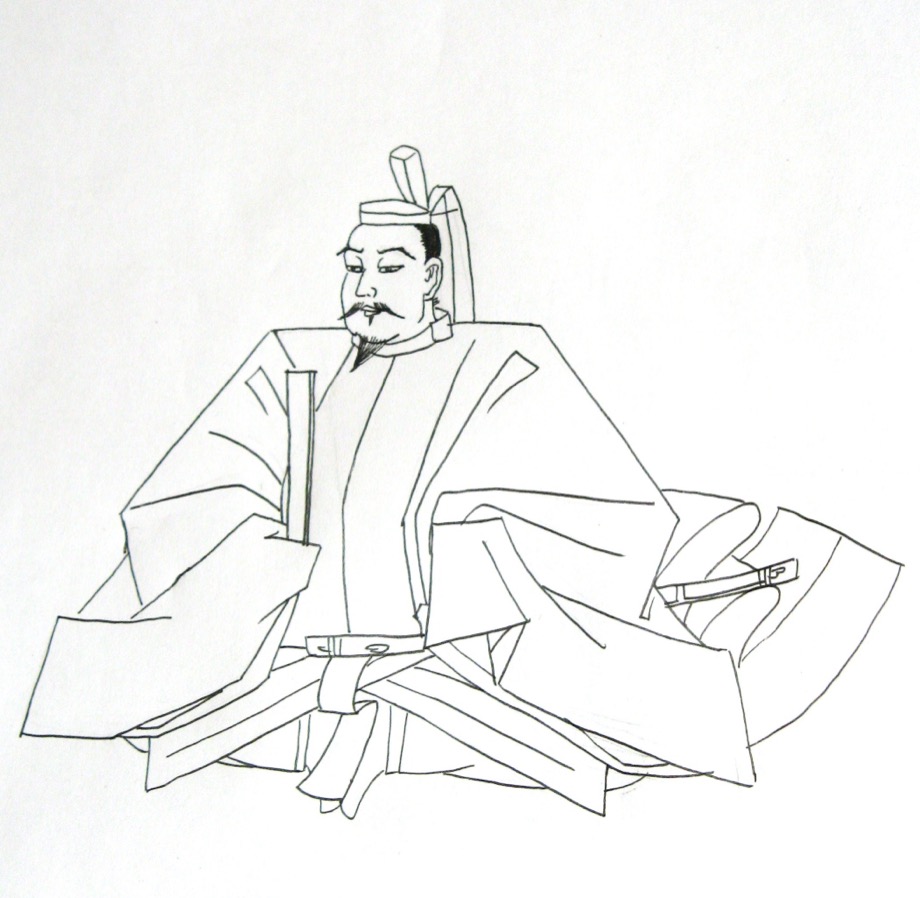
Fujiwara no Yorimichi — imagined drawing by ラッチキング, 2010
An Inheritance That Had to Be Sustained
Fujiwara no Yorimichi received advantages that few courtiers could approach. His father's household already stood close to the throne, and his sister Shoshi was the mother of imperial sons. His career concerned the maintenance and use of that position over decades. A tentative ISTJ reading addresses sustained institutional service and the stewardship of an inherited estate. It is low confidence, because continuity in office may reflect opportunity and circumstance as much as temperament.
Born in 992, Yorimichi received the regency from Michinaga in 1017 and served as regent or chief adviser across subsequent reigns until 1068. These offices described relationships to emperors of different ages; they were not a single modern executive position. His long tenure demonstrates the strength of the family's arrangement, but it should not turn its continuation into an absence of political negotiation.
ISTJ is a low-confidence interpretation of dominant Introverted Sensing: Yorimichi’s public record centers on sustaining inherited court responsibilities and giving established household resources a continuing institutional use.
Keeping an Arrangement in Operation
Michinaga's transfer of office did not eliminate the father's influence, and Yorimichi initially operated within the authority of a senior household figure. After Michinaga's death, the son possessed substantial residences, connections, and resources. Inheritance supplied the means of a career; it did not automatically perform the responsibilities attached to it. Court business continued through appointments, ceremonies, counsel, and the recognition of precedence.
Introverted Sensing is proposed for the persistence of institutional relationships rather than for an imagined personal attachment to every custom. Yorimichi worked through positions that already carried understood duties and authority. The tentative reading emphasizes continuity made practical over a long tenure. It cannot establish whether his reliance on established arrangements came from preference, political necessity, or both.
The limitations of the arrangement became clearer as reigns changed. Maternal kinship could make a great difference to a Fujiwara adviser's influence, but it was not identical under every emperor. Go-Sanjo's accession in 1068 occurred outside the same pattern of immediate maternal connection to the leading northern Fujiwara household. The change cautions against describing Yorimichi's authority as permanent possession of the monarchy.
An Estate Given an Institutional Future
At Uji, Yorimichi converted a villa inherited from Michinaga into Byodoin in 1052. The following year saw the completion of the Amida Hall, now commonly called the Phoenix Hall. The chronology distinguishes founding a temple from completing its best-known surviving structure. It also prevents the mistaken impression that Michinaga personally handed over the estate in 1052, decades after his death.
Extraverted Thinking is a cautious description of the material coordination implicit in such patronage. A temple required land, funding, skilled construction, sculpture, painting, ritual provision, and continued maintenance. Resources previously associated with aristocratic residence acquired a religious institutional purpose. The patron's role connected those resources, but the resulting building cannot reveal every decision by which they were assembled.
The artistic achievement was collaborative. The Amida image is associated with the sculptor Jocho, while architecture, painted surfaces, and attendant figures depended on other skilled work. Yorimichi's patronage made the undertaking possible without making him the author of all its forms. Typing him from the building's ordered appearance would confuse an institution produced by many people with the individual mind of the person who paid for it.
Religious Purpose in a Courtly Landscape
The temple's foundation is commonly associated with the expectation that the age of declining Buddhist teaching, mappo, had begun. This was a religious account of history, not simply a prediction that the physical world would end at once. Concern about access to salvation belonged alongside established practices of devotion and patronage. It should not be translated into a psychological diagnosis of fear in Yorimichi.
The Amida Hall and its images provided a setting for Pure Land worship within a landscape already associated with elite residence. Water, views, and architectural arrangement had religious and social meaning. Yet the present site includes later repairs and restoration; not every feature now visible can be treated as an unchanged expression of an eleventh-century intention. The surviving monument has its own long history after the patron's lifetime.
Yorimichi's political and religious careers also resist a simple division between an ambitious earlier life and a purified retirement. Temple patronage used aristocratic resources and supported family standing while pursuing religious benefit. These purposes could overlap. The historical question concerns how the institution was established and sustained, rather than which single motive would make its patron either admirable or calculating.
Testing the ISTJ Reading
Why not INTJ?
INTJ is plausible if Byodoin and long political tenure are treated as parts of a far-reaching design. ISTJ is preferred tentatively because the available evidence more securely documents continued service and the stewardship of inherited arrangements. A monument’s coherent form is not enough to demonstrate the patron’s personal method of thought.
The interpretation remains low confidence: durable institutions offer evidence of public action, while much of the decision-making inside Yorimichi’s household remains beyond the surviving record.
Connected Figures
Further Reading
- The Cambridge History of Japan, Volume 2: Heian Japan — Donald H. Shively and William H. McCullough, editorsStudies of court government, aristocratic households, religion, and the institutions within which these lives unfolded.
- A Tale of Flowering Fortunes: Annals of Japanese Aristocratic Life in the Heian Period — William H. McCullough and Helen Craig McCullough, translatorsAn annotated translation of Eiga monogatari, to be read as an interested literary account of aristocratic fortunes rather than a neutral transcript.
- The World of the Shining Prince: Court Life in Ancient Japan — Ivan MorrisAn influential account of court society and its literature, best read alongside subsequent scholarship and direct translations.
- Countdown to 1051: Some Preliminary Thoughts on the Periodization of the Buddhist Eschaton in Heian and Liao — Mimi Hall YiengpruksawanA scholarly essay situating beliefs about Buddhist decline within the historical circumstances of eleventh-century patronage.
