 Historical Figure MBTI
3 min read
#58 · 2-19-26 · The Tang Dynasty
Empress Wang
The Traditional Empress in a Transforming Court
c. 628 — 655
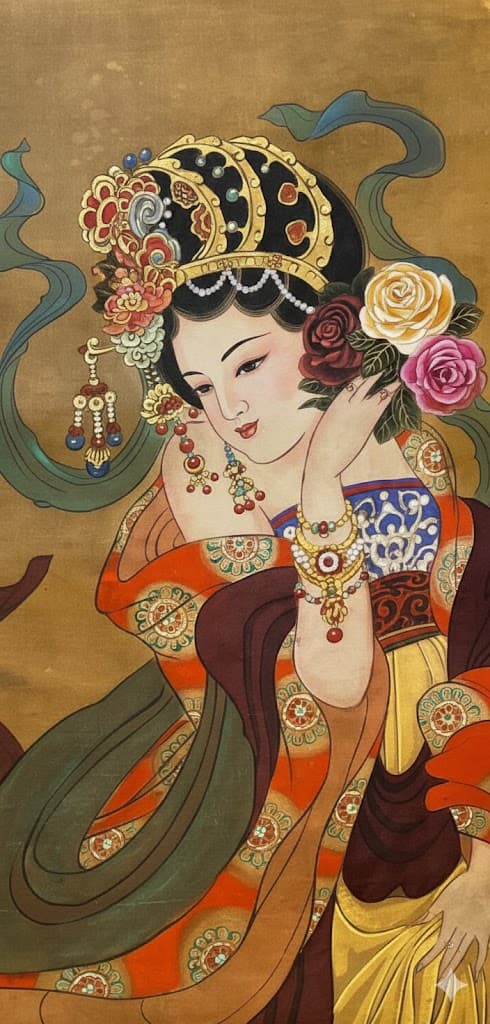
AI-assisted Portrait of Empress Wang.
The Empress Who Could Not Adapt
Empress Wang (c. 628–655) entered the Tang court through aristocratic legitimacy, not political maneuvering. She married Emperor Gaozong of Tang while he was still a prince and was elevated to Empress after his accession in 649.
At first, her position was secure. But palace stability is not maintained by title alone. As Gaozong's favor shifted toward Wu Zetian, Empress Wang's influence declined. What followed was not a counter-strategy of structural consolidation, but a pattern of reactive defense.
Empress Wang reads less like a cold strategist and more like a role-bound traditionalist who struggled when relational security eroded. She aligns with ISFJ. Her story is not one of incompetence — it is one of rigidity in a court that required flexibility.
In a stable court, her temperament may have sustained continuity. In a transforming court, it left her exposed.
Si — Dominant
Wang was anchored in hierarchy and legitimacy: aristocratic birth, formal marriage, and established empress status. She relied on inherited structure rather than constructed alliances. In the Tang court, lineage mattered — and she embodied it.
Si prioritizes continuity and precedent. Wang appeared to assume that proper rank should naturally command loyalty. But palace politics rewards adaptive influence, not static position.
Fe — Auxiliary
Historical accounts describe her as straightforward and unwilling to flatter. She did not cultivate friendships among concubines, attendants, or servants — a significant vulnerability in an inner palace system built on informal networks.
Fe-dominant types build social infrastructure instinctively. Wang did not. But ISFJ Fe is relational, not manipulative. It seeks harmony within established circles — not political expansion. When displaced, it can become emotionally distressed rather than strategically calculating. Her decision to bring Wu Zetian back to counter another rival appears emotionally motivated and short-sighted — a reaction to immediate threat rather than long-range projection.
Ti — Tertiary
Wang did not attempt structural reform, institutional realignment, or aggressive political purges. She defended position. She did not redesign the system. That distinguishes her sharply from Wu Zetian's Te-dominant consolidation.
The Court Contrast
Placed within the Tang power triangle:
- • Wu Zetian (ENTJ) — strategic expansion and institutional restructuring
- • Emperor Gaozong (INFP) — emotionally responsive, relationally guided
- • Empress Wang (ISFJ) — traditional, role-devoted, hierarchy-anchored
Wu built networks. Wang relied on legitimacy. Wu maneuvered. Wang reacted.
Connected Figures
Further Reading
- Wu Zhao: China's Only Woman Emperor — N. Harry RothschildCovers the rival, Wu Zetian, who displaced Empress Wang and ultimately ordered her death.
- Wu Tse-t'ien and the Politics of Legitimation in T'ang China — R. W. L. GuissoDetails the court intrigue that eroded Empress Wang's position as Gaozong's favor shifted.
- The Cambridge History of China, Volume 3: Sui and T'ang China, 589-906 — Denis Twitchett (ed.)Sets Empress Wang's aristocratic legitimacy against the Tang court's shifting rules of succession and favor.
