 Historical Figure MBTI
3 min read
#57 · 2-19-26 · The Tang Dynasty
Emperor Gaozong of Tang
The Gentle Sovereign in a Violent Court
628 — 683
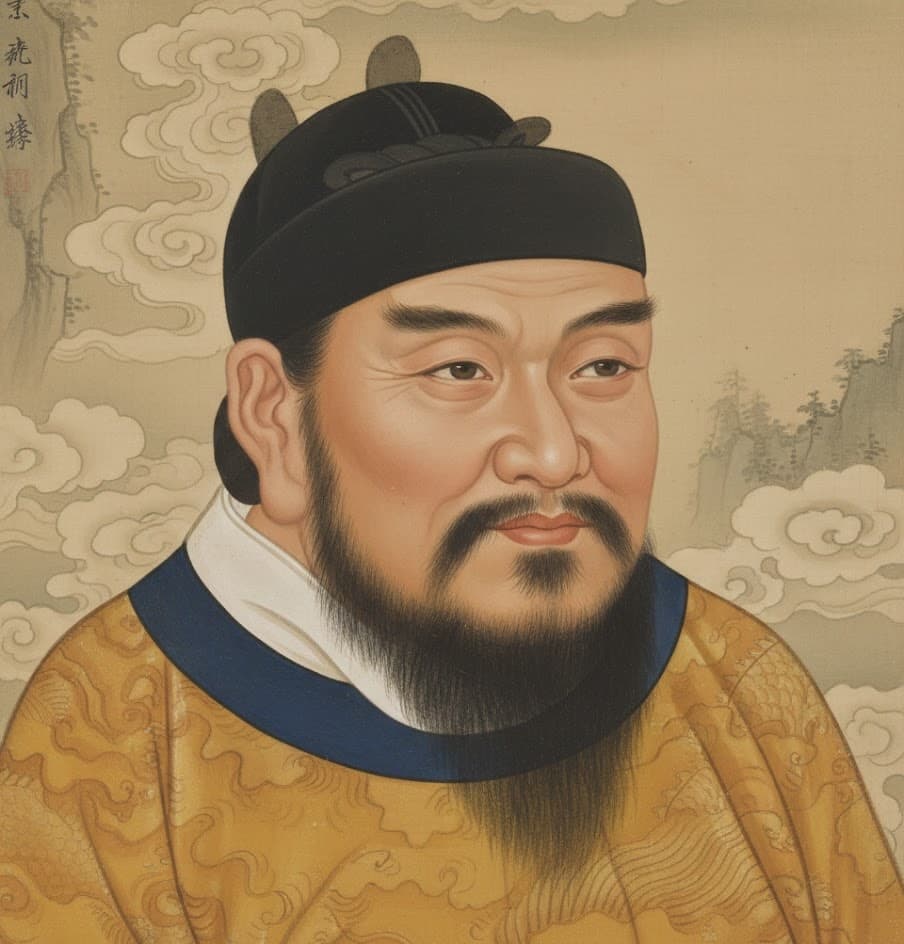
AI-assisted Portrait of Emperor Gaozong of Tang.
The Emperor Between Titans
Emperor Gaozong (628–683) ruled during one of the most pivotal periods of the Tang dynasty. Son of the formidable Emperor Taizong of Tang and husband to the formidable Wu Zetian, Gaozong is often overshadowed by both. But psychologically, he represents something different. He was not a conqueror. Not a structural reformer. Not a ruthless consolidator.
His reign reveals a ruler guided more by personal loyalty and emotional attachment than by aggressive system-building. Gaozong aligns with INFP — a relational ruler navigating overwhelming personalities.
He did not dominate the court. He loved within it.
Fi — Dominant
Gaozong's most consequential political decisions were emotionally driven. He brought Wu Zetian back from the convent, elevated her despite resistance, defended her when accused, and allowed her authority to grow even as opposition mounted. These were not cold calculations. They reflect deep personal conviction and attachment. His loyalty to Wu endured intense political pressure. That is Fi steadfastness.
Ne — Auxiliary
Gaozong did not aggressively preserve rigid hierarchy. He was open to change. Under his reign, the empire continued expanding, new influences were tolerated, and power dynamics shifted gradually. He allowed new configurations to emerge rather than enforcing strict structural preservation.
Si — Tertiary
Unlike his father, Gaozong did not dominate through precedent or iron discipline. He inherited a powerful system but did not rigidly guard it. Tradition did not anchor him as tightly as it did others.
Te — Inferior
Te-inferior rulers often delegate heavily, avoid direct confrontation, and yield administrative control to stronger personalities. As his health declined, Wu increasingly handled affairs of state. But even before illness, Gaozong showed comfort in relying on others for decisive governance. He did not instinctively seize operational command.
A Compatible Contradiction
The union between Gaozong and Wu Zetian represents a classic ENTJ–INFP dynamic — often cited in psychological typology as one of the most naturally compatible, albeit intense, pairings. Gaozong provided the emotional depth (Fi) and relational loyalty that Wu lacked, while Wu provided the structural direction (Te) and protection that Gaozong struggled to manifest.
He was her anchor. She was his shield.
His enduring devotion was not weakness — it was the complementary force that allowed Wu's vision to take root.
Connected Figures
Further Reading
- Empress Wu Zetian — N. Harry RothschildThe most rigorous modern biography of Wu Zetian, with close attention to her relationship with Gaozong and the court politics of his reign.
- The Tang Dynasty: Its History and Culture — Howard J. WechslerA scholarly study of Tang institutions and rulership, essential context for understanding Gaozong's political position.
- China's Imperial Past: An Introduction to Chinese History and Culture — Charles O. HuckerA standard reference for the Tang period, placing Gaozong within the broader arc of imperial Chinese governance.
