 Historical Figure MBTI
4 min read
#59 · 2-20-26 · The Tang Dynasty
Yang Guifei
Imperial Consort · Cultural Muse · Tragic Beauty of the Tang Court
719 — 756
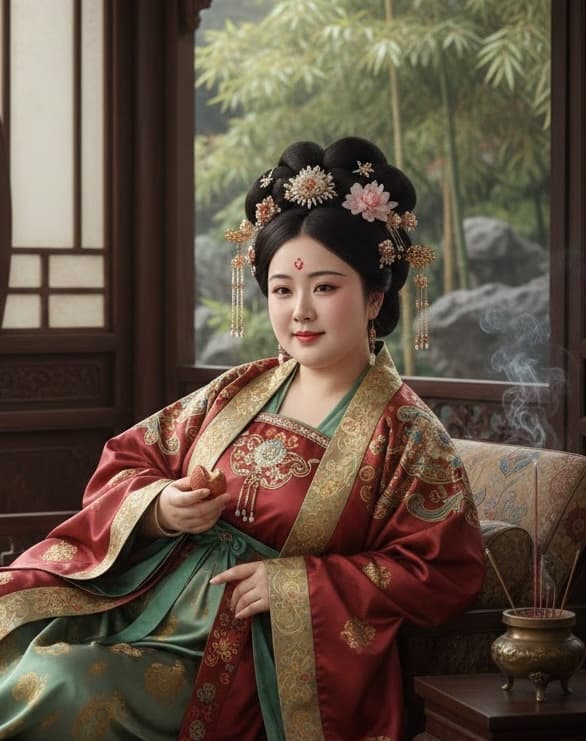
AI-assisted Portrait of Yang Guifei.
The Woman at the Center of Atmosphere
Born Yang Yuhuan in 719, Yang Guifei would become one of the Four Great Beauties of China — but beauty alone does not hold an emperor's devotion for over a decade. She entered the palace first as the wife of a prince, later becoming the favored consort of Emperor Xuanzong of Tang.
Yang Guifei did not issue decrees. She did not command armies. She did not restructure ministries. She shaped atmosphere. Xuanzong composed the "Rainbow Skirt and Feathered Coat." She danced it. He envisioned transcendence. She embodied it. Her influence was not structural. It was sensory, emotional, and intimate.
While occasionally typed as ENFP or ESFP due to her charisma and artistic life, a closer reading suggests something quieter and more inwardly anchored. Yang Guifei most plausibly aligns with ISFP. Her power did not radiate through social orchestration or conceptual expansion. It radiated through presence.
She did not rule the Tang dynasty. She danced at its height.
Fi — Dominant
Yang Guifei's influence appears deeply personal rather than performatively social. Records emphasize her emotional closeness to Xuanzong, her loyalty, and the emperor's profound attachment to her. There is little evidence of ideological persuasion or factional engineering. Instead, her impact was relational — rooted in intimacy, not strategy.
Fi-dominant individuals often anchor power structures not by controlling them, but by becoming emotionally indispensable within them. She did not reshape court doctrine. She became the emperor's emotional center.
Se — Auxiliary
The Tang dynasty celebrated sensory refinement, and Yang Guifei excelled within it. Descriptions highlight graceful movement, musical precision, aesthetic embodiment, and lush physical presence. Her art was not abstract or conceptual. It was lived. Dance, especially in Tang court culture, required disciplined bodily awareness and immersion in the present moment. That is Se at work — embodied artistry rather than idea-driven experimentation.
She did not expand intellectual discourse. She expanded atmosphere.
Ni — Tertiary
There is no strong evidence of long-range ideological planning or symbolic restructuring. However, her ability to maintain the emperor's devotion suggests intuitive attunement to emotional undercurrents. Tertiary Ni can manifest as subtle emotional foresight — understanding what someone needs without articulating it strategically. She seems to have provided refuge during Xuanzong's later years, when governance fatigue set in. Not through vision. Through presence.
Te — Inferior
Yang Guifei is not remembered for administrative control or policy assertion. The elevation of her relatives — especially Yang Guozhong — appears to have flowed more from proximity than strategic governance. An inferior Te profile would explain a lack of structural vigilance. Her world was aesthetic and relational, not bureaucratic. She did not mismanage the empire. She simply did not manage it at all.
Why Not INFJ?
Why not INFJ?
INFJs lead with Ni — internal vision, symbolic restructuring, and the search for universal meaning. While sometimes typed as INFJ due to her status as a cultural muse, Yang Guifei's influence was not anchored in abstract ideals or strategic foresight. Her creativity was embodied and immediate, not visionary or conceptual. Where an INFJ might seek to understand or reshape the underlying meaning of the court, Yang Guifei deepened its sensory and emotional immersion. Her attunement to others was a tool for presence, not a vehicle for a broader ideological mission.
The Ecosystem
The dynamic between Yang Guifei and Xuanzong is psychologically coherent. If Xuanzong leaned Ni–Fe in his early reign — structured, visionary, civilizationally focused — Yang Guifei's Fi–Se presence would have offered grounding. Vision requires embodiment. Meaning requires experience.
But when an emperor begins retreating into aesthetic refuge rather than structural recalibration, the same pairing that once enriched culture can quietly destabilize governance. She did not cause the An Lushan Rebellion. But she became the symbol of an emperor who had shifted from vigilance to immersion.
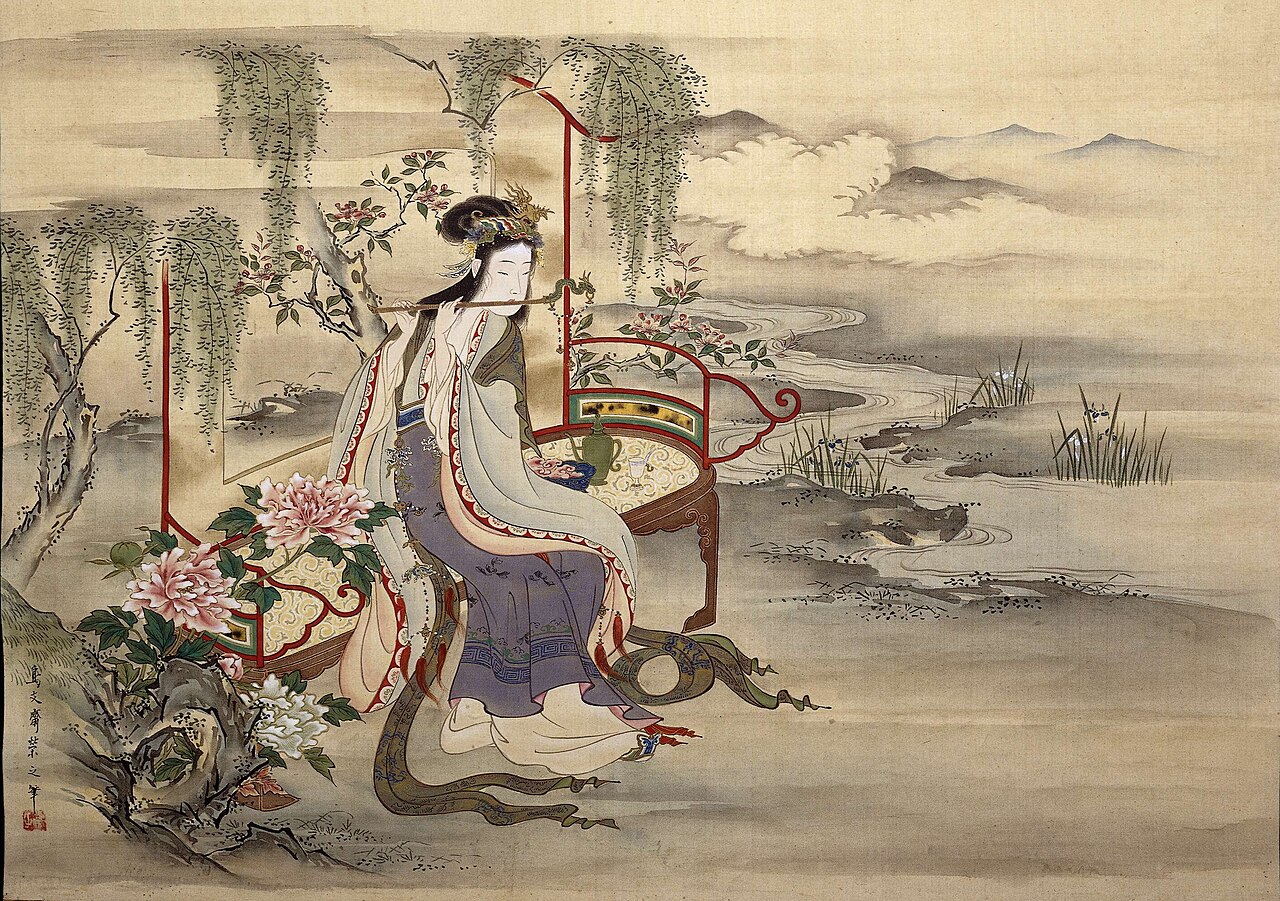
Connected Figures
Further Reading
- China's Golden Age: Everyday Life in the Tang Dynasty — Charles BennDetailed social and cultural history of the Tang court — the world Yang Guifei inhabited.
- The Song of Everlasting Regret: A Story of Chang'an and Its Tragic Love — Wang Anyi (trans. Michael Berry & Susan Chan Egan)A modern novel reworking Bai Juyi's famous poem about Yang Guifei's story.
- The Cambridge History of China, Vol. 3: Sui and T'ang China, 589–906 — Denis Twitchett (ed.)The scholarly standard for Tang political history, including the An Lushan Rebellion and its causes.
- Four Loves: The Story of Bai Juyi — Minnie ChanCovers Bai Juyi's composition of the 'Song of Everlasting Regret' and the cultural afterlife of Yang Guifei's story.
