 Historical Figure MBTI
#1277 · 9-21-26 · The Carolingian World
Ermengarde of Hesbaye
Frankish Empress · Mother of the Imperial Heirs
d. 818
3 min read
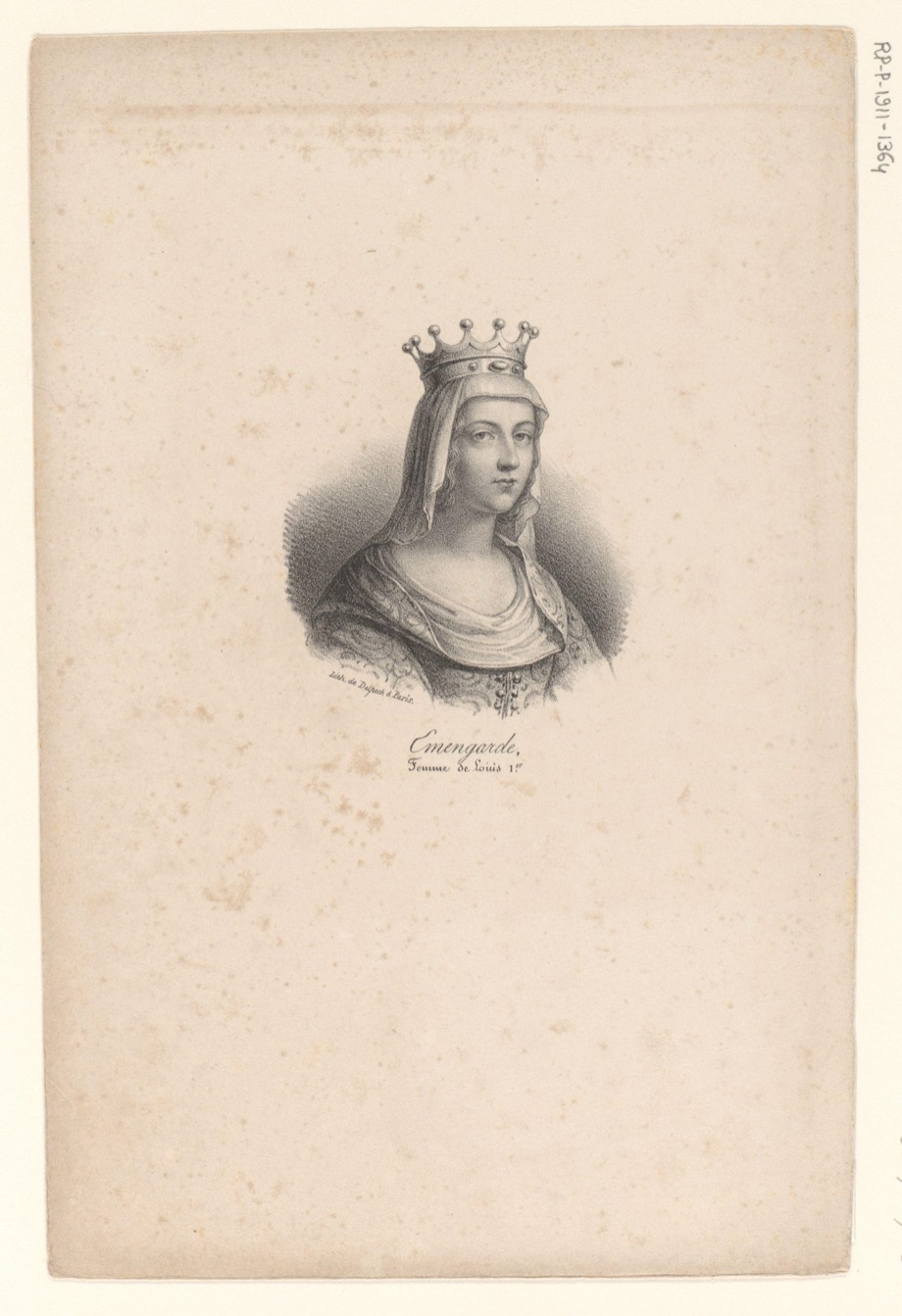
Imagined portrait of Ermengarde of Hesbaye — 1818–1842 (later depiction)
An Empress at the Edge of the Record
Ermengarde of Hesbaye occupied a central place in the Carolingian family while leaving a thin personal record. She married Louis, then king of Aquitaine, before he inherited the empire. Her sons included Lothair, Pepin of Aquitaine, and Louis the German. Their positions later became decisive in imperial succession and civil war. Those consequences make her historically significant, but they do not supply the observations necessary for a responsible personality assessment.
Her origins are usually associated with the aristocracy of Hesbaye, in the region of present-day Belgium. Exact dates and details of her early life are less securely documented than the principal events of her marriage. A family designation should not be expanded into an invented childhood, education, or political program. The sources bring her most clearly into view through her relationship to Louis and their children.
From Aquitaine to the Imperial Household
Louis's long tenure in Aquitaine preceded his succession to Charlemagne in 814. Ermengarde therefore belonged to a royal household before she became empress. Such households were important centers of patronage, religious activity, and family connection. It is reasonable to explain that setting; it is not reasonable to assign every customary responsibility of a queen to her as a documented personal achievement. Her individual contribution cannot always be distinguished from the work of the household around her.
The imperial settlement of 817 gave their eldest son Lothair a superior position and provided subordinate kingdoms for Pepin and Louis. Ermengarde was alive when this arrangement was adopted. The plan made the future of her sons central to the empire's political order, but it does not establish that she designed its provisions. Attribution requires evidence stronger than the fact that a policy benefited members of her family.
A Death Before the Later Conflicts
The Royal Frankish Annals place Ermengarde at Angers during Louis's campaign in Brittany in 818. He had left her ill there and returned shortly before she died on 3 October. This unusually concrete notice connects the imperial family's movements with a military campaign. It records illness and timing, not her reflections or a final political instruction.
Louis married Judith of Bavaria in 819. The birth of their son Charles in 823 complicated the provisions made for the older sons. Ermengarde's death thus marks a consequential change in the composition of the ruling household. Later conflicts should not be projected backward into a rivalry between two women who were not simultaneously Louis's wives. Neither can the actions of her adult sons be treated as a transparent expression of her influence.
Connected Figures
Further Reading
- The Penitential State: Authority and Atonement in the Age of Louis the Pious, 814–840 — Mayke de JongPlaces royal repentance within the language and institutions of Carolingian government, rather than treating it as simple weakness.
- Carolingian Chronicles: Royal Frankish Annals and Nithard’s Histories — Bernhard Walter Scholz, with Barbara RogersTranslations of contemporary narratives whose loyalties and retrospective judgments require careful comparison.
- The Carolingian World — Marios Costambeys, Matthew Innes, and Simon MacLeanConnects court politics with landholding, monasteries, aristocratic networks, and the practical limits of imperial government.
