 Historical Figure MBTI
#1086 · 8-13-26 · Spring and Autumn China
Fan Li
Strategist of Yue · The Minister Who Walked Away
536 – 448 BCE
7 min read
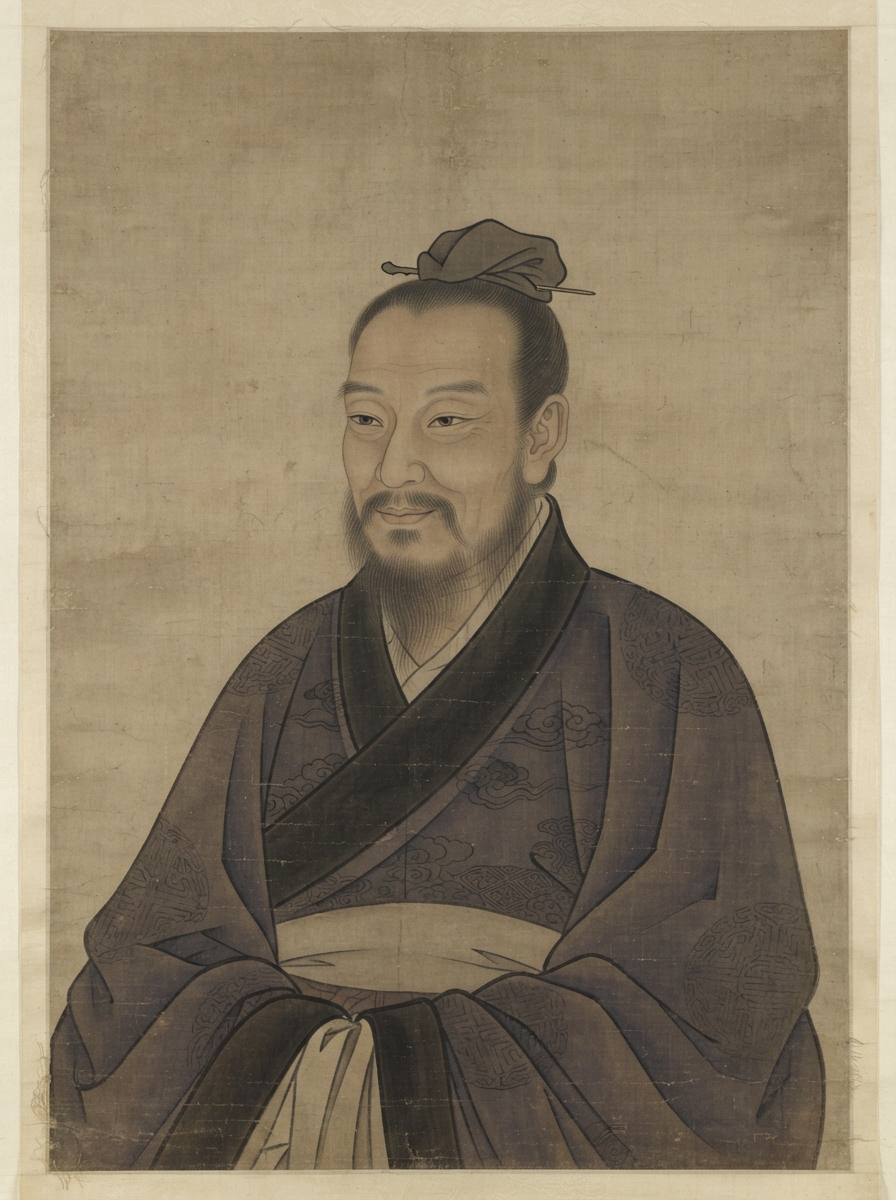
AI-assisted Portrait of Fan Li
The Strategist Who Read the Ending Before It Was Written
Every account of Yue's long revenge against Wu has a hero at its center — Goujian, chewing gall to remember his humiliation, biding twenty years for the day he could strike back. Fan Li is easy to lose in that story, because he never wanted to be its subject. He was the architect standing just behind the throne: the man who worked out, step by step, what a broken kingdom needed to do to become an unbroken one, and who kept generating new angles of attack — economic, military, personal — when the obvious ones ran dry. He was, in short, an INTP, and the clearest evidence for it isn't the plan he built. It's the moment he abandoned everything the plan had won him.
Sima Qian's account gives Fan Li credit for nearly the entire architecture of Yue's comeback: rebuilding the state's finances in secret, timing the military campaigns to Wu's distraction with the north, and — most famously — arranging for the beauty Xi Shi to be delivered to King Fuchai's court as a living diversion. None of this reads as inspired improvisation for its own sake. It reads as a system, worked out logically from the ground up, with each piece justified by what the whole required. That is the signature of a dominant thinker building an internally consistent model of the world and then acting on it without much regard for how the model looks from outside.
Fan Li was an INTP whose Ti built the machine of Yue's revenge — and whose Si told him, once it worked, to walk away from it.
What makes Fan Li worth remembering, though, is not the machine. It's the exit. When Wu finally fell in 473 BCE, Fan Li did not stay to collect his reward. He read Goujian — the man, not the king — with a clarity that had nothing to do with strategy and everything to do with pattern recognition, and he left before the pattern could close on him.
The Architecture of a Twenty-Year Plan
After Yue's crushing defeat at Fuchai's hands, Fan Li didn't counsel his king toward a single decisive gesture. He counseled patience organized around a logical sequence: survive the immediate threat, rebuild the state's productive capacity in secret, cultivate Wu's overreach in the north, and only then convert accumulated advantage into a military strike timed to the moment Wu's defenses were thinnest. Each stage existed because the stage before it made it possible. That is Ti reasoning at the scale of statecraft — not a single flash of brilliance, but an unbroken chain of if-this-then-that, applied consistently for two decades without losing the thread.
The Xi Shi gambit belongs to this same architecture, however uncomfortable it is to read as strategy. Fan Li treated Fuchai's court not as a fixed obstacle but as a system with an exploitable input: a vain king susceptible to distraction. Sending Xi Shi wasn't cruelty for its own sake in Fan Li's calculus — it was a component, selected because it worked, slotted into a plan that had already accounted for what removing Fuchai's attention would buy Yue elsewhere. The Shiji's Fan Li rarely explains himself with sentiment. He explains himself with consequence.
Angles His Colleague Never Saw
Fan Li's constant partner in Goujian's court was Wen Zhong, a capable and loyal minister who nonetheless worked within the plan rather than around it. The record's implicit contrast is instructive: where Wen Zhong executed, Fan Li generated. It was Fan Li who kept surfacing unconventional options — the diversion through Fuchai's court, the economic levers, the diplomatic feints that kept Wu's rival states occupied — options that a narrower, more literal strategist might not have considered because they weren't the "military" answer to a military problem.
That same generative restlessness followed him out of politics entirely. Having engineered a kingdom's revenge, Fan Li didn't retire to enjoy it — he reinvented himself as a merchant under an assumed name, moved his household more than once, and built a second fortune from nothing through trade, becoming proverbial in Chinese memory as a patron of business acumen. An INTJ who had spent that much of himself on one campaign might have kept driving the same vision. Fan Li simply opened a new set of possibilities and pursued those instead.
He Had Watched This Pattern Before
What separates Fan Li from every other clever minister in the historical record is not the plan — it's what he did the moment the plan succeeded. Tradition holds that he had spent years watching Goujian closely, not as a strategist studies an enemy but as a subordinate studies the man he serves: how Goujian bore humiliation, how he treated those who had seen him at his lowest, what his face did when a minister's usefulness was exhausted. Fan Li drew a quiet, retrospective conclusion from that accumulated observation — a king who could endure gall for twenty years to win a war was not a king who would comfortably keep a minister who knew exactly how that war had been won.
So he left. No dramatic confrontation, no petition for reward — he resigned his position and disappeared from Yue's court entirely, resurfacing later under a new name and a new trade. Before he went, he is said to have written to Wen Zhong, warning him in essence that a ruler who could share hardship could not always be trusted to share ease, and urging him to leave as well. It is a judgment built entirely on remembered precedent and lived detail, the past used as reliable evidence for the future — Si operating exactly as it should, at exactly the moment that mattered most.
Why INTP Over INTJ
Why not INTJ?
An INTJ mind might have designed a comparable revenge plot, but it would have driven that single vision forward relentlessly, treating the plan itself as the point and personal cost as irrelevant to it. Fan Li's genius was diagnostic and improvisational rather than architectural in that fixed sense — he read Fuchai's court and generated the Xi Shi gambit as one option among several, and then, when the campaign ended, he read Goujian's court the same way and generated an entirely different unconventional move: leaving to become a merchant. An INTJ who had spent two decades on one vision does not typically abandon it the moment it succeeds and start over as someone else. Fan Li did exactly that, twice.
The distinction matters because it's the whole shape of his life. INTJs are built to finish what they started and hold the line on a long-range goal regardless of what it costs them personally. Fan Li finished Yue's revenge and then treated it as complete — not as a foundation to build further power on, but as a closed problem he could walk away from. That is Ne working in service of Ti, not Ni: options generated and evaluated fresh, situation by situation, rather than one vision pursued to its bitter end.
Connected Figures
Further Reading
- Records of the Grand Historian (Shiji), "Hereditary House of Yue" — Sima QianThe primary account of Fan Li's role in Yue's revenge and his resignation.
- Zuo Zhuan — Attrib. Zuo QiumingContemporary chronicle background on the Wu-Yue wars of the Spring and Autumn period.
- The Cambridge History of Ancient China — Michael Loewe & Edward L. Shaughnessy (eds.)Scholarly context for the Wu-Yue conflict within late Spring and Autumn politics.
- China: A New History — John King Fairbank & Merle GoldmanGeneral historical framing of the Warring States transition Fan Li's era anticipates.
