 Historical Figure MBTI
#1085 · 8-13-26 · Spring and Autumn China
Goujian of Yue
King of Yue · The Patience of Humiliation
c. 520 – 465 BCE
6 min read
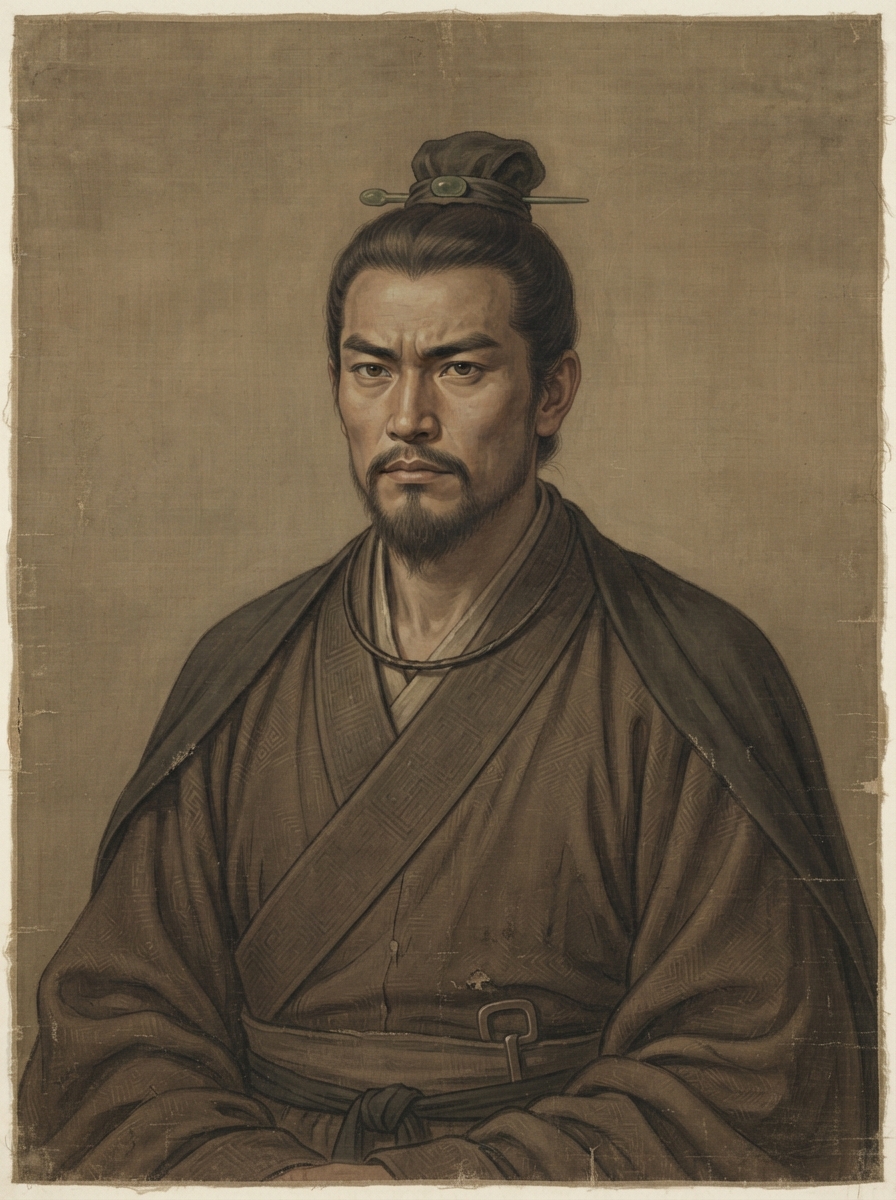
AI-assisted Portrait of Goujian of Yue
The Man Who Tasted Gall
In 494 BCE, Goujian of Yue lost everything. His army was broken at Fuchiao, his capital besieged, and rather than die on the ramparts he walked into King Helü's successor's camp and offered himself as a servant. For three years he groomed horses, and — the sources insist — tasted the stool of his conqueror to diagnose an illness and prove his submission absolute. Most kings who survive that kind of humiliation are destroyed by it, or spend the rest of their lives raging against it in public. Goujian did neither. He went home, and for years afterward slept without a mattress on a bed of firewood, and each day, before he ate, licked a suspended gall bladder for its bitterness — a private ritual with no audience and no immediate use, designed for exactly one purpose: to keep a nine-year plan from softening into memory.
That is the whole of the man in miniature. He is remembered in Chinese as the origin of an idiom — 卧薪尝胆, "sleeping on brushwood, tasting gall" — that describes not vengeance but endurance harnessed to a plan too large to rush. He is best read as an INTJ, a dominant-Ni strategist who converted total defeat into a decades-long private project, executed almost entirely out of sight until the day it was ready to become visible.
Goujian's gall bladder was not a display of grief. It was an INTJ keeping a Ni-generated vision alive against every incentive to let it fade.
The Nine-Year Horizon
What separates Goujian from an ordinary defeated king is the shape of his response. He did not counterattack the moment his strength returned, and he did not settle for the safe, immediate satisfaction of surviving. Instead he held, privately and for years, a single compressed image of the future: a Wu grown fat and careless while Yue rebuilt in secret, ending in a single decisive reversal. That is Ni doing what Ni does — collapsing a long, uncertain span of time into one internally coherent endpoint and refusing to let present circumstance dictate the timeline.
The servitude itself is the clearest evidence. Enduring degrading labor in Wu, including the reported humiliation of tasting Fuchai's stool to diagnose his illness, would break most men's resolve or provoke a rash, self-destructive act of pride. Goujian treated it as a temporary and survivable phase of a plan whose real climax lay years ahead. When Wu Zixu warned Fuchai, correctly, that releasing Goujian was a fatal mistake, he was seeing the same long arc Goujian had already committed to living inside — and Fuchai, lacking that vision, dismissed it.
Even the campaign's final shape bears the signature: Yue did not simply grow stronger and hope for an opening. Goujian's circle sent Wu the beauty Xi Shi, showered Fuchai with tribute and flattery, and let Wu exhaust itself on foreign wars — a strategy of engineered decay aimed at a specific future moment, not a reaction to present opportunity.
Rebuilding a Kingdom in Secret
A vision this patient is worthless without the machinery to execute it, and that machinery is where Te takes over. Goujian did not simply wait for Wu to weaken — he spent the same years methodically rebuilding Yue's population, its farmland, and its army, and he delegated that rebuilding to the two ministers best equipped to run it: Fan Li and Wen Zhong. He set concrete, measurable state policy — incentives to raise children, land reclamation, grain reserves, military drilling — the unglamorous administrative work of restoration that never shows up in the legend of the gall bladder but is what actually made the legend's ending possible.
He was also ruthlessly efficient about which levers to pull. Tribute and flattery toward Fuchai were not sentiment; they were resource allocation, buying time and complacency at a price Yue could easily afford. Sending Xi Shi to Wu's court was the same logic applied to human capital — a calculated instrument in a larger campaign, not a romantic gesture.
The result, in 473 BCE, was not a lucky upset but the arrival of a system finally strong enough to do what it had been built for years to do: Yue's forces overran Wu, and Fuchai took his own life. Goujian was recognized afterward as one of the hegemons of his age — a title earned by administration as much as by any battlefield stroke.
A Bitterness Kept Private
Fi is what kept the gall bladder ritual from becoming performance. Goujian did not parade his humiliation before his court to rally sympathy or build a cult of grievance — he tasted the bitterness alone, before meals, in a habit maintained for years with no outside witness required to make it real. That is the hallmark of tertiary Fi in an Ni-Te stack: an intensely personal, self-referential value — here, the refusal to let a wound heal into forgetting — held with total conviction but never made into public spectacle.
It shows again, more darkly, after the victory. Once Wu had fallen, Goujian turned on Wen Zhong, the minister who had done as much as anyone to engineer the restoration, and forced his suicide — while Fan Li, reading his king's temperament correctly, had already resigned and vanished into obscurity. The same private, unforgiving intensity that sustained nine years of discipline against an external enemy did not simply switch off once that enemy was gone; it found a new target close at hand.
Why INTJ Over ISTJ
Why not ISTJ?
An ISTJ endures hardship by leaning on precedent and established duty — enduring because that is simply what a loyal servant does. Goujian's campaign ran the opposite direction: it was driven by an internally generated, long-range vision of eventual reversal that existed nowhere in Yue's tradition or protocol. The gall-tasting discipline itself was not inherited custom but a ritual he invented from nothing, purpose-built to keep one man's private Ni vision alive — not the behavior of a type oriented around following what already exists.
The distinction matters because Goujian's story is so often flattened into a parable of mere perseverance, which reads as Si-like stoicism. But perseverance was only the visible surface. Underneath it was a specific, self-authored image of the future — Wu's eventual, engineered collapse — held in complete privacy for years and pursued through structures (Fan Li and Wen Zhong's reforms) built expressly to realize it. That is Ni directing Te, not Si maintaining Te.
Connected Figures
Further Reading
- Records of the Grand Historian: Hereditary House of Yue — Sima QianThe primary account of Goujian's servitude, restoration, and conquest of Wu.
- The Zuo Commentary (Zuozhuan) — Attrib. Zuo QiumingContemporary annalistic record of the Wu-Yue wars underlying the later Shiji narrative.
- Sunzi's Art of War and Its Chinese Interpreters — Yuri PinesSituates Yue's strategy of engineered decline within Spring and Autumn statecraft.
- The Cambridge History of Ancient China — Ed. Michael Loewe & Edward L. ShaughnessyPolitical and military context for the late Spring and Autumn hegemonies.
