 Historical Figure MBTI
#1084 · 8-13-26 · Spring and Autumn China
Wu Zixu
Exile Turned Avenger · Minister of Wu
c. 526 – 484 BCE
6 min read
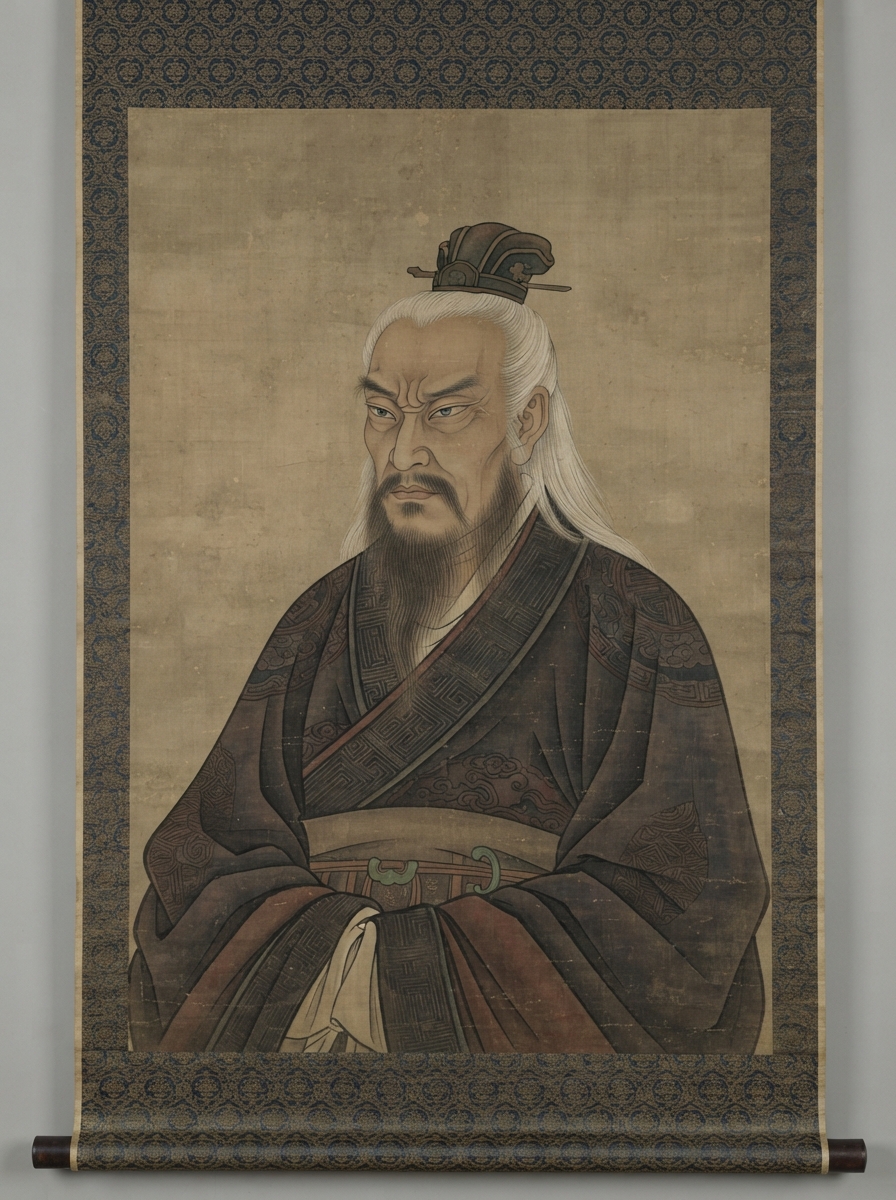
AI-assisted Portrait of Wu Zixu
The Grudge That Outlived a Kingdom
Wu Zixu did not lose his temper. He built a country. When the king of Chu, egged on by slanderers at court, executed his father and elder brother on trumped-up charges, the young nobleman did not rage at the gates of the palace — he ran, and kept running, until he reached a rival state and began, patiently, to arm it. Legend says the strain of a single night crossing a border checkpoint under threat of capture turned his hair white by morning. That image — a man transformed overnight by the sheer pressure of a plan taking shape — is as good a portrait of his mind as any chronicle.
He is an ENTJ, and an unusually pure specimen of the type's darker edge: dominant Te organizing every resource in reach toward a single, non-negotiable objective, backed by an auxiliary Ni that could hold a decades-long revenge plot in view without losing the thread. He did not merely wish Chu ill. He relocated his life, cultivated a king, recommended the greatest strategist of the age, and waited for the machinery he'd built to deliver Chu's capital into his hands. Then he did something no amount of Te alone explains.
Wu Zixu was an ENTJ whose dominant Te turned a father's execution into a decades-long campaign of state-building revenge.
The Architect of Another Man's Kingdom
Exile gave Wu Zixu nothing but a grievance and his own competence. He turned both into leverage. In Wu, he attached himself to the ambitious prince Helü and helped engineer the assassination that put him on the throne — not out of loyalty to Helü personally, but because a strong, grateful king was the instrument his revenge required. He then recommended Sun Tzu as general, handing Wu the finest military mind of the age and, not incidentally, guaranteeing that when war with Chu came, it would be fought by the best available system rather than by his own unaided fury.
The payoff came in 506 BCE, when the armies he had helped assemble broke through and took Ying, the Chu capital. That victory was not an outburst; it was the terminus of a plan laid years earlier in a border town, refined through every year of exile, and executed by an apparatus — army, alliances, a king's favor — that Wu Zixu had built piece by piece because he was the kind of man who could not conceive of revenge except as infrastructure.
Two Decades Held in a Single Line of Sight
What separates Wu Zixu from an ordinary vengeful exile is the span of his patience. Between his flight from Chu and the fall of Ying lay roughly two decades — an entire political generation — during which he never let the goal blur or the timeline slip. Ni, working beneath his forceful Te, kept a single distant image in constant focus: Chu's capital taken, its royal house humbled, no matter how many kings, wars, or years stood between him and it.
That same long lens let him see past Wu's present triumph to its future danger. Long after Chu was broken, he kept insisting that the neighboring state of Yue — recently defeated but not destroyed — was not a settled matter but a deferred one, and that Wu's later kings were making the identical mistake Chu's had made in leaving an enemy alive to recover. He was, in effect, forecasting his own kingdom's death from decades out, with the same clarity he had once used to forecast Chu's.
Three Hundred Lashes on a Dead King
When Ying finally fell, Wu Zixu discovered that the king he had sworn to punish was already dead and the reigning king had fled beyond reach. A purely strategic mind might have declared the campaign's objective satisfied and moved on. Wu Zixu instead had the old king's corpse exhumed and personally whipped it three hundred times — a grievance that had been carried for twenty years as abstract resolve, discharged in the end through the crudest possible physical act.
It is a startling gesture from a man otherwise defined by patience and planning, and that is precisely the tertiary Se signature: forceful, immediate, and physical when the moment for restraint has finally passed. The revenge had to end in the body, not just in the outcome — corpse, whip, count of blows — because an idea of justice satisfied only in the abstract was never going to be enough for him.
The Warning He Would Not Soften
Fi sits last in Wu Zixu's stack, and it shows exactly where an inferior function tends to show: as blunt, unmodulated conviction with no diplomatic coating. Serving King Fuchai, Helü's son, he warned again and again that the defeated state of Yue, under its king Goujian, remained a mortal threat and had to be annihilated while Wu still held the advantage. He was right. He was also incapable of saying it in any way the court could tolerate.
While rivals at court accepted Yue's tribute and flattery — including the celebrated beauty Xi Shi, sent as part of Goujian's campaign to lull Fuchai into complacency — Wu Zixu offered no such theater, no persuasion tailored to a king who plainly wanted comfort rather than correction. His moral certainty simply repeated itself, louder and more inconvenient each time, until Fuchai, worn down by advisors who told him what he wanted to hear, ordered his most loyal minister to take his own life. Wu Zixu's last request was that his eyes be hung above the city gate, so that he might watch — years later, exactly as he had foreseen — Yue's armies march in and finish what he had warned they would.
Why ENTJ Over INTJ
Why not INTJ?
An INTJ pursuing the same revenge would have worked from the shadows, letting circumstance and quiet calculation do the visible labor. Wu Zixu did the opposite at every turn: he fled openly, attached himself publicly to a prince, engineered a coup, recommended a general by name, and led armies in the field. His drive was extraverted and confrontational — he built coalitions and stood in front of kings to argue with them, rather than manipulating events from behind a curtain. That is Te in the driver's seat, not Ni.
The clearest tell is the ending. An introverted-dominant strategist, cornered by a king who didn't want to hear the truth, might have found an indirect way to make the point land, or simply withdrawn to wait out the king's error. Wu Zixu did neither. He repeated the same blunt warning until it cost him his life — the mark of a man whose engine ran outward, in full view, until the very end.
Connected Figures
Further Reading
- Records of the Grand Historian (Shiji) — 'Hereditary House of Wu' and 'Biography of Wu Zixu' — Sima QianThe primary account of Wu Zixu's exile, revenge campaign, and death.
- The Zuo Commentary (Zuo Zhuan) — Attrib. Zuo QiumingThe earliest narrative source for the Chu–Wu conflict and Wu Zixu's flight.
- The Art of War — Sun TzuWritten by the general Wu Zixu brought into Wu's service; illuminates the military culture Wu Zixu helped build.
- Ancient China in Transition — Cho-yun HsuSocial and political background on the Spring and Autumn period's collapsing feudal order.
