 Historical Figure MBTI
#1297 · 9-26-26 · Heian Japan
Fujiwara no Mototsune
Regent · Court Minister · Builder of Fujiwara Authority
836–891
5 min read
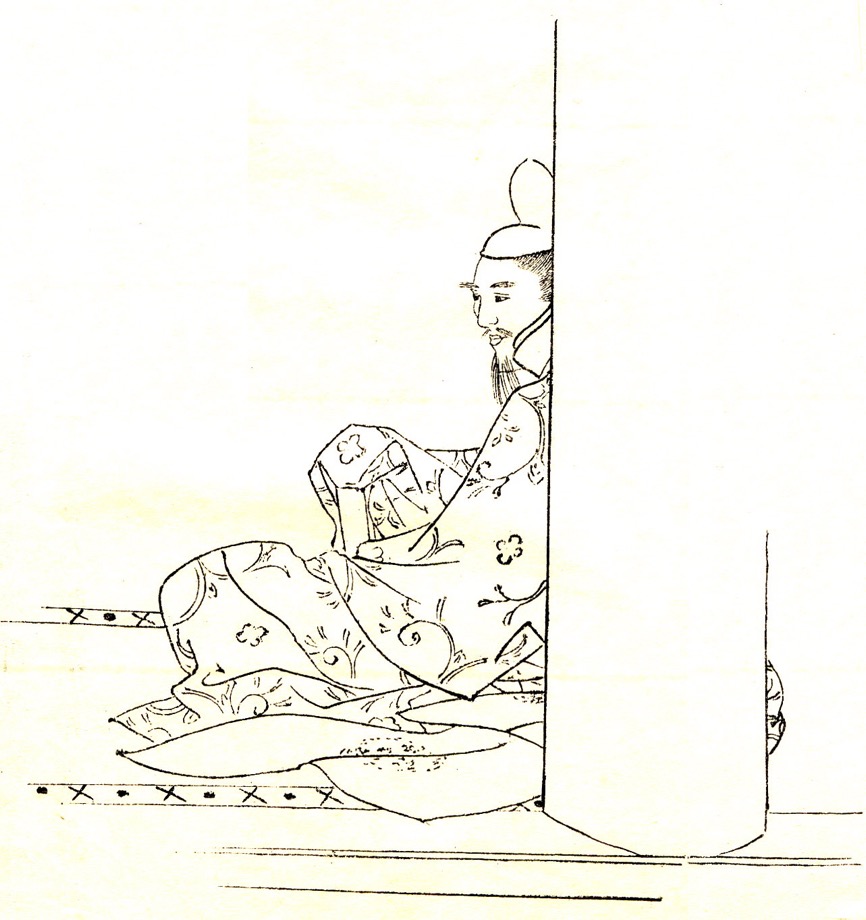
Portrait of Fujiwara no Mototsune — 19th-century drawing; reproduction published 1903 (later depiction)
Authority That Would Not Be Merely Honorary
Fujiwara no Mototsune made clear that ceremonial respect was insufficient if the terms of government left his effective authority uncertain. During a dispute over an imperial document, he withheld the work on which administration depended. A tentative ENTJ reading concerns his effort to secure a recognized executive position through that leverage. It is a low-confidence interpretation of public action, not proof that a powerful minister necessarily possessed a particular temperament.
Born in 836, Mototsune belonged to the northern Fujiwara and was adopted into the household of Yoshifusa, whose political position he inherited and extended. He served across several reigns and became a central figure in the development of the advisory arrangements known as sesshō and kanpaku. These terms should not be flattened into a modern prime ministership: they described relationships to imperial authority that developed within court practice and aristocratic kinship.
ENTJ is a low-confidence reading of dominant Extraverted Thinking: Mototsune used the dependence of government on his cooperation to demand an effective, recognized governing role.
Making the Work Depend on the Position
The Akō dispute began after Uda's accession in 887. A document drafted by Tachibana no Hiromi used the classical Chinese designation akō in describing Mototsune's responsibilities. A scholar associated with the minister argued that it conveyed rank without substantive duties. Mototsune then stopped conducting official business. Whatever the exact intent of the drafting, the practical result was disruption, and the emperor could not resolve it through a title alone.
The episode is distinctive because Mototsune converted the administration's need for his work into bargaining power. He did not have to deny imperial sovereignty outright. By refusing to act under disputed terms, he forced clarification of the relationship that enabled business to proceed. Extraverted Thinking is proposed cautiously for this insistence that authority have an operational form rather than remain an honorific description.
The interpretation must preserve the institutional setting. His leverage depended on inherited connections, previous service, and officials who accepted his importance. It was not simply the achievement of an unusually forceful individual confronting an otherwise passive system. Another man without that position could have withheld his services without stopping much at all.
An Arrangement Beyond One Reign
Mototsune's career extended the possibility of a leading Fujiwara adviser acting alongside an adult emperor. The distinction mattered because minority was not the only situation in which court government could rely on a powerful relative or minister. An arrangement that persisted as a sovereign matured could secure influence beyond the temporary guardianship of a child.
Introverted Intuition is a tentative interpretation of the longer consequence he pursued or helped establish: governing authority defined in a durable relationship to the throne. It should not become a claim that he designed every feature of later Fujiwara predominance. Subsequent households adapted these positions under changing circumstances. The development of an institution is not evidence that one actor foresaw its entire future.
Kinship, Succession, and Negotiation
Mototsune's power included involvement in changes of ruler, notably the transition from Yōzei to Kōkō in 884. Stories about Yōzei's behavior and removal come through sources with political and retrospective interests. They should not be repeated as an uncomplicated medical or moral diagnosis. The secure point is that a leading minister's authority could matter in deciding which imperial claimant would actually reign.
Uda's accession in 887 did not begin a simple contest between an emperor and a stranger who had seized the state. Mototsune's earlier position and role in court arrangements helped create the situation in which the new ruler acted. Their confrontation therefore concerned the terms of cooperation inside an existing political order. Scholarly language offered a vehicle for a disagreement with administrative consequences.
Michizane's intervention during the controversy sought to protect Hiromi and address the dispute. The minister's eventual resumption of government followed revision of the wording. The episode shows that texts, precedents, and learned mediation belonged to practical politics. Mototsune's leverage was substantial, but the outcome still required a formally intelligible settlement rather than an open replacement of the emperor.
Power Was Also Patronage
Religious patronage connected leading Fujiwara households with institutions outside the palace. Later tradition associates Mototsune with a donation that helped establish the Gion complex. The attribution comes through evidence whose date and purposes require caution, so it should not be treated as a fully documented personal construction program. It nevertheless places his remembrance within a world where aristocratic resources and religious institutions could reinforce one another.
Mototsune died in 891. Uda subsequently had more room to arrange appointments and did not simply restore an identical chief advisory position. His son Tokihira later rose to senior ministerial office. Neither development means that Mototsune's entire political project succeeded or failed according to a fixed plan. He had made the terms of effective authority visible, and later rulers and ministers would negotiate those terms again.
Testing the ENTJ Reading
Why not ESTJ?
ESTJ is a strong alternative because Mototsune defended established standing and expected government to recognize it. ENTJ is preferred only tentatively for the effort to make the terms of authority effective and durable alongside an adult emperor. The record is concentrated in office and negotiation, so it provides too little private evidence to make the distinction secure.
Executive office supplies the setting, while the particular use of administrative refusal supplies the limited evidence. Neither should be mistaken for a complete personal psychology.
Connected Figures
Further Reading
- Sugawara no Michizane and the Early Heian Court — Robert BorgenA modern study of the scholar’s political career, literary work, and the court institutions around him.
- The Cambridge History of Japan, Volume 2: Heian Japan — Donald H. Shively and William H. McCullough, editorsScholarly accounts of imperial government, Fujiwara authority, religion, and cultural life.
- A History of Japan to 1334 — George SansomA broad historical account useful for chronology, to be read alongside more recent work on institutions and sources.
- The Enryaku-ji and the Gion Shrine-Temple Complex in the Mid-Heian Period — Neil McMullinExplains religious patronage and its later traditions, including the attributed early role of Mototsune.
