 Historical Figure MBTI
#1295 · 9-26-26 · Heian Japan
Sugawara no Michizane
Scholar · Court Minister · Exile Later Honored as Tenjin
845–903
7 min read
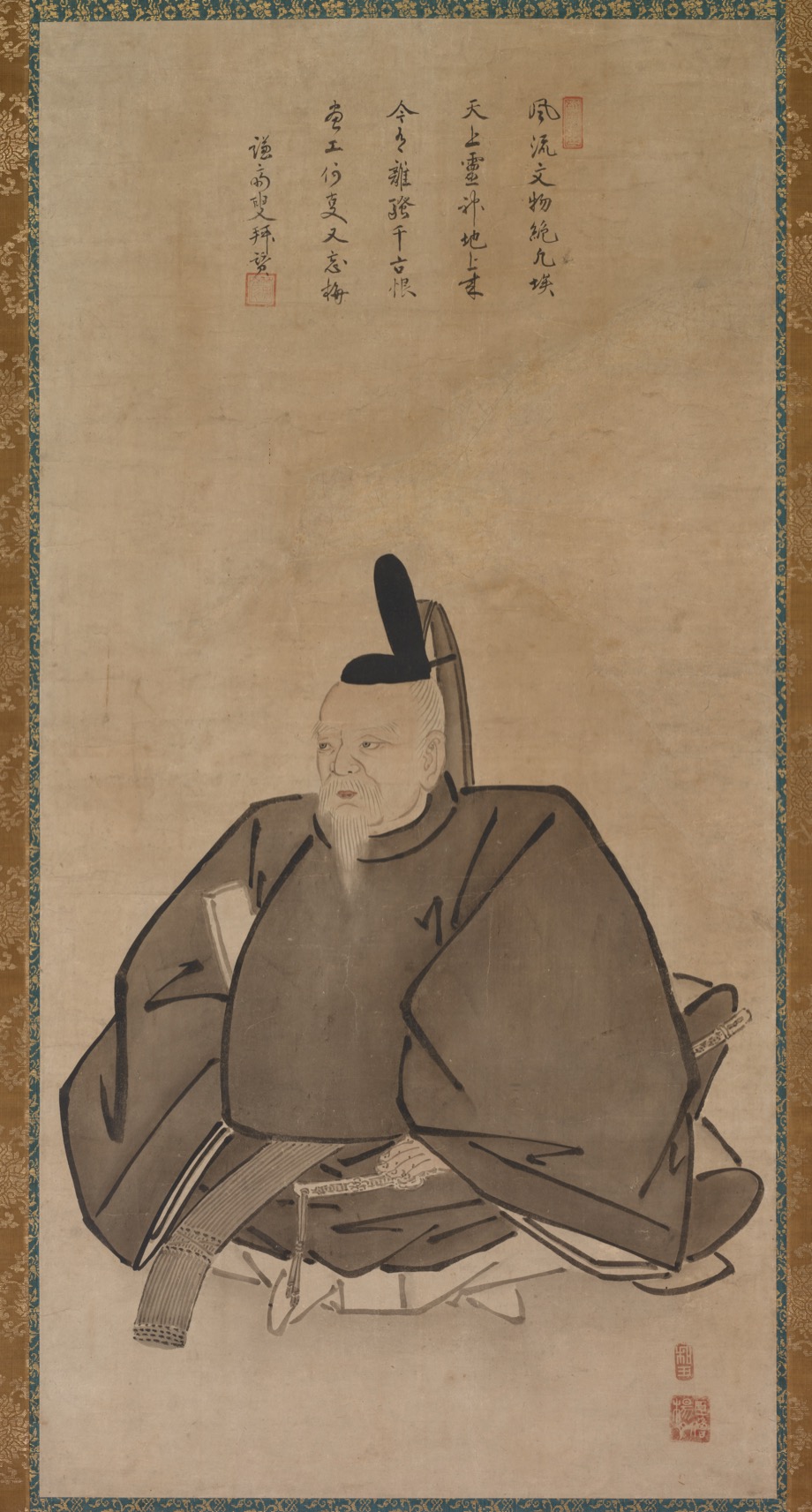
Portrait of Sugawara no Michizane — late 1400s–early 1500s (later depiction)
A Scholar in the Machinery of Power
Sugawara no Michizane's learning was not a refuge from politics. It qualified him to write for rulers, interpret authoritative language, organize historical knowledge, and offer advice that could affect powerful families. His rise exposed the limits of scholarly distinction in a court where patronage and kinship also determined access. A tentative INTJ reading concerns the relationship between his organized intellectual work and independent policy judgment. It does not derive a personality from the vengeful deity later worshipped as Tenjin.
Born in 845, Michizane belonged to a family whose standing rested heavily on classical Chinese scholarship. His father, Sugawara no Koreyoshi, was a distinguished teacher. Michizane became a court professor and served in a sequence of offices, including a provincial governorship in Sanuki. Emperor Uda's favor eventually brought him into the highest levels of government. The progression was exceptional within his scholarly lineage, but it did not free him from the institutional order that made such advancement possible.
His poems, prose, compilations, and the accounts of his fall provide different forms of evidence. An official petition is an intervention in a particular decision; a poem can adapt a literary convention; a later shrine narrative serves religious memory. Treating all three as direct observation would produce a more vivid personality than the sources warrant. The historical scholar must remain distinguishable from both the poetic speaker and the god.
INTJ is a low-confidence interpretation of dominant Introverted Intuition: Michizane repeatedly made inherited learning serve a considered account of government and his place within it.
Learning Organized for a Purpose
The Ruijū kokushi, completed in 892, reorganized material from the official histories by subject. That procedure made an inherited record available in a different way. Rather than requiring a reader to follow only the original chronological sequence, categorization allowed related matters to be considered together. The undertaking linked scholarly knowledge with the needs of an administration that justified action through precedents and authoritative texts.
Michizane also compiled his literary writings and presented them within a family tradition. The Kanke bunsō, offered in 900, included poetry and prose; collections associated with his father and grandfather reinforced the lineage in which he understood his work. The poem conventionally translated as The Hardships of Professors makes the contrast between scholarly family standing and political advancement explicit. Its speaker locates aspiration within inherited learning, while its literary form prevents us from treating it as an unmediated confession.
Introverted Intuition is proposed cautiously for this integration of varied material into a sustained intellectual and political position. The relevant evidence is not simply that he was learned. It is the repeated effort to make knowledge coherent and useful across historical compilation, public argument, and literary self-presentation. Those activities were also professional expectations, however, so they support only a limited inference about temperament.
Advice with Administrative Consequences
The Akō dispute of 887–888 exposed how textual interpretation could become a contest over authority. An imperial document described Fujiwara no Mototsune with a classical Chinese designation whose implications were contested. Mototsune withheld his participation in government, and the dispute placed the document's author, Tachibana no Hiromi, at risk. Michizane intervened through a letter rather than through military or hereditary power. The episode shows scholarship entering a struggle over whose interpretation could have practical force.
In 894 he was appointed to lead a proposed embassy to Tang China. He advised that the mission should not proceed, in a setting of dangerous travel and deteriorating conditions in China. The decision should not be expanded into a claim that Japan stopped all continental exchange or abruptly abandoned Chinese culture. Merchants, monks, books, and objects continued to connect the two societies. A judgment about an official mission is more specific than a civilizational turning point attributed to one man.
Extraverted Thinking offers a tentative description of the way his learning became proposals, classifications, and advice about action. He considered what an undertaking would require and whether it remained useful under current conditions. The record does not establish that he alone made these decisions, or that every policy came from a single comprehensive design. Imperial patrons and other officials shaped both his opportunities and the consequences of his counsel.
Favor Was Not Security
Michizane's advancement under Uda brought him into competition with the northern Fujiwara leadership. He reached the position of Minister of the Right, while Fujiwara no Tokihira held the senior office of Minister of the Left. Uda had abdicated in 897, and the political environment under Emperor Daigo changed. A career built partly through one ruler's confidence could become vulnerable when the relationships around the throne shifted.
In 901 accusations that Michizane threatened the succession resulted in his removal from the capital to Dazaifu in Kyushu. Later accounts make Tokihira the principal author of his ruin, while the documentary record does not give equally secure access to every private motive or conversation. The accusations should be identified as political charges, not repeated as proof that Michizane actually planned a coup. Nor should his defeat establish that he lacked all practical awareness: successful opponents also possessed advantages of position and connection.
He died at Dazaifu in 903. Writing from exile retained a language of learning, service, and loss. His later collection, the Kanke kōshū, preserves work associated with those final years. Its expression of suffering is important evidence for the experience he chose to represent, but no one poem can explain his entire response to dismissal. Literary allusions helped him make displacement intelligible within the tradition that had given his career meaning.
The Man and the God
After his death, calamities at the court were increasingly attributed to his angry spirit. Enshrinement and worship eventually transformed that feared presence into a benevolent protector of scholarship. Kitano's sanctuary was established in 947, long after the historical official's death. The history of those practices reveals how communities answered political injustice, fear, and disaster; it does not demonstrate that Michizane caused storms or carried a permanently wrathful temperament.
Images of Tenjin, miraculous plum-tree stories, and illustrated shrine legends belong to this extensive afterlife. Even objects traditionally associated with Michizane need their attribution stated carefully. A later tradition may preserve a memory of learning or exile while elaborating details far beyond contemporary testimony. The personality hypothesis therefore excludes supernatural vengeance and evaluates the recorded career without treating subsequent worship as retrospective psychological evidence.
Testing the INTJ Reading
Why not ISTJ?
ISTJ is a serious alternative because classical precedent, family tradition, and meticulous compilation were central to Michizane's work. INTJ is preferred only tentatively for his reorganization of knowledge and willingness to use an independent assessment in policy advice. These distinctions are subtle and heavily shaped by a scholar-official's duties, so confidence remains low.
Why not INFJ?
The suffering voiced in his exile poetry and his later moral reputation can suggest INFJ. Neither emotional literature nor posthumous vindication establishes a type. The more distinctive evidence concerns intellectual organization and administrative argument. INTJ is therefore the narrower proposal, without claiming that his relational commitments or religious views were unimportant.
The proposed pattern must be tested against particular writings and decisions. It cannot make a political defeat prove inward isolation, or make a divine afterlife disclose the character of a living official.
Connected Figures
Further Reading
- Sugawara no Michizane and the Early Heian Court — Robert BorgenA modern study of the scholar’s political career, literary work, and the court institutions around him.
- The Cambridge History of Japan, Volume 2: Heian Japan — Donald H. Shively and William H. McCullough, editorsScholarly accounts of imperial government, Fujiwara authority, religion, and cultural life.
- A History of Japan to 1334 — George SansomA broad historical account useful for chronology, to be read alongside more recent work on institutions and sources.
- Selected Poetry by Sugawara no Michizane — Sugawara no Michizane; translated by Wiebke DeneckePoems and scholarly introduction that distinguish literary self-presentation from the later Tenjin tradition.
