 Historical Figure MBTI
#1294 · 9-25-26 · Heian Japan
Ki no Tomonori
Waka Poet · Editor of the Kokinshū
fl. late 9th–early 10th century; conventionally c. 850–c. 904
5 min read
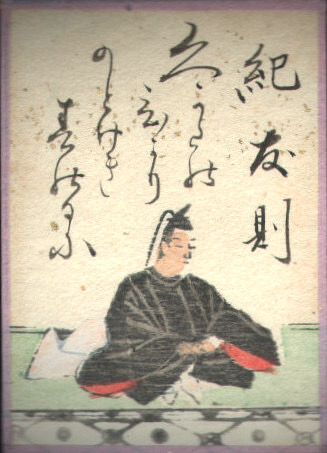
Portrait of Ki no Tomonori — Edo period (1603–1868) (later depiction)
A tranquil day, and blossoms that will not wait
Ki no Tomonori’s best-known poem places falling blossoms against the stillness of a spring day. Its force comes from a question: why should the flowers scatter so restlessly when the light itself seems peaceful? The speaker does not merely announce that beauty is brief. He sets two experiences of time beside one another and lets their failure to agree become the poem’s emotional occasion.
Tomonori belonged to the group that compiled the Kokinshū, the first imperial anthology of Japanese verse. His dates remain uncertain; conventional estimates place him around 850 to 904, while the more secure description is a poet active in the late ninth and early tenth centuries. He remains Untyped because attributed poems and editorial participation provide too little independent evidence of recurring personal behavior. A memorable poetic voice does not automatically supply a complete psychological biography.
One of four compilers
Rikkyo University’s account identifies Tomonori alongside Ki no Tsurayuki, Ōshikōchi no Mitsune, and Mibu no Tadamine as the anthology’s four compilers. The project gathered poetry from different periods and sources, including many anonymous poems, works associated with earlier celebrated poets, and contributions by the compilers and their contemporaries. Its official commission belonged to the reign of Emperor Daigo, although the work of collection had earlier beginnings.
This collective setting is important. An anthology is more than a container for whichever poems happen to survive. Selection establishes a literary inheritance and places individual voices within a larger order. Tomonori participated in a project that helped define what Japanese court poetry would remember and admire. Yet the surviving title of compiler does not tell us which editorial decisions were specifically his, how the collaborators divided their work, or what disagreements shaped the final result.
Tsurayuki’s authorship of the Japanese preface makes his own literary position unusually visible. Tomonori’s participation is less easily reconstructed through a comparable statement of principles. Their association should therefore illuminate the shared enterprise without borrowing one compiler’s articulate theory to fill another’s biographical gaps. The relation is well attested; the degree to which their individual standards coincided requires more evidence.
The question inside the spring poem
The blossom poem later entered the Hundred Poets, One Poem Each tradition as poem thirty-three. Its Japanese sequence moves from the distant source of daylight to a tranquil spring day, then toward flowers that seem unable to remain composed. The turn depends on attributing a kind of restlessness to their falling. The speaker finds the motion striking because it contradicts the settled quality he has just given the surrounding scene.
This is a crafted relation, not a diagnosis of the author’s mood. A poet can write unsettled blossoms while feeling calm, follow an inherited convention while giving it a distinctive arrangement, or revise an apparent spontaneous response over time. The question asks readers to inhabit a perception. It does not require them to believe that the historical Tomonori was habitually anxious or that he viewed every form of change with regret.
Translation can alter that relation. William N. Porter’s early English version emphasizes sadness at blossoms drooping and dying, producing a more explicitly mournful speaker than the Japanese question alone requires. Its rhyme supplies a further structure of feeling. Comparing the original sequence with that version helps separate the poet’s verbal arrangement from the additional emotional interpretation made by a translator. Neither a moving translation nor its familiar circulation makes its emphasis biographical evidence.
The scene also depends on recognizable poetic materials. Spring light, flowers, and their dispersal belonged to a wider language of seasonal verse. Originality need not mean inventing an image no predecessor had used. A short poem can make a difference by the order of familiar terms and the kind of question that joins them. That distinction permits careful literary appreciation without requiring a modern story of solitary genius or personal rebellion.
A canon can preserve what a biography cannot
Tomonori’s place in later poetic memory became more secure than the outline of his life. A name attached to admired poems can circulate through manuscripts, selections, illustrations, and recitation long after the circumstances of composition have become uncertain. Such reception is evidence of continuing literary value. It cannot by itself establish the accuracy of every later story about the poet or the historical appearance imagined in a later portrait.
The anthology relationship with earlier writers works similarly. Narihira’s poems belong to the literary inheritance that the compilers gathered, but inclusion does not demonstrate a personal friendship with Tomonori. A connected literary history needs different kinds of connection: actual collaboration, textual influence, editorial recognition, and subsequent comparison. Treating them all as direct acquaintance would turn a useful map of poetry into an invented map of private life.
Untyped keeps those distinctions active. The surviving record supports a compiler and a poet whose verse can be closely read. It supplies much less material about how he responded to disagreement, exercised responsibility, maintained relationships, or chose between competing practical demands. Those are the kinds of recurring patterns that a historical personality argument would need. The poems remain significant when the missing evidence is acknowledged rather than replaced by the feelings a reader experiences while reading them.
Connected Figures
Further Reading
- Kokin Wakashū: The First Imperial Anthology of Japanese Poetry — Translated by Helen Craig McCulloughA complete translation that places Tomonori’s contributions within the anthology’s collective organization and wider poetic inheritance.
- Kokinshū: A Collection of Poems Ancient and Modern — Translated by Laurel Rasplica Rodd with Mary Catherine HenkeniusAn alternative full translation for comparing wording, poetic sequence, and the interpretation of compact seasonal images.
- One Hundred Poets, One Poem Each — Translated by Peter MacMillanRead Tomonori’s famous poem in the later selection that helped give it an especially durable public identity.
