 Historical Figure MBTI
#1296 · 9-26-26 · Heian Japan
Emperor Uda
Emperor · Patron · Architect of a Contested Court
867–931
5 min read
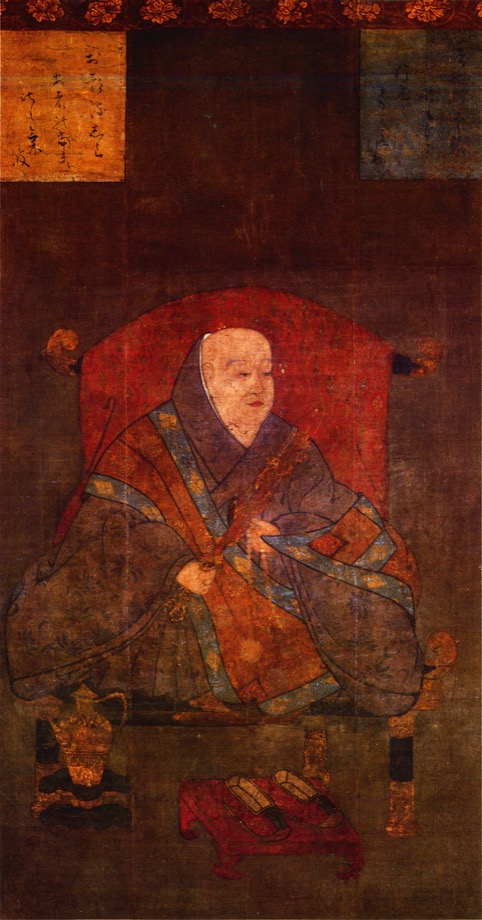
Portrait of Emperor Uda — 15th century (later depiction)
Making Room to Govern
Emperor Uda came to the throne within a court where inherited office and maternal kinship could shape an emperor's freedom to act. His response was to work through appointments, learned advisers, and the language of legitimate authority. A tentative INTJ reading concerns the deliberate configuration of those resources. It remains low confidence because public policy offers a narrower view of a ruler than a sustained personal record would.
Born in 867, Uda was a son of Emperor Kōkō. He had spent part of his early life outside the immediate status of an imperial prince before restoration to the succession. He reigned from 887 to 897 and then abdicated in favor of his son Daigo. His unusual position relative to the leading Fujiwara family helps explain the stakes of the court arrangements around him, but it should not be turned into an imagined childhood of resentment or a predetermined hostility to every Fujiwara official.
INTJ is a low-confidence hypothesis: dominant Introverted Intuition fits Uda’s effort to arrange appointments and advice around a more independent imperial position.
A Court with More Than One Center of Advice
Uda's first major confrontation concerned Fujiwara no Mototsune, whose service and connections made him difficult to bypass. After Mototsune's death in 891, Uda did not simply reproduce the same advisory arrangement. He elevated officials whose authority rested partly on learning and service, including Sugawara no Michizane. That could broaden the sources of counsel available around the throne and reduce dependence on a single inherited position.
The policy was not a clean division between Fujiwara enemies and non-Fujiwara reformers. Uda also promoted Tokihira, Mototsune's son. Branches and households within a large aristocratic family did not share identical interests, and expertise could coexist with lineage. A coherent account of Uda's aims must therefore accommodate practical cooperation rather than imagine an emperor constructing an entirely new meritocracy.
Introverted Intuition is proposed cautiously for the relationship among these appointments and an identifiable institutional objective. Uda sought a configuration in which the emperor had additional resources for government. We can trace that public pattern more securely than its interior reasoning. The same changes may also have followed immediate opportunities after an older minister's death, rather than one plan formulated at accession.
When a Title Stopped the Work of Government
In 887–888, the Akō dispute showed why exact official language mattered. An imperial document used a classical Chinese term in describing Mototsune's position. The minister accepted an interpretation that denied the term substantive governing duties and ceased attending to official business. Scholars were drawn into the controversy, and the disputed wording eventually had to be revised. The balance of authority depended on the cooperation of people empowered to interpret and administer it.
It is tempting to describe the document as a simple trap intended to dismiss Mototsune. The historical dispute is more complicated than that inference. Its drafting, scholarly interpretation, and political use need to be distinguished. What is securely visible is Uda's inability to settle the arrangement by sovereign declaration alone. The emperor had to negotiate with an experienced minister whose withdrawal obstructed government.
Extraverted Thinking offers a limited description of the later emphasis on appointments, responsibilities, and informed counsel. Michizane's compilations and advice belong to that setting, including the assessment of the proposed mission to Tang China in 894. The relevant question was whether particular institutions and undertakings remained workable. It was not a declaration that Japan would cut itself off from continental learning.
Abdication Was Not Disappearance
Uda abdicated in 897 while still a relatively young man. He later entered Buddhist religious life and became associated with Ninna-ji. Imperial retirement could change the form of authority without removing an individual's relationships, prestige, or interests. The later system of powerful retired emperors should not be projected backward in its fully developed form, but neither should Uda's abdication be treated as a departure from all political consequence.
Michizane's fall under Daigo in 901 exposed the fragility of the earlier arrangement. The adviser favored by Uda could be removed when accusations and competing connections prevailed at his successor's court. Later accounts describe Uda's unsuccessful effort to intervene. Those stories should not be expanded into a detailed private drama where every intention is known. The outcome demonstrates that an abdicated emperor's influence had limits.
Uda lived until 931, long enough to see the consequences of decisions made during and after his reign. Religious patronage and retirement belonged within the same imperial world as appointment and advice. They are not evidence that he exchanged a calculating personality for a spiritual one, and neither role by itself establishes a type.
Testing the INTJ Reading
Why not ENTJ?
ENTJ is plausible for an emperor actively altering appointments and the balance of influence. INTJ is preferred tentatively where the pattern centers on arranging the sources of counsel and institutional support rather than on conspicuous personal command. The office itself demands executive action, and the surviving record cannot reliably distinguish that demand from his everyday temperament.
The inference remains low confidence: a strategic pattern in government is not a full reconstruction of the person who occupied the throne.
Connected Figures
Further Reading
- Sugawara no Michizane and the Early Heian Court — Robert BorgenA modern study of the scholar’s political career, literary work, and the court institutions around him.
- The Cambridge History of Japan, Volume 2: Heian Japan — Donald H. Shively and William H. McCullough, editorsScholarly accounts of imperial government, Fujiwara authority, religion, and cultural life.
- A History of Japan to 1334 — George SansomA broad historical account useful for chronology, to be read alongside more recent work on institutions and sources.
