 Historical Figure MBTI
#1316 · 10-1-26 · The Heian–Kamakura Transition
Fujiwara no Shunzei
Poet · Critic · Editor of the Senzaishū
1114–1204
7 min read
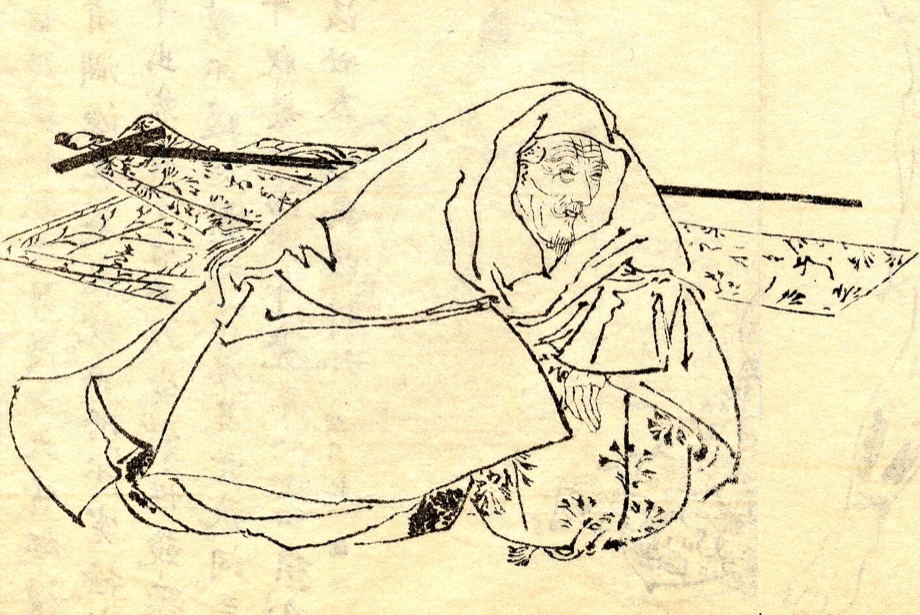
Portrait of Fujiwara no Shunzei — 19th century (later depiction)
Judgment Was Part of Making a Tradition
Fujiwara no Shunzei did more than announce which poem had won. His judgments asked how language, inherited associations, and the effect of a whole composition worked together. They could admit a problem in one phrase while recognizing strength elsewhere. A tentative INFJ reading concerns the connection between a sustained poetic ideal and guidance offered through particular assessments. It is low confidence, because the public work of a critic does not disclose his entire temperament.
Born in 1114, Shunzei is also known through the Japanese reading Toshinari. He inherited a learned family setting, served at court, and became an influential poet and judge. Religious retirement in the 1170s did not end his literary activity. He continued teaching, assessing, and compiling, living until 1204. The long career connects late Heian court culture to the poetic work that continued after the emergence of military government.
His son Teika belonged to that literary inheritance but did not simply repeat it. Family provided resources, relationships, and expectations, while a developing poet could change the possibilities of the tradition. Shunzei's authority therefore needs to be understood as participation in a working literary community rather than possession of a timeless aesthetic rule that others merely obeyed.
INFJ is a low-confidence interpretation of dominant Introverted Intuition: Shunzei repeatedly assessed particular poems through a sustained understanding of poetic depth and the effect of the whole.
The Whole Could Outweigh a Fault
A judgment in the Poetry Contest in Six Hundred Rounds compares two winter poems. Shunzei recognizes charm in part of one composition but finds its opening overly familiar. The other uses an expression he considers questionable, yet its total effect merits preference. The decision demonstrates that criticism could involve more than counting correct phrases. An objection mattered within an assessment of what the poem accomplished together.
Introverted Intuition is proposed cautiously for that movement from a detail to the composition's larger effect. The argument is not that appreciation of subtlety automatically makes a critic intuitive. It is the recurring effort to connect diction, association, and conception within a considered account of poetic achievement. The judgments were nevertheless produced for particular contests, where institutional and personal relationships also mattered.
Terms such as yugen, often translated through mystery or depth, help describe parts of his reception but should not be treated as a complete formula explaining every decision. His surviving criticism is more various than a single modern aesthetic slogan. Reading actual judgments preserves uncertainty, compromise, and specificity that a retrospective label can obscure.
Guidance Had Recipients and Consequences
Poetry contests involved competitors, teams, objections, and patrons. A judge's decision entered that social arrangement rather than addressing an abstract poem with no author or audience. Shunzei responded to particular claims and could award a tie where neither side had an adequate advantage. His assessments supplied a form through which disagreement could remain part of a recognized literary practice.
Extraverted Feeling is suggested by the relation between critical purpose and guidance within that community. It does not imply endless gentleness. Competitors could challenge his authority, and judgments could strengthen the reputation of one poetic group at another's expense. The relevant evidence concerns how his ideas were communicated through a sustained practice of assessment, not an assumption that a mentor must have one personality.
Kensho's written appeal against judgments in the six-hundred-round contest makes those disagreements explicit. Shunzei's authority was substantial but not beyond argument. Literary lineage and rival understandings of appropriate language shaped what participants accepted as evidence. The existence of an appeal complicates a picture in which the great critic's intuitive insight was immediately obvious to everyone around him.
An Anthology Could Preserve and Admit
Go-Shirakawa commissioned the Senzaishu in 1183, and Shunzei completed the collection later in the decade. The undertaking selected poems into a sequence recognizable within the imperial anthology tradition. It included work by Saigyo and Teika, bringing distinctive voices into an institution grounded in earlier models. Selection could maintain continuity while enlarging the set of poets through whom that continuity was understood.
The compiler's role required choices among a much larger body of writing. An anthology did not merely gather the objectively best poems that already existed. Its order, thematic sections, attributions, and balance of contributors shaped a reader's encounter with the tradition. Shunzei's contribution was therefore editorial as well as poetic. It created an influential arrangement without making every selected poet an expression of the compiler's own mind.
Political upheaval supplied part of the setting. The commission preceded the Taira defeat, while completion followed major changes in military power. Poetry's continued imperial framework demonstrates that a shift in governing authority did not instantly erase court institutions or their prestige. Shunzei's career belongs to that persistence, which must be explained rather than described only as nostalgia for a lost age.
Literary Memory Required Discrimination
Shunzei's judgments use older poetry and prose, including The Tale of Genji, as resources for assessment. An allusion was not sufficient simply because its source was famous. In a contest involving moonflowers, he recognizes a connection to Genji while finding the reference too oblique to serve the poem well. Knowledge of a literary work and success in using it were different achievements.
This distinction guards against reducing him to a conservative keeper of quotations. The value of inherited material depended on its new setting and the effect it produced. It also guards against a romantic picture of effortless perception. A judge needed textual knowledge, practiced attention, and the ability to respond to claims made by others. The work could be subtle while still requiring a great deal of explicit learning.
His critical writings, including Korai futeisho, belonged to the later portion of a long career. Buddhist commitments supplied another setting for considering the value of poetry. The relation should not be simplified into a modern claim that all artistic feeling was enlightenment or that every poem expressed a private spiritual revelation. Courtly practice and religious thought met through particular texts and arguments.
A Father’s Support Was Also an Institution
Shunzei's support for Teika involved family standing and access as well as instruction. The son's opportunities arose within a household that had cultivated patrons and literary authority. Describing patient guidance should not make inherited advantage disappear. Nor should the advantage erase the work required to write, compete, copy, and defend a developing approach to poetry.
The different careers make the relationship historically useful. Shunzei's critical authority and Teika's later textual and poetic work reinforced one another without being identical. A son could inherit standards while extending them in ways his father had not fully articulated. The continuity of a lineage depended on adaptation as well as preservation, and later claims about that lineage added their own interests.
Testing the INFJ Reading
Why not INFP?
INFP is plausible for a poet whose work values feeling and subtle experience. INFJ is preferred tentatively because the proposed pattern joins an enduring critical understanding to the guidance of other writers and an editorial arrangement of the tradition. The distinction is limited: the texts preserve literary decisions more clearly than everyday private conduct.
The type remains low confidence. It describes a pattern of assessment and guidance while leaving patronage, lineage, convention, and individual disagreement in the explanation.
Connected Figures
Further Reading
- Japanese Court Poetry — Robert H. Brower and Earl MinerA foundational study of court verse and criticism, to be compared with later scholarship on institutions, texts, and religious interpretation.
- Teika: The Life and Works of a Medieval Japanese Poet — Paul S. AtkinsA modern study drawing on diary entries, poems, criticism, and textual work while distinguishing secure writings from later attributions.
- The Making of Shinkokinshū — Robert N. HueyA study of the later anthology and the literary networks through which Shunzei’s legacy was transformed.
- Traditional Japanese Poetry: An Anthology — Steven D. CarterAnnotated translations providing a wider poetic setting for these writers and the conventions through which individual expression worked.
- A Fine Thing for the Way: Evidence, Counter-Evidence and Argument in the Poetry Contest in Six Hundred Rounds — Thomas McAuleyAn article examining disagreement, testimony, and precedent in Shunzei’s judgments and Kensho’s appeal.
