 Historical Figure MBTI
#1319 · 10-2-26 · The Heian–Kamakura Transition
Emperor Go-Shirakawa
Emperor · Retired Sovereign · Cultural Patron
1127–1192
7 min read
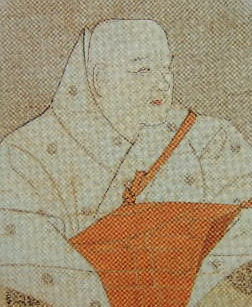
Portrait of Emperor Go-Shirakawa — First half of 14th century (later depiction)
Retirement did not remove him from the contest
Go-Shirakawa’s brief reign was followed by a much longer struggle over what a retired emperor could still do. He surrendered the throne in 1158 but remained a consequential figure until his death in 1192. The position was not ceremonial inactivity. It offered a household, clients, property, religious connections, and a continuing relation to the succession, all subject to pressures he could negotiate but never completely control.
His career resists a single straight line. An alliance with Taira no Kiyomori became rivalry and confinement. Emerging military leaders became potential allies, dangers, and sources of leverage. Cultural patronage meanwhile placed him in relationships with accomplished people beyond the narrowest court circles. The same man could defend imperial standing and pursue songs transmitted by performers whose social position was far from his own.
The proposed ENTP interpretation is low confidence. It gives weight to his readiness to work through changing possibilities and relationships rather than to a consistently imposed program. Political survival, however, can force flexibility on people of many dispositions. His preserved musical memoir offers another kind of evidence, but even that text is a deliberate account of authority and transmission.
Go-Shirakawa suggests ENTP: dominant Extraverted Intuition keeps seeking another workable configuration when political relationships change.
Extraverted Intuition — another configuration remains possible
His accession in 1155 placed him within a contested imperial succession. The Hōgen conflict the following year brought family and aristocratic disputes into armed confrontation. Kiyomori and Minamoto no Yoshitomo supported his side, yet their subsequent rivalry changed the distribution of power. These events made the relationships sustaining imperial authority unstable from early in his reign. There was no fixed alliance that could safely answer every later problem.
The possible dominant Extraverted Intuition pattern lies in treating a changed alignment as an opening rather than as the end of action. Go-Shirakawa worked through partners whose interests differed from his own and continued to seek leverage when one arrangement narrowed his freedom. This should not be exaggerated into a cheerful appetite for novelty. It was a dangerous political practice in which possibilities could close abruptly.
The confinement imposed by Kiyomori in 1179 is an important limit. Go-Shirakawa’s position could be overridden by force; being connected to several interests did not protect him from a determined opponent. The event prevents an account of his adaptability from becoming a legend of invulnerable cunning. A strategy that preserves options can still fail when another actor controls the immediate means of coercion.
After the Taira withdrew from Kyoto in 1183, relations with Minamoto no Yoshinaka and later with Minamoto no Yoritomo created new negotiations. The imperial court retained something military leaders needed: titles, recognition, and the language of legitimate action. Go-Shirakawa could use that position without commanding all the armies invoking it. His agency operated through the gap between those two kinds of power.
Introverted Thinking — a distinction could preserve room to act
Insei, rule associated with a retired emperor, separated possession of the throne from the exercise of considerable influence. Go-Shirakawa’s career makes that distinction concrete. Retirement, and later taking Buddhist vows, did not necessarily extinguish the institutional relationships through which he acted. Authority could be distributed among offices, households, family positions, and religious identities rather than located in one continuously held title.
An auxiliary Introverted Thinking interpretation might notice his use of such distinctions to preserve room for action. The reigning sovereign and the retired imperial household had overlapping but nonidentical positions. A warrior’s ability to compel obedience and the court’s ability to legitimate action likewise did not coincide perfectly. Working within those differences could permit negotiation where a simple question of who was strongest would foreclose it.
This is an inference about a recurrent political practice, not proof that he privately reasoned through a particular cognitive model. Institutional differentiation existed before him, and advisers and circumstances shaped its use. We do not possess a continuous record of his deliberations. The argument is more modest: his career repeatedly used a political world whose ambiguities could be exploited rather than eliminated.
The ambiguity also had human costs. Changing alignments could place associates in danger, and preserving the imperial household’s position did not guarantee a stable settlement for everyone else. Calling his practice flexible should not make it harmless. The type framework is useful only if it leaves those consequences visible instead of treating adaptability as an automatic virtue.
Songs supplied a different record of attention
His attachment to imayō songs gives the portrait an unusually personal surviving register. In the memoir associated with Ryōjin Hishō, he describes singing with a persistence that damaged his voice. The account presents practice as effort, not a leisurely ornament of rank. Musical accomplishment mattered enough to demand repeated work and to become a subject of retrospective self-explanation.
His teacher Otomae occupies a central place in that account. He describes prolonged training, including correcting earlier ways of singing to bring them into her tradition, and honored her after her death. That relationship complicates any easy picture of an emperor who accepted instruction only from people close to his status. In a defined art, another person possessed knowledge he sought and acknowledged.
The memoir is also concerned with the difficulty of transmitting what he had learned. An accomplished singer required a suitable successor, and his imperial position could not simply manufacture the necessary devotion. This is a limit of patronage as well as a personal frustration. The desired continuity depended on someone else’s sustained commitment, a resource that command alone could not supply.
These passages qualify the type argument rather than merely decorate it. Correcting and relearning a repertoire shows respect for a particular tradition. It would be wrong to call that inferior Introverted Sensing simply because the proposed type places the function last. Serious expertise demands repetition. His musical dedication demonstrates that flexibility in politics could coexist with exacting fidelity in an art.
Patronage and authority occupied the same landscape
Go-Shirakawa’s Hōjūji residence included religious institutions, and the Kyoto National Museum now occupies part of that former complex. Rengeō-in and its great hall belong to this setting of imperial patronage. The proximity reminds us that devotion, residence, art, and political standing were connected aspects of a household’s presence. They should not be divided into a modern opposition between private culture and public power.
A supporting Extraverted Feeling reading might find evidence in his investment in relationships with performers and in the public recognition given to a teacher. Yet patronage always carries asymmetry. Respect for Otomae’s skill did not dissolve imperial rank or make their world egalitarian. The relationship reveals a particular acknowledgment of another person’s authority, not a general modern policy of social inclusion.
Why ENTP Over ENTJ
Why not ENTJ?
ENTJ is plausible for a ruler who maintained influence, sponsored major institutions, and negotiated with military leaders. ENTP receives a slight preference because the record more often shows repositioning among competing forces than a sustained attempt to make all instruments serve one stable design. His musical practice adds intellectual and relational range but does not itself prove the type. The difference remains a low-confidence interpretation of a pressured career.
His enemies’ descriptions of cunning and the Heike’s dramatic encounters are interested portraits. Neither can be accepted as a complete inventory of character. The strongest reading combines political acts with his own mediated musical account and lets the tensions between them remain unresolved.
Connected Figures
Further Reading
- Songs to Make the Dust Dance: The Ryōjin Hishō of Twelfth-Century Japan — Yung-Hee KimA study with translated songs and memoir passages illuminating his musical training and patronage.
- The Tale of the Heike — Translated by Helen Craig McCulloughThe medieval narrative preserves the rise and fall of the Taira through a morally and artistically shaped account.
- Lovable Losers: The Heike in Action and Memory — Edited by Mikael S. Adolphson and Anne CommonsEssays distinguish Taira political activity from its later cultural representations.
- Beginnings: The History of the Museum Site — Kyoto National MuseumIdentifies the surviving landscape of the former Hōjūji imperial residence.
