 Historical Figure MBTI
#1318 · 10-2-26 · The Heian–Kamakura Transition
Taira no Kiyomori
Court Minister · Military Leader · Dynastic Patron
1118–1181
10 min read
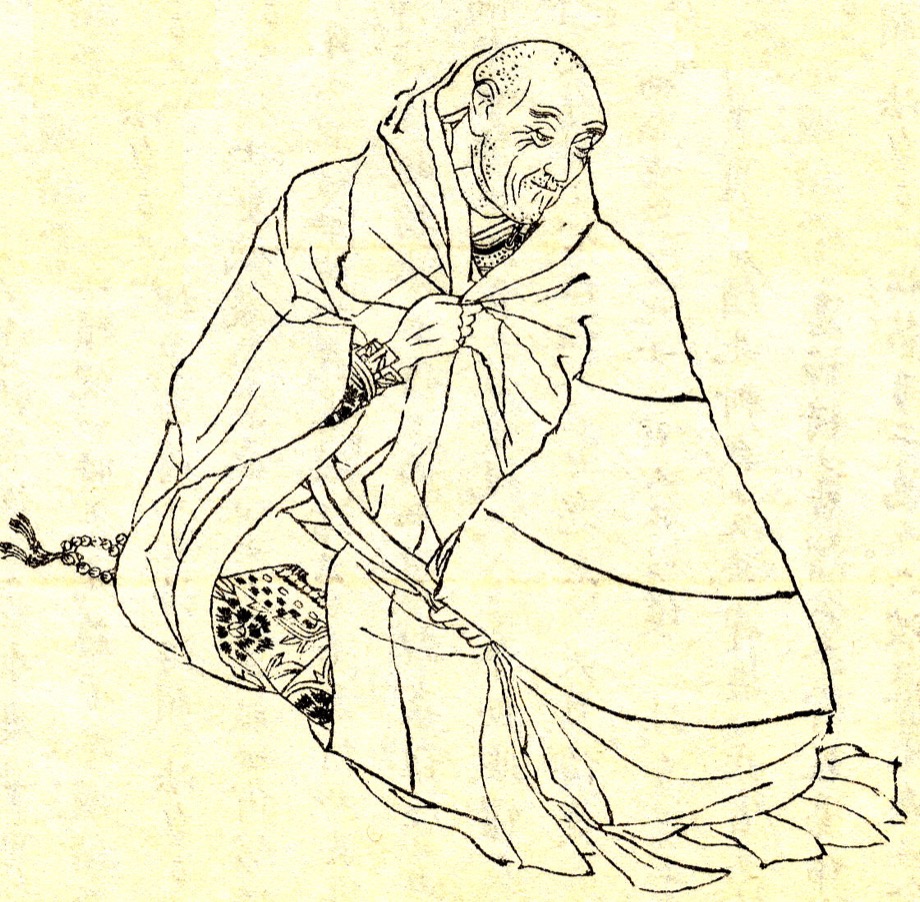
Portrait of Taira no Kiyomori — 19th century (later depiction)
Power had to reach the court
Taira no Kiyomori did not stop at winning a place among the men who could fight for the court. He sought to make military service, high office, family marriage, landed resources, and maritime access reinforce one another. His career is most intelligible at the points where those resources meet. A battlefield victory could open a political door, but keeping that door open required people, institutions, and material support beyond the battlefield.
The familiar tyrant of the Tale of the Heike is consequently both indispensable and insufficient. The medieval narrative makes his rise an example of pride approaching retribution. It gives the events a memorable human center, but the center is shaped by a moral design. A historical portrait must examine the arrangements he made without treating every reported speech, omen, or violent impulse as an eyewitness record of his mind.
The proposed ENTJ interpretation has moderate rather than high confidence. Its strongest basis is the repeated attempt to coordinate different sources of power toward an enlarged family position. Public success alone cannot establish dominant Extraverted Thinking. The argument depends on how he pursued and reorganized the means of rule, including the costly moments when that coordination failed.
Taira no Kiyomori suggests ENTJ: dominant Extraverted Thinking repeatedly turns military, institutional, and material advantages into an enlarged family position.
Extraverted Thinking — convert an advantage into a position
Kiyomori inherited a substantial foundation from his father, Tadamori, who had served the retired imperial household and developed western connections. That inheritance corrects the image of a solitary soldier suddenly breaking into an otherwise sealed aristocratic world. The family already possessed access and resources. Kiyomori’s distinction lay in extending them and making the resulting position harder for other political actors to ignore.
He fought on Go-Shirakawa’s side in the Hōgen conflict of 1156, alongside Minamoto no Yoshitomo. In the Heiji conflict of 1159–1160, Yoshitomo became his opponent and was defeated. Those changing alignments expose the inadequacy of a timeless Taira–Minamoto rivalry. Warriors acted within disputes involving the imperial household and aristocratic factions. Kiyomori’s victories mattered because they changed his leverage within that existing political structure.
His ascent culminated in appointment as grand minister in 1167. He left the office after only a short tenure, but the prestige and the wider elevation of his family did not disappear with resignation. Office was one instrument among several. A psychological reading can cautiously notice this practical distinction between holding a title continuously and using its attainment to transform the standing of a group.
Dominant Extraverted Thinking is a plausible interpretation of this recurring effort to make advantages operational. Military strength becomes rank; rank improves access to offices and resources; family appointments make influence durable. This does not imply dispassionate competence or benevolent administration. An effective arrangement can distribute benefits narrowly and provoke those excluded from it. The political record includes both the system he strengthened and the opposition it created.
Introverted Intuition — place the family inside succession
The marriage of his daughter Tokuko to Emperor Takakura connected the family directly to the succession. Their son Antoku was born in 1178 and enthroned in 1180. Kiyomori thereby became the emperor’s maternal grandfather. The relationship offered something battlefield command could not provide: a position within the intimate household through which sovereign authority was sustained and mediated.
This was not the invention of dynastic marriage as a political method. Earlier aristocratic families had pursued influence through related arrangements. The possible auxiliary Introverted Intuition clue lies instead in the convergence Kiyomori sought. Marriage, promotion, and resources became parts of a durable configuration, with the imperial child at its center. The recurring destination was more important than any single instrument used to approach it.
Women cannot be treated as inert pieces in that configuration. Tokuko held rank and household standing; Kiyomori’s wife Tokiko and her sister Shigeko connected different branches of the courtly and warrior Taira. Their relationships possessed histories and claims of their own. Calling the arrangement a strategy should describe its political consequences without pretending that Kiyomori controlled every choice or that the women had no agency.
The framework also had a weakness. Dependence on succession and family access made deaths, confiscations, and disagreements over property unusually consequential. A structure that appeared to bind interests together could become a field of incompatible claims. Long-range convergence does not guarantee an accurate vision of what other people will tolerate. Kiyomori’s increasingly concentrated position helped make resistance to him more widely shared.
The western shore was a resource and a sacred landscape
His interest in Fukuhara and the port at Ōwada tied political ambitions to the western sea. Connections with Song China brought trade, goods, and diplomatic possibilities into the orbit of a family whose power also depended on court institutions. The point is not that he discovered commerce in a country without it. He sought advantage through an existing maritime world and helped enlarge the infrastructure through which that advantage might operate.
Port development and contact with foreign merchants therefore belong beside appointments and marriages. They provided another material basis for influence and another reason to value a western residence. Describing him solely as a warrior overlooks this range. Describing him as a modern commercial visionary would be equally misleading, since the purposes and institutions of twelfth-century exchange differed from those of a modern economy.
Itsukushima offered a different but connected setting. Kiyomori’s devotion and the family’s patronage enlarged the shrine’s standing. The ornate Heike Nōkyō manuscripts were dedicated in 1164, and the shrine complex was expanded later in the decade. These were collective undertakings involving family members, scribes, artisans, and religious personnel. Their survival makes the scale of patronage visible without making every decorative choice a direct expression of one man’s psychology.
The sacred dimension should not be reduced to advertising. Kiyomori associated divine protection with his fortunes, and the shrine belonged to a world where religious obligation and political authority were interwoven. We cannot measure his inward sincerity from expenditure alone. We can recognize that devotion, prestige, and family identity could reinforce one another without being mutually exclusive explanations.
A tertiary Extraverted Sensing reading might find support in his readiness to act upon concrete opportunities: a port, a site, an office, a military advantage. But these examples are too entangled with strategic necessity to bear much independent weight. Their historical importance is stronger than their diagnostic value. The portrait should preserve that unequal confidence rather than assign a function to every building or battle.
The new capital tested the reach of command
In 1180 Kiyomori brought the imperial court to Fukuhara. The move placed the sovereign closer to a center associated with his own western interests, but relocating the court was much more difficult than relocating a powerful household. Officials, ceremonies, residences, routes, and expectations had been organized around Kyoto. The decision exposed the difference between issuing an effective order and creating the conditions under which an entire institution could remain elsewhere.
The experiment lasted only months before the court returned to Kyoto. Its failure is especially useful for the type argument because it prevents the portrait from treating intention as proof of mastery. A man capable of coordinating considerable resources could still underestimate resistance, disruption, and the practical dependencies of other participants. Strategic concentration can become coercive overconfidence when a chosen destination absorbs too much of the judgment.
The Heike makes the movement of the capital a scene of disorder and sorrow. That account deserves close reading as a representation of displacement, but its voices should not be mistaken for a complete survey of contemporary opinion. Modern scholarship has reconsidered the proposed capital’s maritime and political significance. Neither a simple mad whim nor an inevitable modernization project adequately captures the decision.
This is also where an ENTJ reading must remain distinct from admiration. The ability to impose change says nothing by itself about the legitimacy of the change or the willingness of others to live with it. Fukuhara reveals a practical and political limit. Kiyomori could make people move; he could not ensure that the new arrangement would become stable merely because it served his larger design.
Victory narrowed into coercion
The relationship with Go-Shirakawa moved from alliance into severe conflict. In 1179 Kiyomori confined the retired emperor and removed a group of officials associated with him. The coup followed disputes over power and property that had intensified after deaths within the family. It converted a difficult partnership into direct constraint, while leaving the imperial institution necessary to the authority Kiyomori sought to exercise.
The contradiction was structural. He needed the court’s legitimating position and wanted to limit the independence of important people within it. Coercion could secure immediate compliance while giving aristocratic, religious, and provincial opponents a more common reason for resistance. The rebellions beginning in 1180 did not emerge from one insult alone. They drew upon interests and grievances that family predominance had brought into sharper conflict.
Kiyomori died in 1181 before the Taira’s final defeat. Later narration surrounds his fatal illness with terrible heat and the image of a body already anticipating punishment. Those descriptions belong to a moralized death scene, not a clinical record from which to diagnose either disease or a psychological collapse. The reported demand for Yoritomo’s head similarly needs attribution to the tale rather than conversion into an unquestioned last utterance.
An inferior Introverted Feeling story about wounded pride might be tempting here, but it would outrun the evidence. We can identify coercive acts, concentrated interests, and escalating conflict. We cannot confidently reconstruct the private value system operating beneath every decision. The type hypothesis is strongest when it describes the recurrent organization of action and weakest when it claims access to his final inward state.
Why ENTJ Over ESTJ
Why not ESTJ?
ESTJ can explain his effective use of offices, hierarchy, and established dynastic methods. ENTJ receives a modest preference because the pattern repeatedly combines those inherited instruments into an enlarged configuration, including maritime development and the attempted relocation of the court. The Fukuhara decision particularly suggests a willingness to reorder the setting around a strategic destination. This is a reading of public choices, so the distinction remains uncertain.
The medieval portrait adds unforgettable anger and pride, but those qualities are arranged to explain a fall. They should not become the foundation of a modern type. Moderate confidence reflects the substantial political record and the continuing distance between recorded acts and an inferred cognitive preference.
Connected Figures
Further Reading
- The Tale of the Heike — Translated by Helen Craig McCulloughThe medieval narrative preserves the rise and fall of the Taira through a morally and artistically shaped account.
- Lovable Losers: The Heike in Action and Memory — Edited by Mikael S. Adolphson and Anne CommonsEssays distinguish Taira political activity from its later cultural representations.
- The Origins of Japan’s Medieval World: Courtiers, Clerics, Warriors, and Peasants in the Fourteenth Century — Edited by Jeffrey P. MassA broader institutional context for understanding the continuing place of court and religious powers.
- Itsukushima Shinkō — Kokugakuin University, Encyclopedia of ShintoAn institutional history of the shrine and the Taira family’s patronage.
