 Historical Figure MBTI
#1317 · 10-1-26 · The Heian–Kamakura Transition
Fujiwara no Teika
Poet · Critic · Diarist · Textual Scholar
1162–1241
7 min read
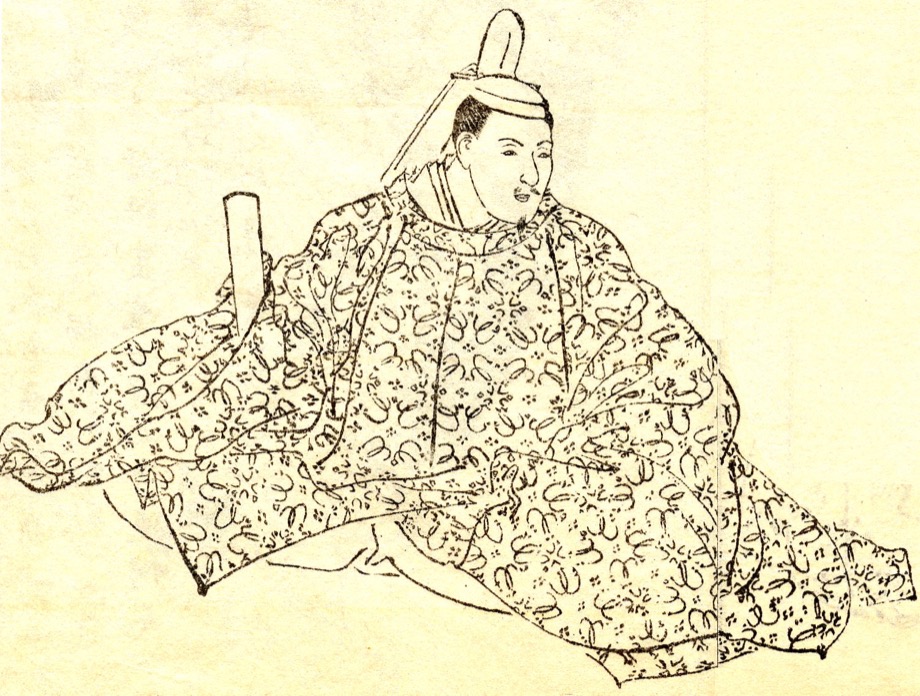
Portrait of Fujiwara no Teika — 19th century (later depiction)
The Standard Had to Survive in a Text
Fujiwara no Teika's literary authority rested on more than the ability to write a memorable poem. He judged, selected, copied, compared, and kept records. A text worth preserving had to survive the practical problems of handwriting, error, and access as well as the uncertainties of taste. A tentative INTJ reading concerns the relation between sustained standards and organized literary work. His extensive diary makes the proposal more assessable than many historical typings, without making it an observed fact.
Born in 1162, Teika was a son of Shunzei and is also known as Sadaie. Family connections placed him in a cultivated court household, but advancement still depended on patrons, appointments, and performance. His career extended across the establishment of military government and deep into the Kamakura period. The imperial court remained a center of literary authority within that changing political arrangement.
The diary called Meigetsuki survives in substantial portions, much in his own hand. It records public matters alongside personal responses and everyday difficulties. That combination provides richer evidence than assigning him the attitude of a poetic speaker. It also remains a written selection: recording a complaint, a duty, or a loss does not disclose everything about how the writer behaved beyond the page.
INTJ is a tentative interpretation of dominant Introverted Intuition: Teika repeatedly made particular literary choices answer to sustained standards that could organize composition, criticism, and transmission.
A Standard Larger Than One Poem
Teika's work connected the assessment of individual poems with questions about appropriate models, styles, and the development of a poet. Different compositions could succeed in different ways. A durable standard therefore need not mean that every poem should resemble one favored example. The historical critic's task involved distinguishing kinds of achievement while deciding what was worth imitation or preservation.
Introverted Intuition is proposed for that continuing effort to relate particular decisions to a considered literary direction. It is not inferred simply from imagination or an association with mysterious beauty. The stronger pattern lies across criticism, selection, and textual work. Its limitation is that these activities were also components of a learned vocation and a family tradition, so their coherence cannot be attributed entirely to a personal cognitive preference.
Treatises associated with Teika require an additional caution. Some are securely supported; others are disputed or later fabrications. The Maigetsusho, an extended work of advice to a pupil, is generally treated more favorably than several spurious secret teachings, but its transmission and recipient remain questions for scholarship. One cannot assemble every saying attached to his name into a single transparent private philosophy.
Preservation Was Material Work
Copying an old work required more than accurate penmanship. Manuscripts could contain different readings, difficult forms of characters, gaps, or errors inherited from earlier copies. Teika's collection and copying of texts involved comparison and judgment. His household also participated in that labor. The literary tradition reached later readers through people making practical decisions about which wording to reproduce.
Extraverted Thinking is suggested by the organized activity through which standards became durable documents. This includes the movement from interest to an actual copy, an annotated reading, or a selected anthology. It does not imply that every manuscript decision was dispassionate or uncontested. Preservation creates an influential witness to a text, not necessarily an unquestionable recovery of the author's original.
The Tale of Genji provides an important example of that transmission. Teika's textual work contributed to a major line of manuscript tradition, but no autograph by Murasaki survives. His involvement cannot make the version associated with him identical to an original he never possessed. Editorial authority and historical certainty need to be distinguished, especially where later descendants developed claims around a prestigious family archive.
The Diary Keeps the Person Complicated
The Meigetsuki records grief, irritation, illness, and obligations alongside the work of a courtier. Entries concerning his mother's death and continuing memorial observances make attachment visible within the same life that pursued literary assessment. They prevent the stereotype of an intellectual temperament without strong personal feeling. Such evidence still belongs to a crafted record whose survival is incomplete.
Introverted Feeling is proposed cautiously for the commitments that remained personally significant across that work. The inference does not arise from assigning a sad poem to a private loss or making every sharp complaint evidence of uncompromising principle. The diary is more useful because it situates feelings beside obligations and particular events, while leaving room for conflict among them.
A type description also cannot turn bodily illness into a function diagnosis. Teika frequently records poor health, but neither recurrent sickness nor a bad day establishes psychological imbalance. The practical consequences can be discussed historically: attendance, travel, copying, and ceremony were affected by conditions in which a person had to work. The record does not authorize an explanation of those conditions through the proposed personality code.
Patronage and Poetic Independence
Saigyo asked the young Teika to judge a contest made from the older poet's own work. The request gave him an early opportunity to exercise criticism while showing that authority could be sought across generations. His later work depended on relationships with leading court patrons and with retired Emperor Go-Toba. Literary accomplishment opened doors but did not remove the expectations of the people controlling those doors.
Teika helped compile the Shinkokinshu, whose preparation and celebration in the early thirteenth century involved several editors and the patron's active participation. It should not be attributed to him alone. Selection and arrangement emerged through argument, revision, and patronage. A compelling anthology can express multiple interests rather than becoming the realization of one editor's perfectly independent plan.
His later compilation of the Shinchokusenshu illustrates the political pressures around literary judgment. The anthology's circumstances required decisions about legitimacy, patronage, and the reputations of figures affected by the conflict of 1221. Compromise belongs in the historical picture. Insistence on standards did not mean that Teika could act as though the political positions of patrons and contributors were irrelevant.
An Archive with an Afterlife
Teika died in 1241, leaving writing whose preservation became part of a family's authority as well as a wider literary tradition. His diary, manuscripts, poetry, and criticism were transmitted through descendants and readers with their own aims. Later disputes and attributions show the value of his name, but also the need to examine what can actually be credited to him.
The collection known as the Ogura Hyakunin Isshu is conventionally associated with his selection of poems, while the precise relation among versions and the later familiar arrangement is a matter of textual history. Its fame should not turn every subsequent presentation into a work he personally designed. The historical evidence for requests for poem cards and the continuing life of a widely known anthology are related questions, not identical facts.
Testing the INTJ Reading
Why not ISTJ?
ISTJ is a strong alternative because the diary, copying, and attention to precedent demonstrate sustained care for records and inherited texts. INTJ is preferred tentatively for the connection between that work and independent, developing literary standards rather than preservation alone. The difference remains uncertain: textual scholarship requires both interpretation and careful continuity, whatever the scholar’s temperament.
Confidence is moderate relative to the unusually rich record, while the type itself remains tentative. The argument is strongest where diary, criticism, and material work converge and weakest where attribution or a poetic speaker substitutes for personal evidence.
Connected Figures
Further Reading
- Teika: The Life and Works of a Medieval Japanese Poet — Paul S. AtkinsA modern study drawing on diary entries, poems, criticism, and textual work while distinguishing secure writings from later attributions.
- Fujiwara Teika’s Maigetsushō — Robert H. BrowerAn annotated translation and study that also addresses attribution, transmission, and the uncertain identity of the recipient.
- The Making of Shinkokinshū — Robert N. HueyAn institutional and literary history of the anthology, including the roles of editors and patron.
- Japanese Court Poetry — Robert H. Brower and Earl MinerA foundational study of court verse and criticism, to be compared with later scholarship on institutions, texts, and religious interpretation.
- Traditional Japanese Poetry: An Anthology — Steven D. CarterAnnotated translations providing a wider poetic setting for these writers and the conventions through which individual expression worked.
