 Historical Figure MBTI
#938 · 7-10-26 · The Rise of Fascism
Galeazzo Ciano
Foreign Minister · The Diary That Damned Him
1903 — 1944
6 min read
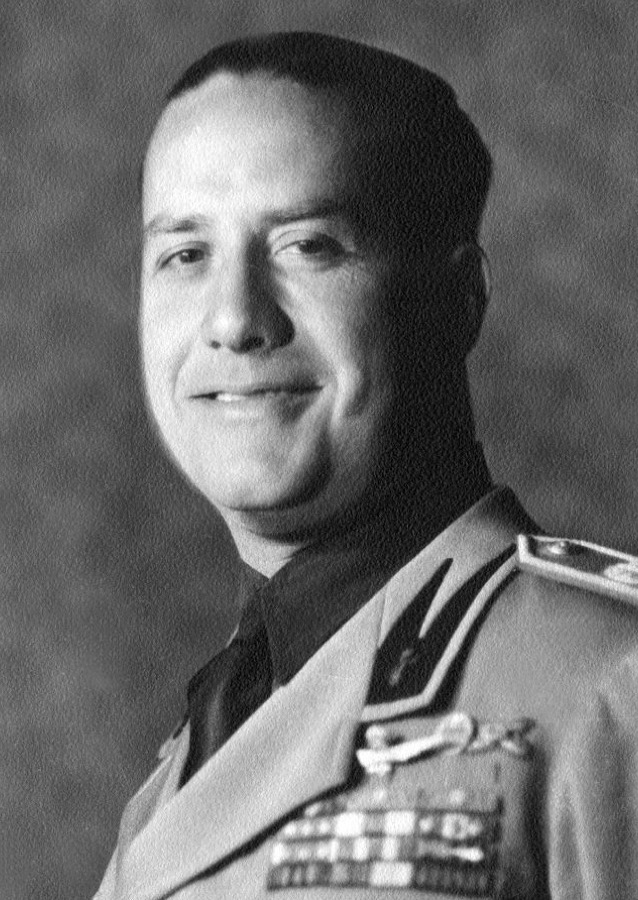
Portrait photograph, 1936 (Atelier Binder, public domain)
The Playboy Who Wrote It All Down
Galeazzo Ciano had the easiest rise in Fascist Italy and the hardest fall. He married Edda Mussolini in 1930, was Foreign Minister by thirty-three, and spent the years in between at parties, at the racetrack, in a string of affairs, and behind the wheel of fast cars — a life of appetite and appearance that made him, in the eyes of Rome's diplomatic corps, more playboy than statesman. He believed in the regime the way a man believes in the house he grew up in: because it was his, not because he had examined it.
What separates Ciano from the careerists around him is the diary. Night after night he recorded, in vivid and unsparing present tense, exactly what he saw and felt about the German alliance, about Italy's military unreadiness, about the men he worked with — not a systematic case against fascism, just an accumulating record of a man reacting in real time to what was in front of him. That diary became the evidence used against him at his own trial, and later a bestseller. It is the truest artifact of who he was.
Ciano was an ESFP, and the diary is a dominant-Se document: a man who trusted what he could see, hear, and personally feel in a room over any doctrine he was handed.
A Life Lived in the Room
Ciano's Foreign Ministry was run less like a bureaucracy than a stage. He loved the theater of diplomacy — the receptions, the uniforms, the sense of being watched and admired — and he loved Rome's nightlife with equal, undisguised enthusiasm. Colleagues and rivals alike described him as a man who needed to be seen, who read a negotiation the way he read a party: by the mood in the room, not the memo on the desk.
That same immediacy shows in the diary's texture. Ciano did not write abstractions about geopolitics; he wrote about a face across a table, a tone in Ribbentrop's voice, the physical fact of German troops he had just watched move. His judgment of the alliance with Hitler's Germany was formed less from strategic analysis than from what he had personally witnessed of German bad faith — Se processing the present moment and trusting it over any official line.
A Private Ledger of Right and Wrong
Underneath the socialite surface, Ciano kept a private moral accounting that he shared with almost no one. The diary is full of disgust at the Germans he was forced to host, contempt for the war he believed Italy was not ready to fight, and a growing sense that his father-in-law was leading the country toward catastrophe. None of this reached policy. It stayed personal conviction, recorded for himself, rarely acted on until it was almost too late.
That gap between private certainty and public silence is Fi in its auxiliary seat: strong, stubborn, internal values that shaped how Ciano felt about everything happening around him, but that surfaced as action only once — in July 1943, when he voted with the Fascist Grand Council to remove Mussolini from power. It was a genuine act of conviction. It came years after the diary had already convicted the regime in his own mind.
Competent Enough to Survive, Not Enough to Lead
Ciano was not incompetent. He ran the Foreign Ministry with real organizational grip, managed Italy's diplomatic apparatus through the Ethiopian war and the Pact of Steel negotiations, and could be sharp and efficient when a task demanded it. But this was tertiary Te — capability deployed in service of appetite and status, not a driving need to build or control systems for their own sake.
It shows most clearly in what Te didn't do for him: it never hardened into the kind of cold strategic calculation that might have let him protect himself. He could manage a ministry. He could not manage the much narrower, much more dangerous problem of his own exposure once he had turned against Mussolini.
A Blind Spot He Never Corrected
What Ciano lacked, fatally, was inferior Ni's long view — the capacity to project his present feelings and actions forward into consequence. He could see, viscerally, that the German alliance was a mistake. He could not see, or would not let himself see, that voting to depose Mussolini made him a marked man the instant the Germans engineered his father-in-law's rescue.
He stayed in Italy. He trusted, on some level, that family — decades of it — would count for something. It didn't. Captured by the German-backed Italian Social Republic, tried for treason, and shot on Mussolini's own order in January 1944, Ciano died the way his psychological profile predicted: a man of vivid present conviction who never built the future-facing foresight to protect himself from the world he had accurately, uselessly diagnosed.
Why ESFP Over ESTP
Why not ESTP?
An ESTP reads a dangerous situation and calculates the odds before acting — risk assessed, contingencies weighed. Ciano did the opposite: he let a private, Fi-driven conviction that Mussolini was wrong build for years inside the diary, then acted on it in a single vote with almost no thought given to what came after. His downfall was not a miscalculated gamble; it was the near-total absence of calculation. That gap between deep personal certainty and shallow strategic foresight is Fi paired with weak Ni, not the sharp tactical instinct of an ESTP.
Ciano's diary is the tell. An ESTP's record of the same years would read as tactical assessment — who to trust, what to do about it. Ciano's reads as a man feeling his way through events he never quite planned to survive.
Connected Figures
Further Reading
- The Ciano Diaries — Galeazzo CianoThe primary source — Ciano's own candid, present-tense record of the regime's inner workings.
- Mussolini's Shadow: The Double Life of Count Galeazzo Ciano — Ray MoseleyA full biography tracing Ciano's rise, marriage into the Mussolini family, and downfall.
