 Historical Figure MBTI
#1139 · 8-23-26 · The Fall of the Han
Gongsun Zan
The White Horse General · Walled Into a Tower of His Own Making
d. 199 CE
4 min read
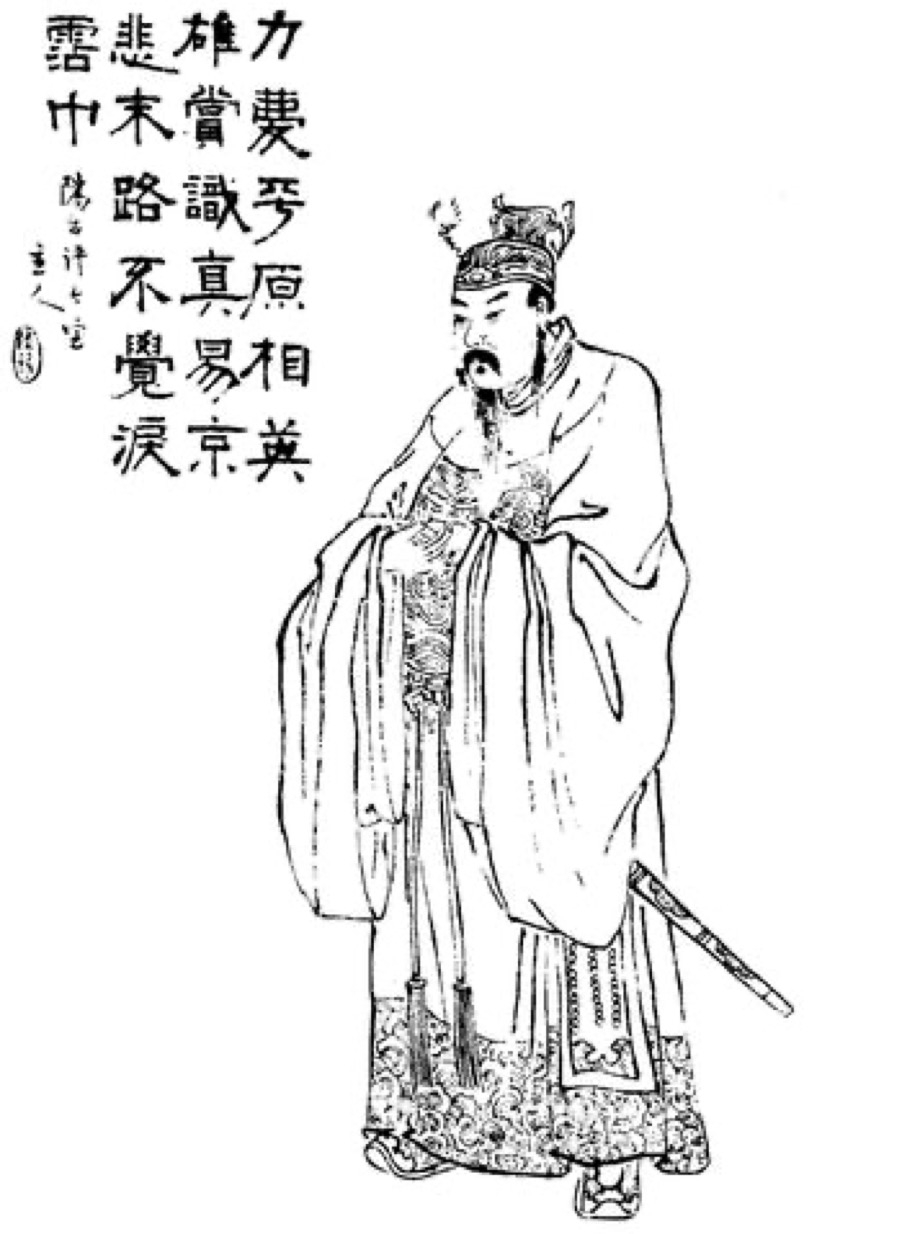
Portrait of Gongsun Zan
The General Who Walled Himself In
Gongsun Zan made his name on the northern frontier, commanding elite cavalry mounted on matched white horses against the Xianbei and other raiders — hard, immediate, decisive fighting that made him one of the most feared field commanders of his generation. Through the 1990s CE he rivaled Yuan Shao for control of Youzhou and the surrounding territory, and for a time held his own against a man with far deeper political resources. A young Liu Bei served under his patronage early in that career, one of the very few relationships that seems to have survived Gongsun Zan's growing suspicion of everyone around him intact.
As the war against Yuan Shao dragged on and the setbacks accumulated, something in him changed. He grew distrustful, then withdrawn, and finally retreated into an elaborately fortified compound at Yijing — layered walls, moats, and enormous grain stockpiles — where he stopped taking the field himself and largely stopped speaking to the people who might have helped him hold his position. In 199, Yuan Shao's forces broke through. Facing capture, Gongsun Zan killed his own family and then himself.
He trusted his own hands and a fortress wall far more than he ever trusted people — and the ISTP instincts that made him deadly on an open battlefield were exactly the instincts that walled him into a tower when the war outgrew what his hands alone could solve.
Psychological Verdict
Gongsun Zan is the clearest case in this era of a man whose instincts were made for one kind of war and ruined by another. On an open field, against raiders who respected only force met with force, his instincts were close to unerring — read the ground, commit the horse, decide in the saddle rather than the tent. That is a temperament built for direct, sensory engagement with a problem in front of it, not for the slower work of holding a coalition together while an equally capable rival out-administered him province by province.
The tell is Yijing. Faced with a war he was losing not on any single battlefield but in the accumulating arithmetic of alliances, supply, and trust, he did not rebuild any of those things. He built walls instead — literal ones, layered moats and towers around a fortress stuffed with grain, inside which he stopped fighting his own battles and stopped talking to nearly everyone who might have helped him win the larger one. It reads less like a strategy than like an instinct with nowhere else to go: when the world stopped being a problem his hands could solve, he shrank the world down to a space his hands could still control.
That isolation is also why the exception matters. The young Liu Bei, who served under his patronage early on, is one of the only relationships Gongsun Zan seems to have maintained without suspicion curdling it — a sign the distrust was less a fixed contempt for people than a narrowing that set in once the stakes turned political rather than personal. Against Yuan Shao, a rival built for exactly the kind of coalition-management war Gongsun Zan couldn't stomach, that narrowing became fatal. When Yijing finally broke in 199, he met the end on his own terms rather than anyone else's — killing his family, then himself — the last and starkest expression of a man who never once, from the frontier campaigns to the final siege, learned to hand the outcome to anyone but himself.
Connected Figures
Further Reading
- A Biographical Dictionary of the Later Han to the Three Kingdoms — Rafe de CrespignyEntry on Gongsun Zan
- Sanguozhi (Records of the Three Kingdoms) — Chen ShouThe primary source biography
