 Historical Figure MBTI
#1137 · 8-23-26 · The Fall of the Han
Yuan Shao
Best Pedigree, Biggest Army · The Warlord Who Couldn't Decide
d. 202 CE
8 min read
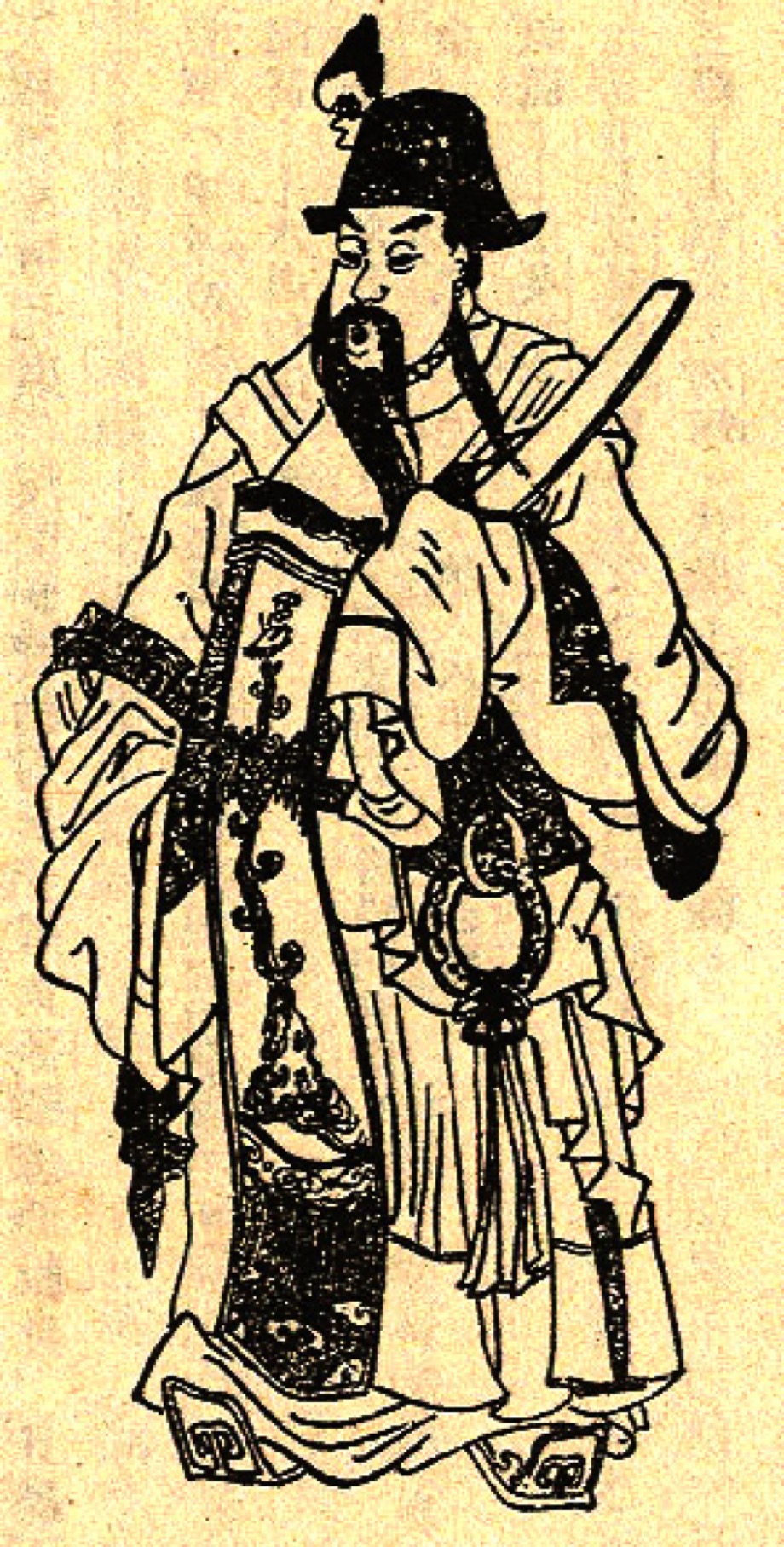
Portrait of Yuan Shao
The Name That Was Supposed to Be Enough
No name in the collapsing Han Empire carried more weight than Yuan. Four generations of Yuan men had sat among the Three Excellencies, the highest ministerial ranks the dynasty could confer, and by the time Yuan Shao came of age that inheritance had curdled into something close to a birthright to rule. When the warlord Dong Zhuo seized the capital in 189 and the eastern provinces rose against him, it was Yuan Shao the coalition chose as its nominal leader — not because he had proven himself in battle, but because every other lord in the room recognized the name and deferred to it. That deference would define his entire career, for good and, eventually, fatally, for ill.
Through the 190s CE he built on that head start with real, patient work: absorbing rivals, defeating the frontier warlord Gongsun Zan, and stitching together four provinces — Ji, Bing, You, and Qing — into the largest, richest domain any single warlord controlled. By the year 200 he could put an army in the field that outnumbered Cao Cao's roughly four to one. He had the pedigree, the territory, and the men. What he did not have, when it mattered, was the will to act alone.
Twice the empire turned on a decision only Yuan Shao could make, and twice he let the room decide for him instead. He waited while Cao Cao took custody of the fugitive Emperor Xian and converted that boy into the single most valuable political asset of the age. He waited again at Guandu, dithering between advisors who wanted patience and advisors who wanted a lunge, until Cao Cao's raiders burned his grain and his four-to-one army came apart in an afternoon. This was not a man defeated by superior numbers. It was a man who had spent his life managing consensus and, faced with a decision consensus could not make for him, discovered he had no other way to decide at all.
Yuan Shao was an ESFJ, Fe-dominant to his bones — a man who ruled by holding a coalition together rather than by commanding it, and who could not survive the one moment that demanded he break with it.
A Coalition of One Man's Face
Yuan Shao's entire rise was an exercise in extraverted feeling — reading a room of proud, competing men and giving each of them a reason to fall in behind him. The 190 coalition against Dong Zhuo was not a natural alliance; it was a collection of ambitious governors and generals who trusted no one, and Yuan Shao became its head precisely because his name let every faction save face by deferring to a figure above their own rivalries rather than to one another. That is a Fe move, not a Te one — he did not out-argue or out-organize his peers into following him, he simply outranked their objections socially.
The same instinct built his court in the north: a wide tent housing men as different as the blunt Tian Feng and the cautious Ju Shou, held together less by shared strategy than by loyalty to Yuan Shao personally. And the same instinct broke it. When Ju Shou urged him to secure Emperor Xian while Cao Cao was still weak, Yuan Shao hesitated — not from any hidden strategic objection, but because the move was contested inside his own camp, and picking a side inside his own advisory circle felt more dangerous than losing the emperor to a rival. Harmony among his own people outweighed advantage against everyone else's.
It curdled worst at Guandu. Tian Feng argued forcefully against rushing into a set battle with Cao Cao, and Yuan Shao's response was not to weigh the argument on its merits but to have Tian Feng imprisoned — removing the discordant voice from the room rather than resolving the disagreement it raised. A Te-dominant commander overrules a subordinate and moves on; Yuan Shao silenced the subordinate because the argument itself, ongoing and unresolved, was intolerable to him.
The Family Name as Load-Bearing Wall
Yuan Shao's auxiliary Si is the quiet engine underneath the Fe — it is what told him, from the start, exactly what his name was worth and how to spend it. He did not invent a new claim to legitimacy; he drew on four generations of precedent, the established fact of Three Excellencies stacked behind him, and let that established weight do work that other warlords had to fight for. His conquest of the north in the 190s was similarly methodical rather than inspired — province by province, alliance by alliance, building outward from a known and stable base rather than gambling on some novel stroke.
That same Si is what made his court legible to itself. Ji, Bing, You, and Qing were governed as an accumulation, precedent layered on precedent, a household grown enormous but still run on the old family logic of rank and deference. It gave him, by the year 200, the largest standing force any warlord in China could field — proof that Si-backed patience, applied for a decade, out-produces almost anyone's improvisation.
But Si that has never been tested by genuine crisis calcifies into something closer to superstition than strategy. Yuan Shao's confidence at Guandu rested on the same accumulated weight that had always worked before — more men, more provinces, more precedent — and he could not process that Cao Cao was about to break the pattern rather than extend it. The past had never failed him. He had no internal model for a battle the past could not predict.
Flashes of a Wider Board
Tertiary Ne shows up in Yuan Shao less as a source of vision than as a source of temptation — the occasional glimpse of an alternative path that never quite reorganizes his thinking. He was capable of seeing, at moments, what a bolder man might do with his position: that the fugitive emperor was a piece worth seizing, that a swift strike might end the northern rivalry with Gongsun Zan before it dragged on for years, that consolidating four provinces opened possibilities beyond simple accumulation. Ju Shou's advice about Emperor Xian landed on ears that could, in theory, hear it.
The trouble was that Ne in the tertiary slot argues quietly and loses easily to the Fe-Si partnership running the rest of the personality. Yuan Shao would entertain the wider possibility, turn it over, and then default back to whatever kept the coalition steady and matched the known pattern — which is precisely why the Emperor Xian opportunity went to Cao Cao instead. He saw the board Cao Cao saw. He simply couldn't make himself move on it before someone with less to lose did.
The Argument He Couldn't Sit Inside
Inferior Ti is where the Guandu campaign actually breaks. What the moment demanded was cold, isolated logical analysis — weigh Tian Feng's caution against the appetite for a decisive strike, on the internal merits alone, and commit to a single conclusion regardless of who in the room favored which side. That is exactly the operation an inferior Ti cannot perform under pressure: Yuan Shao could not detach the argument from the arguers long enough to judge it on its own terms.
So the argument became a person, and the person became a problem to be removed rather than an analysis to be resolved. Imprisoning Tian Feng was not a strategic decision at all — it was the closest thing to logical closure Yuan Shao's psychology could produce under that kind of strain, silence standing in for a verdict he was incapable of reasoning his way to. The night Cao Cao's raiders burned the grain depot at Wuchao, there was no contingency plan, no cold recalculation, because the internal machinery for building one under fire had never been asked to run before and failed exactly where inferior functions fail: catastrophically, all at once, with nothing held in reserve.
He died two years later, in 202, still nominally the greatest lord in the north. His sons turned on each other over the succession rather than closing ranks against Cao Cao — a final, grim echo of a court that had only ever been held together by one man's face, and that came apart the moment that face was gone.
Why ESFJ Over ESTJ
Why not ESTJ?
An ESTJ reading of Yuan Shao is tempting because he looks, on paper, like a man of command: the biggest army, the widest territory, the deepest bench of advisors. But an ESTJ with those resources drives a plan through regardless of internal dissent — Te doesn't stall out waiting for a room to agree. Yuan Shao had the numbers and still couldn't act; his paralysis at every hinge point came from an oversensitivity to faction and prestige, not from any deficit of organizational will. He imprisoned his best advisor rather than simply overruling him, which is a Fe failure of nerve, not a Te failure of logistics.
The distinction matters because it explains the specific shape of the collapse. A failed Te-dominant warlord loses because his plan was wrong. Yuan Shao lost because he could never settle on having a plan at all — every major fork in his career resolved not by decision but by default, the path requiring the least friction inside his own coalition. Four generations of prestige bought him the largest army in China. It could not buy him the one thing an ESFJ under existential pressure cannot generate from within: the will to stand alone against his own court and be right.
Connected Figures
Further Reading
- Imperial Warlord: A Biography of Cao Cao — Rafe de CrespignyCovers the Guandu campaign in detail from the winning side.
- A Biographical Dictionary of the Later Han to the Three Kingdoms — Rafe de CrespignyReference entry on Yuan Shao's career and family.
- Sanguozhi (Records of the Three Kingdoms), Book of Wei — Chen ShouThe primary source biography underlying every later account.
- Fire over Luoyang: A History of the Later Han Dynasty — Rafe de CrespignyOn the Yuan clan's four-generation rise to the Three Excellencies.
