 Historical Figure MBTI
#1136 · 8-22-26 · The Fall of the Han
Emperor Xian of Han
The Last Han Emperor · A Puppet's Entire Reign · Dignity Without Power
181 – 234 CE
6 min read
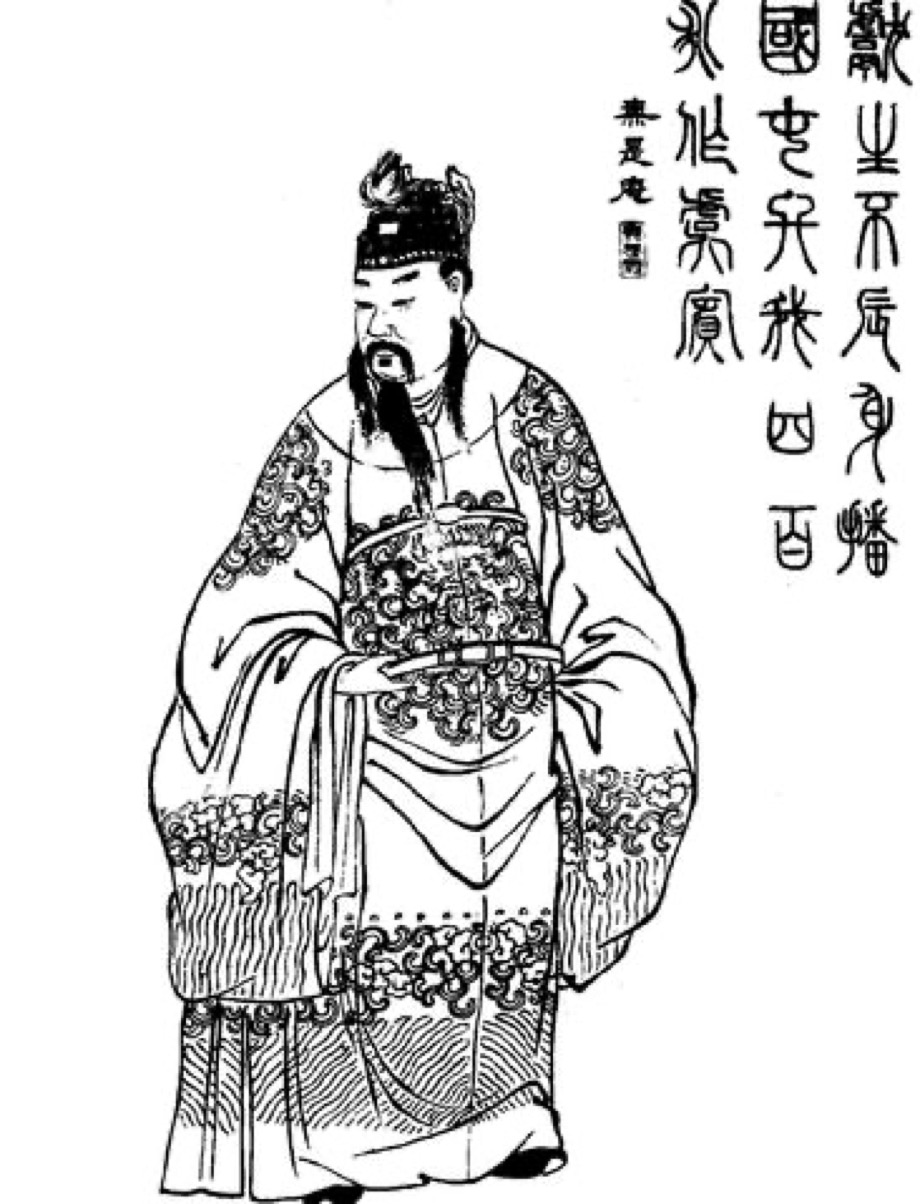
Portrait of Emperor Xian of Han
The Boy Who Was Never Meant to Rule
Emperor Xian of Han was eight years old when the warlord Dong Zhuo deposed his half-brother, the reigning boy-emperor, and put him on the throne instead — not because Xian showed promise, but because he showed none. A child seen as pliable was safer than one who might resist. After Dong Zhuo's assassination, the boy-emperor passed to the even more dangerous hands of the warlord's former officers, whose infighting brought the court to starvation and forced a genuinely perilous flight back east. In 196 he was "welcomed" by Cao Cao — a word doing enormous work, since in practice it meant custody. For the next two decades Cao Cao ruled in his name, and the era's chroniclers did not soften what that was: he "held the Son of Heaven to command the nobles."
And through all of it, Emperor Xian did not fight. He signed, sanctioned, and performed the rituals of a powerless throne, decade after decade, under three men who could have killed him and mostly chose not to, because he made himself so easy to keep. It is one of the strangest survival stories in Chinese history — not because he escaped, but because he never tried to.
Emperor Xian's genius, if it can be called that, was never resistance — it was the quiet, unbroken competence of an ISFJ who understood that outlasting his captors mattered more than defying them.
The Rituals That Outlasted Every Ruler
What Si gave Emperor Xian was not power but continuity — the ability to keep performing the forms of the office, correctly and consistently, no matter who stood behind the throne pulling the strings. Under Dong Zhuo, under Li Jue and Guo Si, under Cao Cao, the edicts still issued and the court protocols still ran. Three regimes, three masters, and the machinery of the office never broke down. It shows most clearly in the flight from Chang'an: rather than improvising some bold escape, the teenage emperor clung to the established forms of imperial travel even as the men around him starved and fought. Si reaches for what has held before, not for invention under pressure.
The clearest late-life expression of it is the strangest: after losing the throne entirely, he took up medicine among his former subjects in Shanyang — not scholarship, not memoir, but a practical, hands-on craft, the kind of grounded competence Si gravitates toward once the crown that had defined his identity was gone.
Dignity as a Survival Strategy
Fe is what turned Emperor Xian's captivity into something closer to a working relationship. Under Cao Cao especially, he is remembered not for sullen compliance but for a genuinely cooperative, dignified public bearing — sanctioning appointments, receiving envoys, holding court with a steadiness that made the fiction of his authority easier for everyone, Cao Cao included, to maintain. That harmony was not weakness; it was the one form of leverage available to a man with no army of his own.
It also explains the unusual mercy he was shown at the end. When Cao Pi finally compelled his abdication in 220, he did not have Emperor Xian killed, the customary fate of a deposed ruler. He was made Duke of Shanyang instead, with land and real privileges, and lived another fourteen years in peace — the payoff, plausibly, of decades spent visibly cooperating rather than resenting. That same outward orientation later carried him into medicine, tending the people around him once sovereignty was gone.
Reading the Room Without Ever Saying So
Tertiary Ti shows up in Emperor Xian less as argument than as private calculation — the quiet, largely invisible reasoning that let him tell which battles were worth fighting and which were not. He never mounted a coherent ideological case against Dong Zhuo, Li Jue and Guo Si, or Cao Cao; instead he assessed, moment to moment, how much room he had under each, and acted within it. That same quiet analysis is why he was never caught plotting, never linked to the conspiracies that periodically rose in his name and were crushed around him.
It is also, plausibly, what let him recognize the difference between Cao Cao's regime and the ones before it — chaotic, murderous captors versus a genuinely capable administrator worth cooperating with at length. A less analytical man might have resisted all three identically, or none.
The Futures He Never Reached For
Inferior Ne is visible mostly in its absence. Emperor Xian never seems to have entertained the more speculative paths open to him — no attempt to rally a rival faction against Cao Cao, no flight to Liu Bei, who styled himself a Han loyalist and might have sheltered him, no wager on an uncertain future when a survivable present was on offer. A functioning Ne might have gambled on one of the era's uncertain alliances; he instead chose the known captor over the unknown rebellion, every time, for thirty years.
When Ne does surface, it is narrow and late — the choice, once the throne was gone, to take up an entirely new vocation in medicine rather than simply retire into idle privilege. A small pivot, but for a man who had spent his whole life inside one fixed role, even that modest reinvention counts as inferior-function stretching, arriving only once the weight of Si-Fe duty had lifted.
Why ISFJ Over INFP
Why not INFP?
An INFP reading would frame his passivity as private, inward withdrawal — a man quietly checked out of a role he never wanted. But the record shows the opposite of detachment: active, repeated, socially engaged cooperation, decade after decade, formally sanctioning Cao Cao's authority again and again, and later choosing a hands-on service vocation among his former subjects rather than solitude. That is not an introverted-feeling type disengaging from an imposed role. It is Si-Fe, consistent and duty-first, doing what it always does.
Decades of unbroken cooperation across three dangerous regimes only make sense as Si-Fe. An INFP under that pressure withdraws inward and lets the performance go slack; his never slipped, which is precisely the stability ISFJ is built for and INFP is not.
Connected Figures
Further Reading
- Imperial Warlord: A Biography of Cao Cao — Rafe de CrespignyThe fullest account of the Cao Cao–Emperor Xian relationship.
- A Biographical Dictionary of the Later Han to the Three Kingdoms — Rafe de CrespignyEntry on Emperor Xian.
- Fire over Luoyang: A History of the Later Han Dynasty — Rafe de CrespignyOn his early years under Dong Zhuo and the flight from Chang'an.
