 Historical Figure MBTI
#1135 · 8-22-26 · The Fall of the Han
Chen Gong
The Idealist Who Walked Out on Cao Cao · Over One Murder
d. 198 CE
7 min read
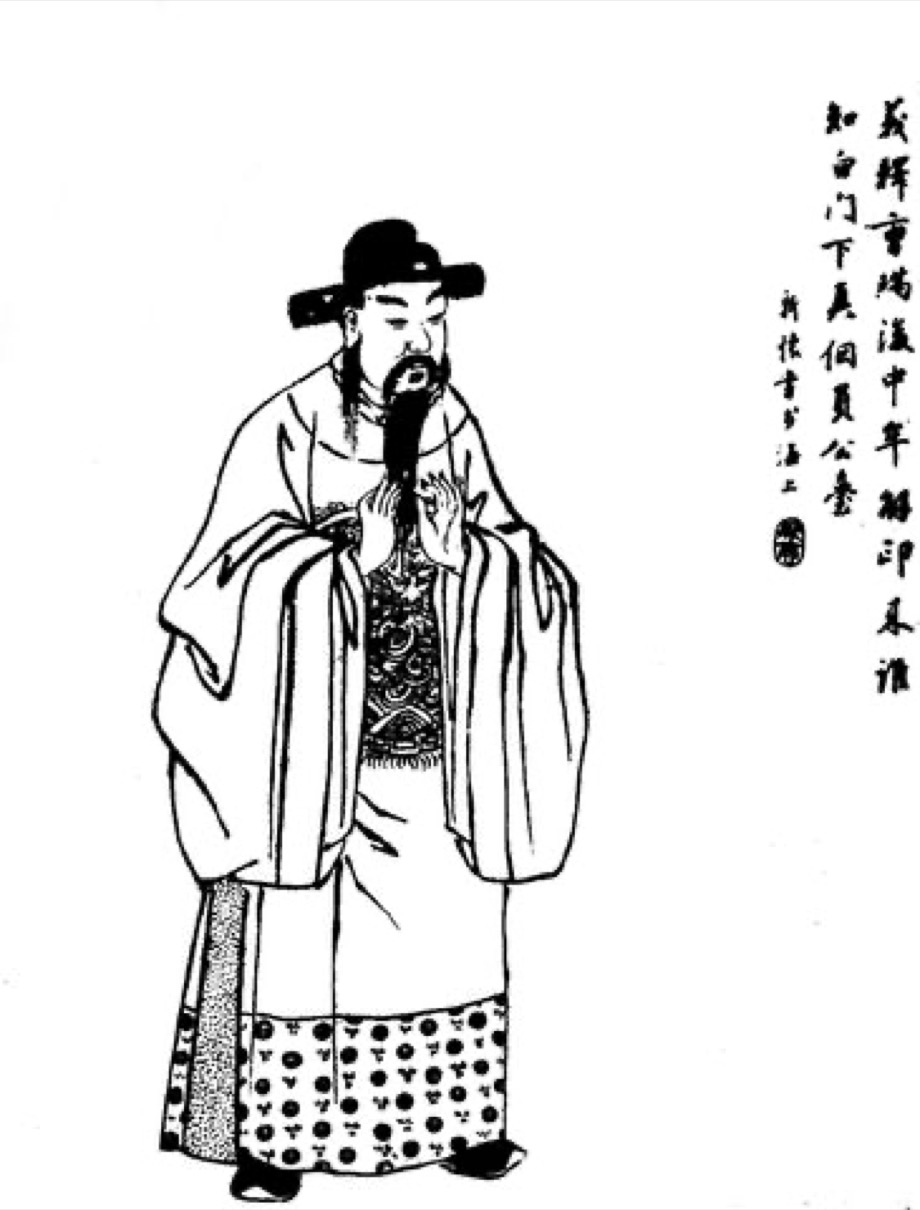
Portrait of Chen Gong
The Household at Cheng-gao
Chen Gong had every reason to stay. He was one of the ablest men in Cao Cao's early circle, a Yan-province local whose backing had helped a landless warlord secure his first real base of power. He believed in Cao Cao's talent — believed it enough to bet his own career on it. And then, in the aftermath of Cao Cao's father's murder, on a punitive campaign already soaked in vengeance, Cao Cao stopped at the home of Lü Boshe, a family friend who fed him and sheltered him, and — convinced, wrongly, that the household meant to betray him — killed everyone inside. Guests included.
Chen Gong did not argue the point, did not petition for restraint, did not stay to see whether the massacre was an aberration or a preview. He left. Not for a rival with better terms, not because the campaign was going poorly, but because he had watched a man he admired do something he could not hold in the same mind as admiration. It is the quietest kind of rupture in the record of the age, and the most absolute.
Chen Gong is INFP — a dominant-Fi conviction so total that one massacre outweighed a rising empire, and he never once looked back to check the math.
A Line That Would Not Move
The break with Cao Cao is not a strategist's recalculation; it is a moral reflex. Nothing about Chen Gong's position had changed — Cao Cao was still the most capable warlord he had backed, Yan province was still the safest bet on the board, and by any external measure walking away was a catastrophic career decision. What had changed was internal and non-negotiable: he had watched hospitality answered with slaughter, and some part of his own sense of who he was could not survive staying to watch more of it.
That is the signature of a dominant feeling judgment turned inward rather than outward — Chen Gong was not adjudicating right and wrong for the group, issuing verdicts or rallying others to his outrage. He simply found the thing unbearable to be near, and removed himself, quietly and without appeal to anyone else's opinion of the decision. He did not stay to argue Cao Cao out of it, did not try to salvage the relationship on the theory that one massacre might still be an aberration. The violation was total and instant, and no argument was going to be entertained against it.
The same conviction reappears, undiminished, at Xiapi. Captured alongside Lü Bu in 198, brought before the man he had once served and clearly still respected, Chen Gong did not beg, did not explain himself, did not try to bargain his talent for his life. He had made his choice years earlier on principle, not on odds, and he held it to the end for the same reason.
Good Counsel, Ignored
Having left Cao Cao on principle, Chen Gong needed a second cause, and found one in Lü Bu — a formidable fighter and a chronically poor strategist, the kind of man whose situation was never quite as settled as it looked and always had another angle worth trying. That suited Chen Gong's auxiliary Ne well. He was rarely short of options: alliances to cultivate, positions to fortify, moments to strike before an opponent's advantage hardened into fact. His counsel across the Lü Bu years shows a mind generating live possibilities in a genuinely fluid, dangerous situation, not one working from a fixed playbook.
The trouble was never the ideas. It was that Lü Bu, brave and self-assured in exactly the ways Chen Gong was not, kept overriding them — trusting his own instinct for a fight over his advisor's reading of the field. Chen Gong kept offering new angles anyway, adapting each fresh proposal to whatever Lü Bu had just done to worsen their position, rather than simply declaring the cause hopeless and leaving a second time. The ideas flowed until the walls of Xiapi came down around both of them.
What He Could Not Un-See
Tertiary Si is what makes the massacre unforgettable rather than merely regrettable. Chen Gong did not process what happened at Lü Boshe's household as an isolated data point to be weighed against Cao Cao's other, more admirable qualities. It lodged as a fixed, returnable memory — the specific image of a household that had offered hospitality, answered with slaughter — and every later dealing with Cao Cao, even across enemy lines years afterward, ran through that same recollection unaltered.
It shows too in how little Chen Gong seems to have revised his own account of the break, even under the pressure of a losing war and a dwindling set of options. A more flexible relationship with the past might have let him reframe the massacre as wartime excess, forgivable in a man he otherwise respected, and angle for a return to Cao Cao's service once Lü Bu's cause began to fail. Chen Gong never tried. The memory held its shape, and so did he.
The Math He Never Ran
Inferior Te explains what Chen Gong never did, which is treat his own survival as an optimization problem. A strategist fluent in Te would have run the numbers on Lü Bu's odds well before Xiapi, hedged his position, or at minimum kept a channel open back to Cao Cao against the day the walls came down. Chen Gong ran none of that math. He committed to a cause on moral grounds and then declined, to the very end, to treat the commitment as a position to be managed for outcome.
It surfaces again, starkest, in the interview with Cao Cao after his capture. The efficient move — the Te move — was obvious and available: explain himself, appeal to the old relationship, angle for a pardon Cao Cao by several accounts would have been glad to grant. Chen Gong did none of it. He asked for nothing and offered nothing, and died holding a position that no calculation of self-interest could have recommended.
Why INFP Over INFJ
Why not INFJ?
An INFJ reading would want the break with Cao Cao to be strategic foresight — Chen Gong seeing, ahead of everyone else, where a rising tyrant's trajectory was headed, and acting on a long-range vision of the future. Nothing in the record supports that. There is no sign he anticipated Cao Cao's later course, no larger plan he was executing by leaving. What the sources show is an immediate, visceral reaction to one specific act, followed by loyal service to whatever cause he had already committed himself to — including, with Lü Bu, a cause he could see plainly was mismanaged. That is Fi conviction answering the present, not Ni foresight building toward a future.
The distinction matters because it changes what kind of tragedy this is. An INFJ Chen Gong would be a man proven right by history, a prophet whose warning went unheeded. The INFP reading is smaller and, in its way, sadder: a man who could not stay near something he found morally intolerable, who then gave everything he had to a losing cause chosen on the same ungoverned instinct, and who never once treated either decision as reversible.
Connected Figures
Further Reading
- Fire over Luoyang: A History of the Later Han Dynasty — Rafe de CrespignyCovers the Lü Boshe massacre and its fallout across Cao Cao's circle.
- Imperial Warlord: A Biography of Cao Cao — Rafe de CrespignyOn Cao Cao's early campaigns and their moral costs.
- Sanguozhi (Records of the Three Kingdoms), Book of Wei — Chen ShouThe primary source biography of Chen Gong and his break with Cao Cao.
