 Historical Figure MBTI
#1134 · 8-22-26 · The Fall of the Han
Wang Yun
The Minister Who Killed the Tyrant · Then Refused Mercy to Anyone Else
137 – 192 CE
6 min read
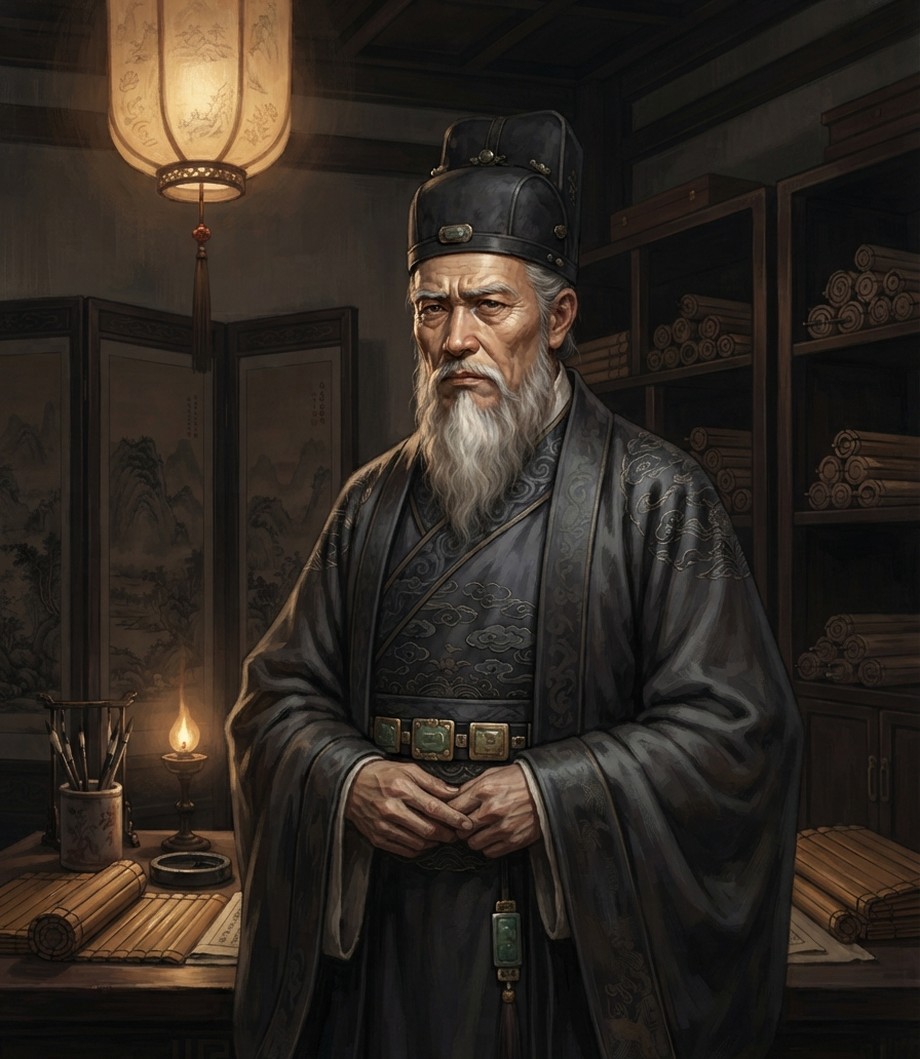
AI-assisted Portrait of Wang Yun
The Long Wait, and the Short Mercy
For most of the years he served under Dong Zhuo, Wang Yun looked like exactly what he appeared to be: a senior, unremarkable minister of the collapsing Han court, cooperative, careful, unreadable. He held office through an occupation that broke or exiled almost every colleague who crossed the warlord ruling the capital by fear, and did it without tipping his hand. That patience was not cowardice — it was method, years of cataloguing grievances, waiting for the single point of leverage that would let one quiet man topple a tyrant no army had managed to dislodge.
He found it in Lü Bu, Dong Zhuo's own adopted son and bodyguard, and worked the old grievance between them until it became a blade. In 192 the plan executed cleanly: Lü Bu struck, Dong Zhuo died, and Wang Yun stood, briefly, as the most powerful man left in Chang'an. It is the second half that reveals what kind of mind had done the plotting. Handed the choice every victor after a civil collapse must make — bend the rules for peace, or hold the line — an ISTJ instinct did not bend. Wang Yun refused amnesty to Dong Zhuo's surrendering generals on principle, and within months the court he had rescued was ash.
Wang Yun was Te in the service of Si — a mind that could out-wait a tyrant for years, then could not, for one afternoon, out-wait its own certainty about what was owed to the men left standing after him.
The Court Official Who Remembered Everything
What let Wang Yun survive years inside Dong Zhuo's occupation was not talent for improvisation but its opposite: a settled, internal sense of how the Han court was supposed to function, held constant against every daily indignity of a regime that had inverted it. He filed the occupation away as an aberration and kept faith with a standard that never changed shape under pressure — the same interiority that let him sit on his estimate of Dong Zhuo for years, until the picture was complete enough to act on with one irreversible move.
It also explains his refusal to flee Chang'an at the end. The same Si that held a fixed picture of how the court ought to run held an equally fixed picture of what a minister owed his post — and running was not, in that internal accounting, a thing this kind of man does.
The Engineer of the Assassination
Te is what turned a decade of private cataloguing into an executable plan. Wang Yun identified the fault line already running through Dong Zhuo's household — the friction between the warlord and his adopted enforcer — and treated it as a lever with a known load rating, recruiting Lü Bu through a cold, efficient reading of what he wanted. The execution followed the same efficiency: one strike, at a moment of maximum exposure, rather than a drawn-out campaign.
But Te auxiliary to Si enforces an existing standard; it does not read a live, changing situation — and that is where it failed him next. Presented with Dong Zhuo's surrendered generals, Wang Yun applied the same decisive logic that had killed the tyrant: no half-measures, disband or punish the lot of them, because that was what the standard required. It was the identical instrument that had won him the court, now aimed at men with nothing left to lose.
A Private Ledger of Right and Wrong
Underneath the procedural surface sat a quieter, moral certainty — the sense that Dong Zhuo's crimes had earned his subordinates no benefit of the doubt, regardless of how the political arithmetic favored mercy. Advisors warned him that Li Jue and Guo Si, cornered and stripped of any path to pardon, would fight with the desperation of men who had nothing left to lose. Wang Yun heard the argument and was not moved, because the objection was practical and the conviction he was working from was not. This is Fi at its most dangerous when tertiary: not argued for in its own terms, but held as an unspoken bottom line beneath decisions that present themselves as purely procedural — a private verdict wearing an official coat.
The Branch He Never Considered
An inferior Ne shows up in Wang Yun less as absence of imagination than as absence of alternatives when they were most needed. Presented with the surrendered generals, he did not entertain a middle path — a conditional pardon, a dispersal to distant postings — the options were not refuted so much as never metabolized; he returned, each time, to the single track his standard had laid down. The same narrowness governs the final scene: a mind with more access to its own Ne might have found some third way between martyrdom and flight. Wang Yun found neither — he had one branch of the decision tree fully built, and when the moment came, it was the only branch he could see.
Why ISTJ Over ESTJ
Why not ESTJ?
An ESTJ reading fits the man who executed a tyrant and briefly ran a capital — not the man who spent years getting there. Wang Yun's method was interior and patient, a private ledger kept against a fixed internal standard for a decade; that is Si depth, not an ESTJ's outward drive to organize and command in real time. And his fatal error was not overreach in pursuit of a new vision of his own making — it was rigid fidelity to an existing standard he refused to adjust even when every advisor said the situation had changed. That is Te bent to Si's consistency, not Te leading.
The patience that let him outlast Dong Zhuo and the rigidity that let Li Jue and Guo Si outmaneuver him were never in tension — they were the same trait, aimed first at a tyrant and then, fatally, at the men he left behind.
Connected Figures
Further Reading
- Fire over Luoyang: A History of the Later Han Dynasty — Rafe de CrespignyBrill — covers Wang Yun's plot against Dong Zhuo and its aftermath in detail
- A Biographical Dictionary of the Later Han to the Three Kingdoms — Rafe de CrespignyEntry on Wang Yun
