 Historical Figure MBTI
#1132 · 8-22-26 · The Fall of the Han
Dong Zhuo
Frontier Warlord · The Man Who Burned Luoyang · Terror as Policy
d. 192 CE
10 min read
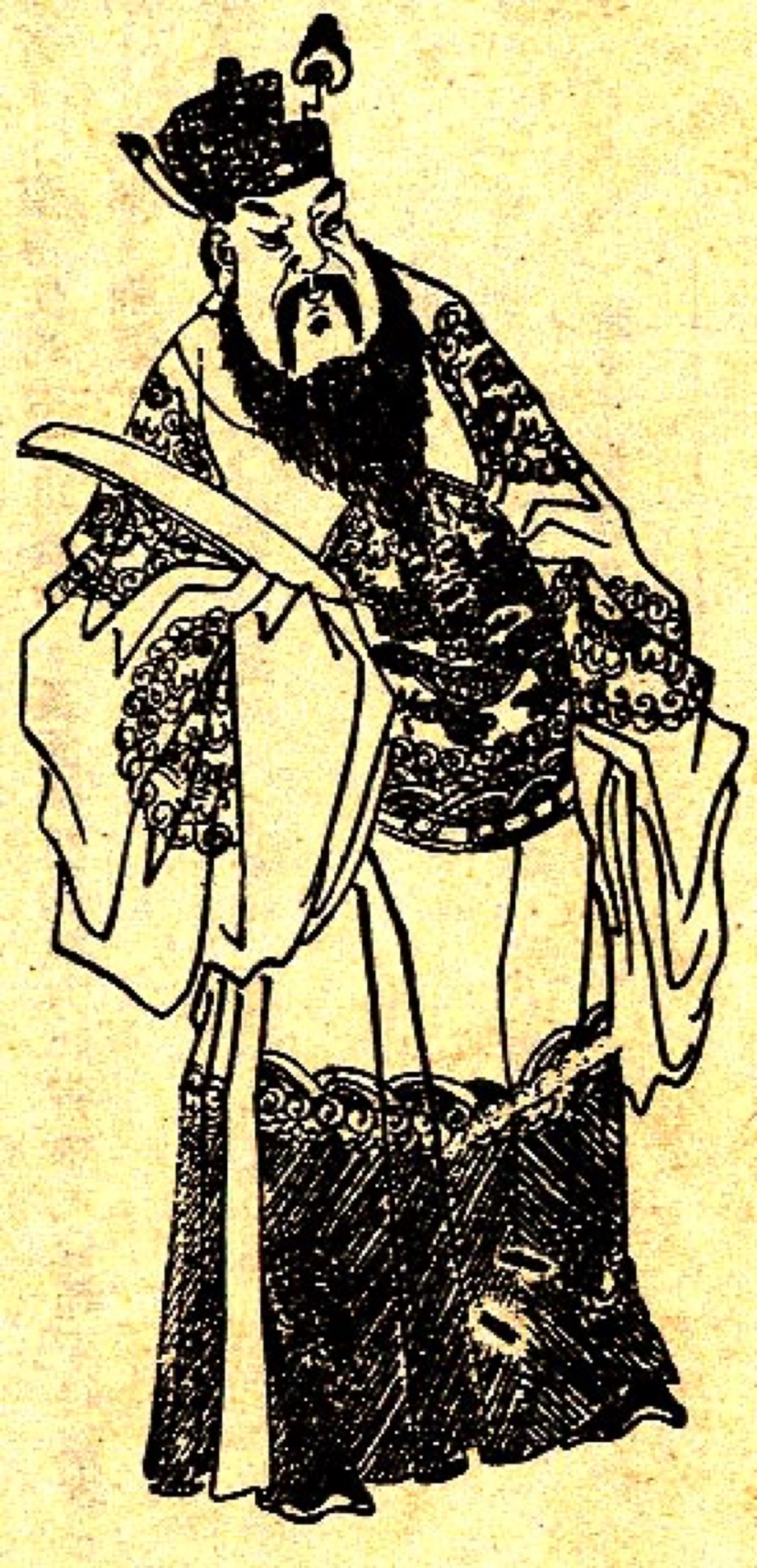
Portrait of Dong Zhuo
The Frontier General Who Walked Into a Power Vacuum
Dong Zhuo did not scheme his way to the top of the Han court. He rode into it. In the late summer of 189, the regent He Jin — locked in a standoff with the palace eunuchs who had dominated the throne for a generation — sent for a blunt instrument: a frontier general from Liang province, a man who had spent his career grinding down Qiang tribesmen on the empire's northwestern edge, where survival meant acting first and explaining never. He Jin wanted Dong Zhuo's army as leverage. He got a catastrophe instead. By the time Dong Zhuo's troops reached the outskirts of Luoyang, He Jin was already dead, murdered by the eunuchs he had tried to intimidate, and the capital had dissolved into open massacre — eunuchs slaughtered in the streets, princes fleeing on foot in the dark. Into that vacuum walked the one force in the city still capable of forming ranks.
He did not negotiate for the throne. He simply had more soldiers standing in the right place at the right moment, and he used them the way he had used soldiers his entire life — to take what was in front of him. Within weeks he had deposed the reigning boy-emperor, installed the more pliable Emperor Xian in his place, and disposed of anyone positioned to object, the deposed sovereign and the dowager empress included. There was no faction-building, no courting of the great clans, no attempt to wear legitimacy convincingly. There was force, applied directly, and an apparent assumption that force would keep working indefinitely. It very nearly did — until the moment it required something Dong Zhuo never developed: the patience to hold what he had seized.
Dong Zhuo is ESTP to the bone — a man who read every room as a battlefield and never once asked what the battlefield would look like a year later.
A Career Built on the Nearest Available Force Se — dominant
Everything about Dong Zhuo's rise reads as a man solving problems with whatever mass and momentum happened to be closest at hand. On the frontier, that meant cavalry charges against Qiang raiders — a trade that rewards instinct, timing, and a willingness to close distance without hesitation, not reflection. In Luoyang, it meant an army marched straight into the smoking wreckage of a coup and simply occupying the throne room, because his was the only force in the city still capable of forming ranks. He did not out-plan his rivals. There was no rival plan to out-plan. He was simply the man standing there with soldiers when everyone else had none.
The clearest evidence of dominant Se is not the seizure of power — plenty of ambitious men manage that — but what he did with it. He looted the imperial tombs for bullion. He let his soldiers pillage the city outright, treating Luoyang's wealth as spoils rather than as a tax base to be preserved for a government he might someday need to run. When the eastern coalition marched against him in 190, his response was not fortification, negotiation, or a defensive campaign — it was total, immediate withdrawal: burn the capital, force the population west at spearpoint, strip the tombs again on the way out for whatever coin remained. Every one of these is a decision made in the moment, against the pressure directly in front of him, with no visible model of tomorrow informing it at all.
Even his endgame is a monument to Se logic. At Meiwu, the fortress he built and stocked with grain and treasure, he is said to have boasted he could hold out thirty years. That is not a plan for governing an empire. It is a plan for outlasting a siege — the exact horizon a soldier who has spent his life on campaign knows how to think in, and the only horizon he ever seriously considered.
The Ambush Instinct, Applied to a Court Ti — auxiliary
Beneath the brute force was a working mechanism — not a philosophy, but a soldier's private logic for reading a situation and finding the fastest exploitable gap in it. Dong Zhuo's march on Luoyang was not blind luck; he understood, correctly, that a leaderless capital in the middle of a massacre would yield to whoever arrived organized. His decision to depose Emperor Shao in favor of the younger, more malleable Emperor Xian was similarly a piece of clean tactical reasoning — a puppet on the throne solves the problem of legitimacy more cheaply than an actual claim to the throne would, and he saw that instantly.
This is auxiliary Ti doing exactly what it does in an Se-dominant frame: not building systems, but stripping a problem down to its mechanical essentials in real time. When Wang Yun and Lü Bu began circling him near the end, contemporary accounts describe a man who still trusted his own read of threats over any counsel — he calculated who around him was dangerous with the same cold, situational clarity he'd once used to calculate which hillside to hold against the Qiang. The tragedy is that this same tactical mind never scaled up. It solved the problem of the next hour with real sophistication and never once addressed the problem of the next decade.
Terror as a Substitute for Consensus Fe — tertiary
Dong Zhuo was not indifferent to how others felt about him — he simply had no interest in earning their approval, only in controlling their behavior, and terror was the fastest tool available for that. Public executions of critics, open massacre used as a demonstration rather than a byproduct, the studied cruelty of letting his soldiers run loose in Luoyang: these are the moves of a man who understood, in a crude and instrumental way, that a population's collective mood is a lever. He pulled it constantly. He just pulled it in exactly one direction.
That is tertiary Fe stripped of any of its usual warmth — an awareness of the group, weaponized rather than cultivated. He never tried to make himself loved, or even respected in the conventional sense; he tried to make himself feared past the point where anyone would risk defying him. It worked for a while precisely because fear is a cheap and immediate substitute for the loyalty a more patient ruler would have spent years building. But a court and a country held together by terror have no reserve of goodwill to draw on when the terror falters even slightly — and by 190, with an entire coalition of governors marching against him, it was faltering badly.
The Fire That Cost Him Everything Ni — inferior
Nothing in Dong Zhuo's career exposes the absence of long-range vision like the burning of Luoyang. Facing a coalition army he could not immediately defeat, he chose the fastest available exit — abandon the capital, torch it so his enemies would inherit ashes, and force the entire population west to Chang'an on a brutal forced march, looting the imperial tombs a second time along the route to fund the retreat. As tactics go, it worked: the coalition took an empty, smoking ruin and, lacking a shared purpose beyond his removal, largely fractured and went home.
But as strategy, it was close to the worst decision available to him. Luoyang was not merely a city — it was the seat of four centuries of Han legitimacy, and destroying it announced to every governor, general, and clan in the empire that Dong Zhuo had no interest in ruling China, only in surviving the next campaign season. It cost him the last shred of the mandate his puppet emperor was supposed to confer, and it hardened opposition that a genuinely strategic actor might have split or waited out. An inferior Ni doesn't just fail to see five years ahead — it actively mistakes the five-year problem for the five-day one, and burns down the very asset it should have been protecting.
He compounded the error at Meiwu, where he stockpiled treasure and grain as if the only future worth preparing for was his own extended survival inside a fortress. It is the inferior function's signature move: not blindness to the future exactly, but a future imagined solely as more of the same present, indefinitely extended — hoarding instead of building, a longer siege instead of a different outcome. Two years after the fire, his own bodyguard cut him down. The fortress full of treasure changed nothing.
Why ESTP Over ESTJ
Why not ESTJ?
An ESTJ reading would require Dong Zhuo to have been building or defending something — a chain of command, a durable institution, an order, however brutal, meant to outlast him. He never was. He never governed at all; he occupied a throne room and improvised survival from there, one crisis at a time, with no visible interest in administration, succession, or any structure larger than his own safety. The Meiwu fortress, stocked for a thirty-year siege, is the tell: that is a hoarding instinct, not a governing one. Dominant Te builds systems. What Dong Zhuo ran on was Se reacting to whatever stood in front of him, with Ti sharpening the reaction into something momentarily clever — never Te organizing toward a future he could hold.
The distinction matters because it is exactly what makes his story a tragedy of squandered opportunity rather than a competent, if brutal, reign gone wrong. A Te-dominant warlord who seized the Han court might have built something — a new dynasty, a functioning regency, a legacy beyond infamy. Dong Zhuo had the army, the position, and the ruthlessness to do it, and he simply never tried. He took the throne room the way he had taken hillsides from the Qiang: as ground to be held for as long as the fight lasted, not as a foundation to be built on. ESTP explains both the speed of his rise and the totality of his collapse in a single stroke; ESTJ would explain neither.
Connected Figures
Further Reading
- Fire over Luoyang: A History of the Later Han Dynasty — Rafe de CrespignyThe definitive account of Dong Zhuo's coup and the burning of Luoyang.
- A Biographical Dictionary of the Later Han to the Three Kingdoms — Rafe de CrespignyEntry on Dong Zhuo, with primary-source citations for his career and death.
- Sanguozhi (Records of the Three Kingdoms), Book of Wei — Chen ShouThe primary source biography underlying nearly every later account of Dong Zhuo.
- Imperial Warlord: A Biography of Cao Cao — Rafe de CrespignyCovers the political fallout of Dong Zhuo's rule and the warlord era it triggered.
