 Historical Figure MBTI
#1133 · 8-22-26 · The Fall of the Han
Lü Bu
Peerless Warrior · Foster Son, Twice Betrayed · The Sword for Hire
d. 199 CE
7 min read
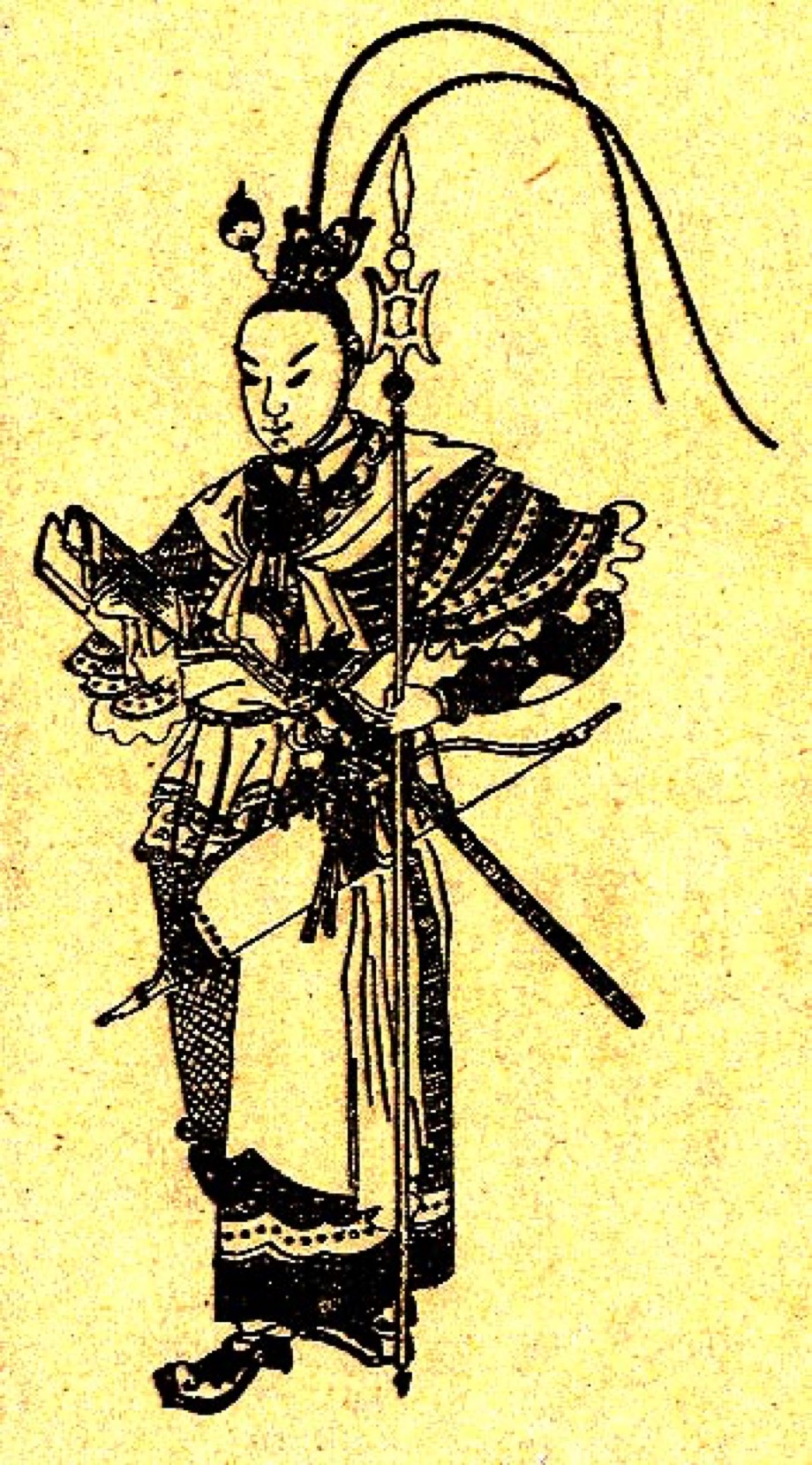
Portrait of Lü Bu
The Sword That Trusted No Sheath
No one in the collapse of the Han fought like Lü Bu, and no one changed masters faster. He rode into the historical record as the terror of every battlefield he entered — the man on Red Hare, the finest horse and the finest spear in an age that measured worth by exactly those things — and he rode out of it strangled at his own captor’s feet, begging for a command he had already proven he would betray. In between, he killed two men who had called him son.
The pattern is almost too clean to need interpretation. Ding Yuan raised him and armed him; Lü Bu took his head the moment Dong Zhuo offered better terms. Dong Zhuo adopted him, armored him, made him the strongman’s own strongman; Lü Bu killed him too, egged on by a court minister who had correctly diagnosed that all it would take was a grievance and an opening. There was no third betrayal only because the war ended first — Xuzhou, seized the instant its rightful holder’s back was turned, was practice for the same instinct working on territory instead of on a man.
This is not the profile of a schemer building toward something. It is the profile of a man who reads a room, a battlefield, or a power vacuum with total clarity and acts on it before anyone else has finished blinking — and who has essentially no apparatus for asking what any of it will look like five years on. That is ESTP, dominant Se running almost unchecked, and it explains both why Lü Bu was unbeatable in the moment and why every single patron who staked their fortune on him eventually regretted it.
Lü Bu never lost a fight of the body. He never once considered what winning it would cost him later — because for a dominant-Se ESTP, later was a country that did not exist.
The Best Spear in Any Room
Se-dominance in Lü Bu is first, and most literally, physical. Contemporaries and chroniclers alike converge on the same image: a warrior so far beyond his peers in single combat and horsemanship that generals avoided meeting him blade to blade at all, preferring numbers and sieges to a fair fight. Red Hare — the legendary steed prized above whole cities — was not vanity. It was the correct instrument for a man whose entire genius lived in the instant of contact: the read of an opponent’s stance, the gap in a formation, the half-second where a charge could break a line.
That same immediacy governed his politics. Lü Bu never built a faction, cultivated a network, or waited for the right moment to strike — he simply struck when the terms in front of him improved. Dong Zhuo’s reward looked better than Ding Yuan’s loyalty, so he took it that day. Xuzhou sat undefended while Liu Bei was off campaigning, so he took that too, on the spot, without a plan for what came after. Every major decision of his career reads as a response to what was directly in front of him — never a move made three steps ahead.
It is also why he was, for years, effectively unkillable in the field and yet never secure. Se without long-range foresight wins battles and loses wars; Lü Bu drifted from base to base, territory to territory, because holding ground requires exactly the patience and structural thinking that dominant Se does not supply. He was always the sharpest weapon on any battlefield he stood on — and never the architect of what that battlefield was for.
A Private Ledger of What Serves Him
Underneath the raw reflex sat a cold, working logic — not a moral code, but a private accounting of self-interest that Lü Bu applied consistently even when it damned him. He did not defect from Ding Yuan out of confusion or panic; he weighed the offer, saw it was better, and acted. When he killed Dong Zhuo, it was not an outburst — it was the execution of a plan Wang Yun had handed him, one Lü Bu’s own Ti recognized as internally sound: Dong Zhuo’s paranoia had made him dangerous to keep serving, and the reward for removing him was real.
This is auxiliary Ti in its purest warlord-era form: a system of reasoning that answers only to itself, indifferent to how it looks from outside. Lü Bu never once tried to justify his betrayals in the language of righteousness the way rival warlords postured about restoring the Han — he simply acted on what made sense to him in the moment and moved on. Even at the end, cornered at Xiapi, his offer to Cao Cao was pure Ti transaction: put me on your cavalry and I will win your battles for you. It was a coherent, self-consistent proposal. It just failed to account for the one variable Ti alone will never weigh correctly.
The Reputation He Needed and Could Not Manage
Lü Bu was not indifferent to how others saw him — he needed to be seen as the finest warrior alive, and he chased that recognition actively, through Red Hare, through his conquests, through a hunger for territory and title that a purely self-contained fighter would never have bothered with. That craving for external validation, for status legible to everyone around him, is tertiary Fe: real, but undisciplined, and easily curdled into harshness when it came to actually managing the people beneath him.
It shows most damningly at Xiapi. Lü Bu did not fall to Cao Cao’s army so much as he fell to his own subordinates, who bound him and handed him over after months of erratic, punishing treatment had exhausted whatever loyalty his reputation once bought him. A dominant or auxiliary Fe user manages a garrison’s morale as instinctively as breathing. For Lü Bu, holding a room’s loyalty was a need he felt but never a discipline he built — and in the end the people closest to him decided his fearsome name was not worth their necks.
The Cost He Never Once Priced In
Inferior Ni is the missing organ in Lü Bu’s story, and it is the reason the story ends where it does. He never asked what killing Ding Yuan would mean for how the next patron would trust him. He never asked what killing Dong Zhuo — however justified the immediate calculus — would mean for how the man deciding his fate years later would weigh his offer to switch sides yet again. Each betrayal was locally rational and globally catastrophic, and Lü Bu simply never ran the long arithmetic that would have shown him the pattern he was building.
That failure crystallizes at his execution. Bound before Cao Cao, Lü Bu made his pitch — competent, self-interested, exactly the kind of proposal his Ti had always produced. Cao Cao, by every account, was tempted; a cavalry commander of Lü Bu’s ability was worth a great deal. It was Liu Bei — a man Lü Bu had once been sheltered by and then robbed of Xuzhou — who supplied the sentence that killed him: remember Ding Yuan, remember Dong Zhuo. Lü Bu had spent his whole career living entirely inside the present tense. In his final minutes, the past he had never once considered came due all at once, delivered by exactly the person he had most recently wronged.
Why ESTP Over ISTP
Why not ISTP?
An ISTP reading would cast Lü Bu as a quiet technical specialist — a man absorbed in the craft of combat for its own sake, indifferent to audience or rank. Nothing about the record supports that. He actively pursued recognition as the single greatest warrior alive, prized Red Hare as a public emblem as much as a tool, and seized territory and title rather than simply hiring out his sword for whoever paid. That hunger for visible dominance, chased outward into the world rather than perfected quietly within it, is extroverted Sensing doing the driving — Se-dominant, not Se-auxiliary in service of an introverted core.
The distinction matters because it explains the shape of his failures as much as his triumphs. An ISTP who overreached would likely retreat back into competence and let the world come to him. Lü Bu never retreated — he kept converting every opening into a new bid for status and ground, all the way to Xiapi, because that outward-facing hunger for the next visible win was the engine, not a byproduct of skill he happened to possess.
Connected Figures
Further Reading
- Fire over Luoyang: A History of the Later Han Dynasty — Rafe de CrespignyCovers Lü Bu's role in the assassination of Dong Zhuo and the collapse that followed.
- A Biographical Dictionary of the Later Han to the Three Kingdoms — Rafe de CrespignyReference entry on Lü Bu's career and shifting allegiances.
- Sanguozhi (Records of the Three Kingdoms), Book of Wei — Chen ShouThe primary source biography underlying nearly every later account.
- Generals of the South — Rafe de CrespignyOn the military culture of the warlord period that produced men like Lü Bu.
